Performed at authorized partner hospitals Turkey Hair Center is a Ministry of Health authorized health-tourism intermediary, not a clinic.
A scalp yeast infection usually means an overgrowth of, or reaction to, Malassezia, a yeast that lives on every scalp. It shows up as dandruff, seborrheic dermatitis or itchy follicle bumps, and it is usually treated with antifungal shampoo; scalp ringworm is a different fungal infection that needs a doctor.
People search for yeast on scalp, scalp yeast or hair yeast infection when they notice flakes, greasy scale, itch or small bumps. This guide explains what the term covers, what it can look like, how a doctor tells it apart from look-alike conditions, and which treatments are backed by the NHS, the American Academy of Dermatology (AAD) and DermNet. It does not diagnose your scalp; only an examination can do that.
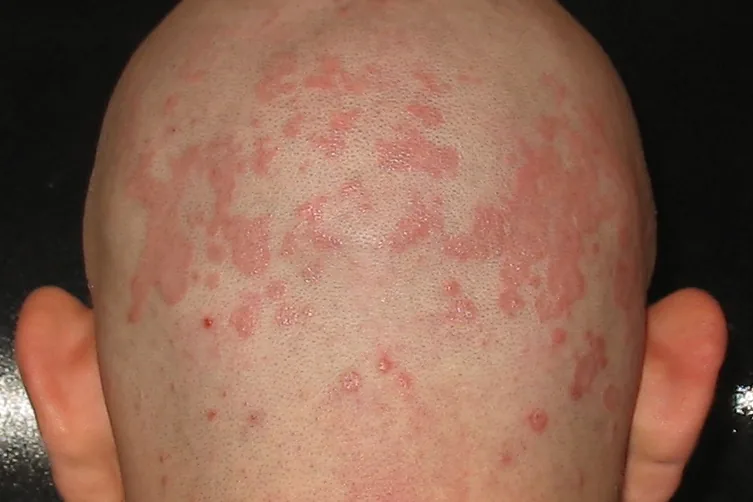
Seborrheic dermatitis is the Malassezia-linked condition most people mean by a scalp yeast infection. On this shaved scalp it shows as pink to red patches with fine scale; under hair the same rash is usually noticed as itch and flakes. Appearance alone is not a diagnosis.
What Is Scalp Yeast Infection?
"Scalp yeast infection" is not a single medical diagnosis. DermNet describes Malassezia yeasts as normal inhabitants of the skin surface that cause disease only under specific conditions, and links them to seborrheic dermatitis, pityriasis versicolor and Malassezia folliculitis. The NHS says dandruff may be caused by a type of yeast that naturally lives on your skin.
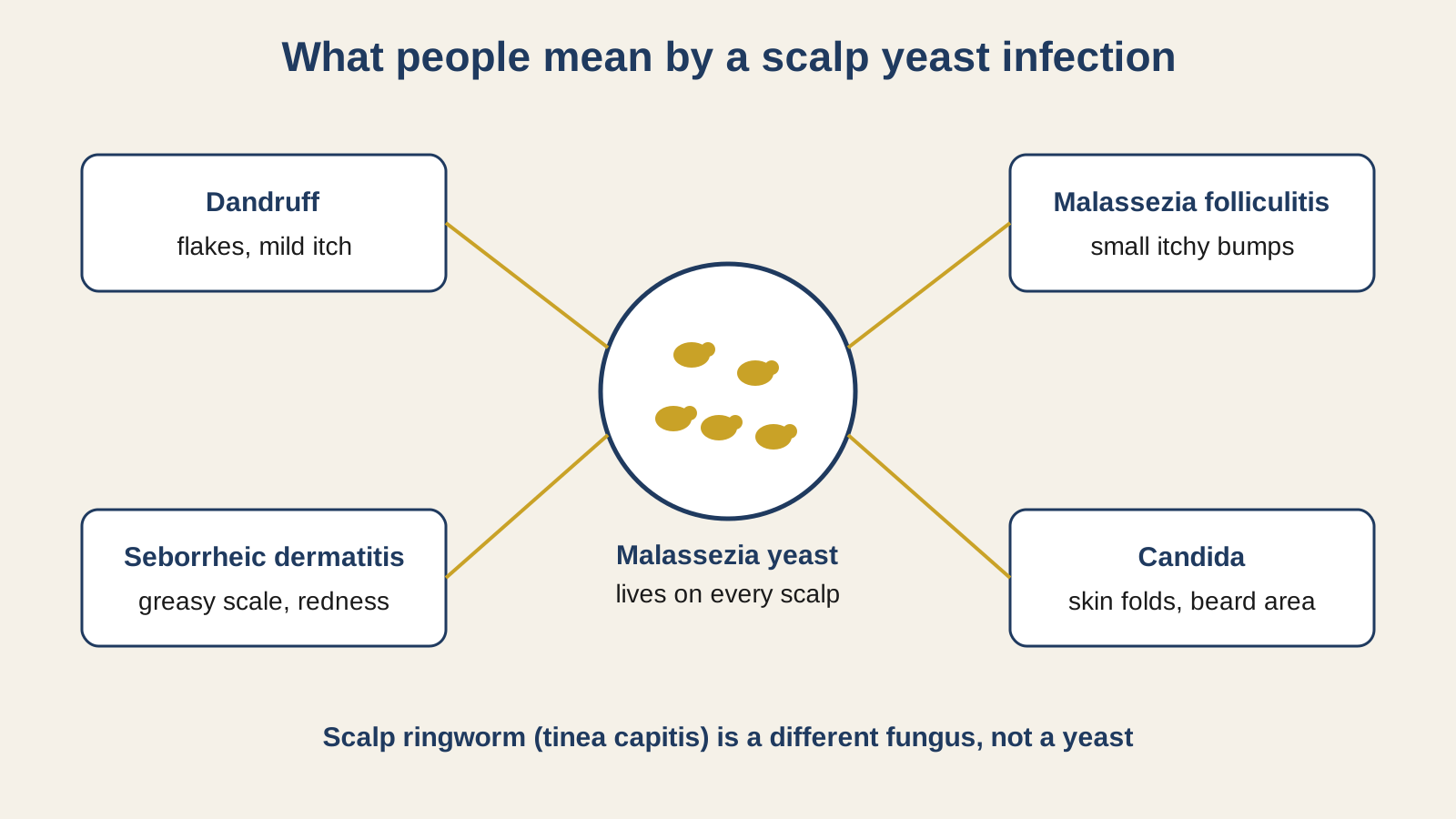
The diagram groups these conditions by organism. Malassezia sits behind dandruff, seborrheic dermatitis and Malassezia folliculitis, Candida mostly affects skin folds and the beard area, and scalp ringworm is caused by a different fungus.
Candida, the yeast behind most mouth and genital yeast infections, is a different organism. DermNet describes Candida folliculitis in skin folds and the beard area rather than the scalp.
What Does Scalp Yeast Infection Smell Like?
None of the medical sources we checked lists a particular smell as a sign of yeast on the scalp. Greasy scale and sweat can make any scalp smell stronger. A scalp that smells unpleasant and also oozes, crusts or hurts should be examined, because those signs can point to a bacterial infection.
What Is Scalp Fungal Infection?
A scalp fungal infection most often means tinea capitis, also called scalp ringworm. DermNet describes it as a fungal infection of the scalp skin and hair that causes hair loss, dry scaly areas, redness and itch. It is caused by dermatophyte fungi, not by yeast.
Can Scalp Yeast Infection Cause Hair Loss?
The answer depends on which condition is behind it. Scalp yeast infection causes such as Malassezia overgrowth lead mainly to flaking and itch. The NHS lists dandruff as not harmful, and none of the NHS or AAD dandruff pages lists hair loss as a dandruff symptom.
Scalp fungal infection causes hair loss more clearly. The NHS states that ringworm on the face or scalp may cause patchy hair loss, and DermNet notes that partial hair loss with some inflammation is typical of tinea capitis. A severe inflammatory form called kerion may result in permanent hair loss.
Heavy scratching can break hairs, and inflamed follicles can shed. If you are losing hair in patches, or the scalp looks shiny or scarred, see a dermatologist rather than treating a presumed yeast infection on scalp skin yourself. Our guide to the reasons for hair loss covers the more common causes of thinning.
What Does Scalp Yeast Infection Look Like?
Scalp yeast infection symptoms differ by condition. These are the patterns described by the NHS, AAD and DermNet:
Dandruff: white flakes in the hair and on the shoulders, sometimes with mild itch.
Seborrheic dermatitis: white to yellowish scale that may be dry or greasy, with redness on lighter skin and pink, purple or lighter patches on darker skin.
Malassezia folliculitis: small, uniform, itchy bumps and pustules, sometimes along the hairline.
Tinea capitis: scaly patches with broken hairs or bald patches, mostly in children.
Scalp yeast infection pictures online can mislead: the AAD warns seborrheic dermatitis can look like other skin conditions. Our page on pimples on the scalp covers spots and bumps in more detail.
Symptoms of Candida on Scalp
Candida is not a common scalp yeast. DermNet describes Candida folliculitis in skin folds and the beard area. A red, sore, moist rash in a body fold should be shown to a doctor, who may take a swab to identify the organism.
Is a Scalp Yeast Infection Contagious?
Malassezia conditions are not considered contagious. The AAD says seborrheic dermatitis is not contagious, and the NHS says you cannot catch dandruff. Scalp ringworm is different: the NHS says it spreads through close contact with an infected person or animal and through shared combs, bedsheets or towels.
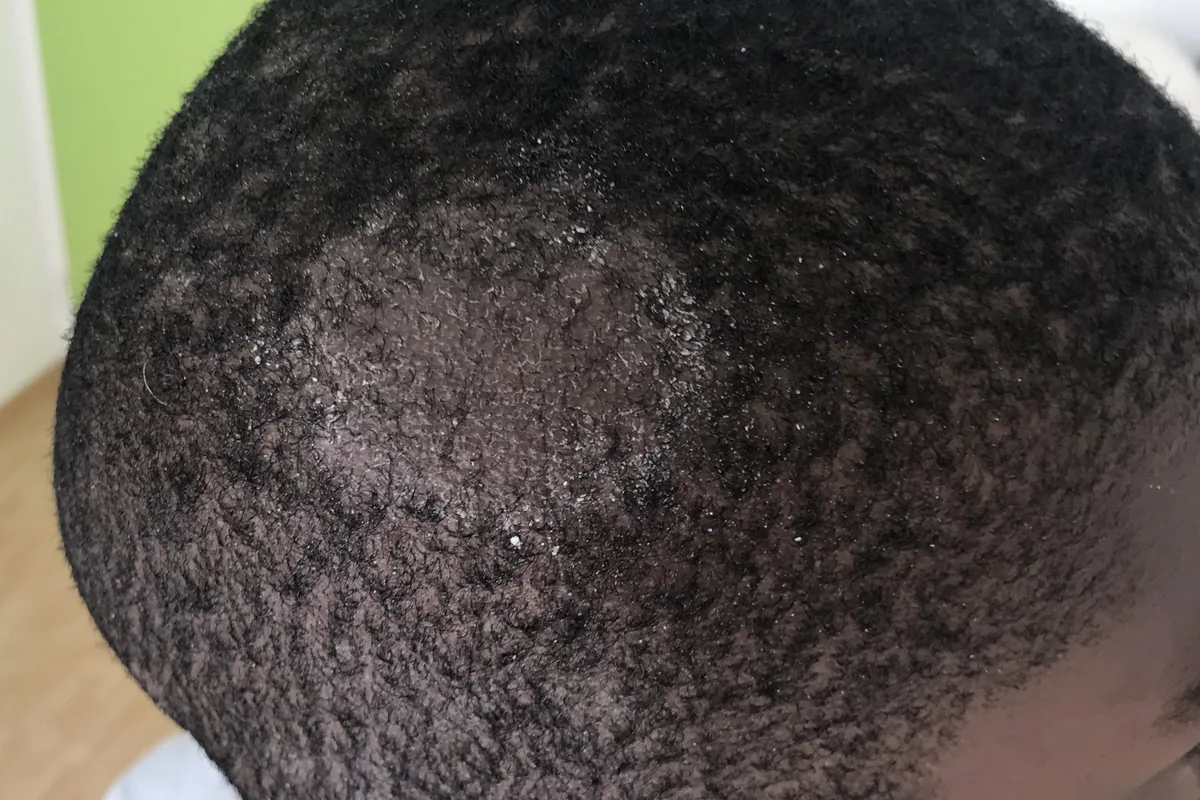
This is what sets scalp ringworm apart: a rounded, scaly patch where the hairs have broken off short, rather than flakes spread through the hair. Because it is contagious and needs treatment from a doctor, a patch like this in a child should be checked rather than treated as dandruff.
How Scalp Yeast Infection Is Diagnosed
A doctor usually starts by looking at the scalp. For Malassezia folliculitis, DermNet says the examination raises the diagnosis and a skin scraping, tape strip, swab or biopsy confirms the yeast. For tinea capitis, DermNet says the diagnosis should be confirmed with microscopy and a fungal culture, which can take up to 4 weeks. A Wood lamp and dermoscopy can help in some cases.
How to Treat Scalp Yeast Infection?
Scalp yeast infection treatment usually starts with an antifungal shampoo. The NHS suggests anti-dandruff shampoos containing ketoconazole, coal tar or salicylic acid, used for up to 4 weeks. DermNet lists medicated shampoos with ketoconazole, ciclopirox, selenium sulfide, zinc pyrithione, coal tar and salicylic acid for scalp seborrheic dermatitis.
DermNet also notes that some strains of Malassezia are resistant to azole antifungals, in which case zinc pyrithione or selenium sulfide can be tried.
Over-the-Counter Antifungal Shampoos
Scalp yeast infection treatment shampoo choices you can buy include ketoconazole 1%, selenium sulfide, zinc pyrithione and ciclopirox in some countries. The AAD says some dandruff shampoos need to stay on the scalp for 5 to 10 minutes and that instructions differ by product and hair texture, so follow the label. If one shampoo does not help, the AAD suggests alternating between products with different active ingredients.
How Is a Scalp Yeast Infection Treated?
If shampoo alone does not help, a dermatologist may add a short course of a steroid scalp lotion to calm itch, an antifungal cream for the face, or tablets for Malassezia folliculitis, according to DermNet. Scalp ringworm usually needs prescription antifungal tablets and shampoo, says the NHS.
How to Treat Scalp Yeast Infection Naturally?
Scalp yeast infection home remedies have little evidence behind them. The best-studied option is tea tree oil shampoo: in a trial of 126 people published in the Journal of the American Academy of Dermatology, 5% tea tree oil shampoo improved dandruff in 41% after 4 weeks, compared with 11% using placebo.
A review in Clinical Microbiology Reviews notes that tea tree oil can cause skin irritation and allergic reactions, and it is toxic if swallowed. Use only ready-made products, never neat oil. The NHS does not recommend plant oil treatments for head lice, which is a separate cause of scalp itch. Other kitchen remedies were not covered by any of the medical sources we checked, so we cannot recommend them as a scalp fungal infection treatment at home. Oregano oil is another oil with lab data only; see oregano oil for hair growth.
Is Scalp Fungal Infection Dangerous?
Most yeast-related scalp problems are a nuisance rather than a danger. The bigger risks are scalp ringworm left untreated, because kerion can cause permanent bald patches, and bacterial infection after scratching, which the AAD mentions for seborrheic dermatitis.
Who Is Most at Risk?
DermNet lists hot, humid climates, oily skin, heavy sweating, occlusive creams, antibiotic use and a weakened immune system as risk factors for Malassezia folliculitis. The AAD adds that seborrheic dermatitis is more common in men, in people with HIV or Parkinson's disease, and in people with psoriasis or rosacea.
How to Prevent Scalp Yeast Infection?
Yeast-related flare-ups tend to return, so prevention is about routine. The AAD notes that seborrheic dermatitis often flares in winter and early spring and with stress. DermNet says weekly antifungal use may help prevent Malassezia folliculitis coming back.
Maintain a Clean and Dry Scalp
Wash often enough to control oil, especially after sweating, and let the scalp dry before tying hair up or putting on a cap. The AAD suggests that people with fine, straight or oily hair may need to shampoo daily, while people with curly or coily hair can wash when needed and use a dandruff shampoo about once a week.
Scalp Yeast Infection: How It Compares
Condition
Main signs
Contagious?
Usual first step
Dandruff
White flakes, mild itch, no redness
No
Anti-dandruff shampoo
Seborrheic dermatitis
Greasy scale with inflammation, may reach face
No
Antifungal shampoo; doctor if severe
Malassezia folliculitis
Uniform small itchy bumps
No
Antifungal treatment
Scalp ringworm
Scaly patches, broken hair, bald areas
Yes
GP: tablets and shampoo
Scalp psoriasis
Dry, flaky patches with silvery-white scale
No
Doctor-led treatment
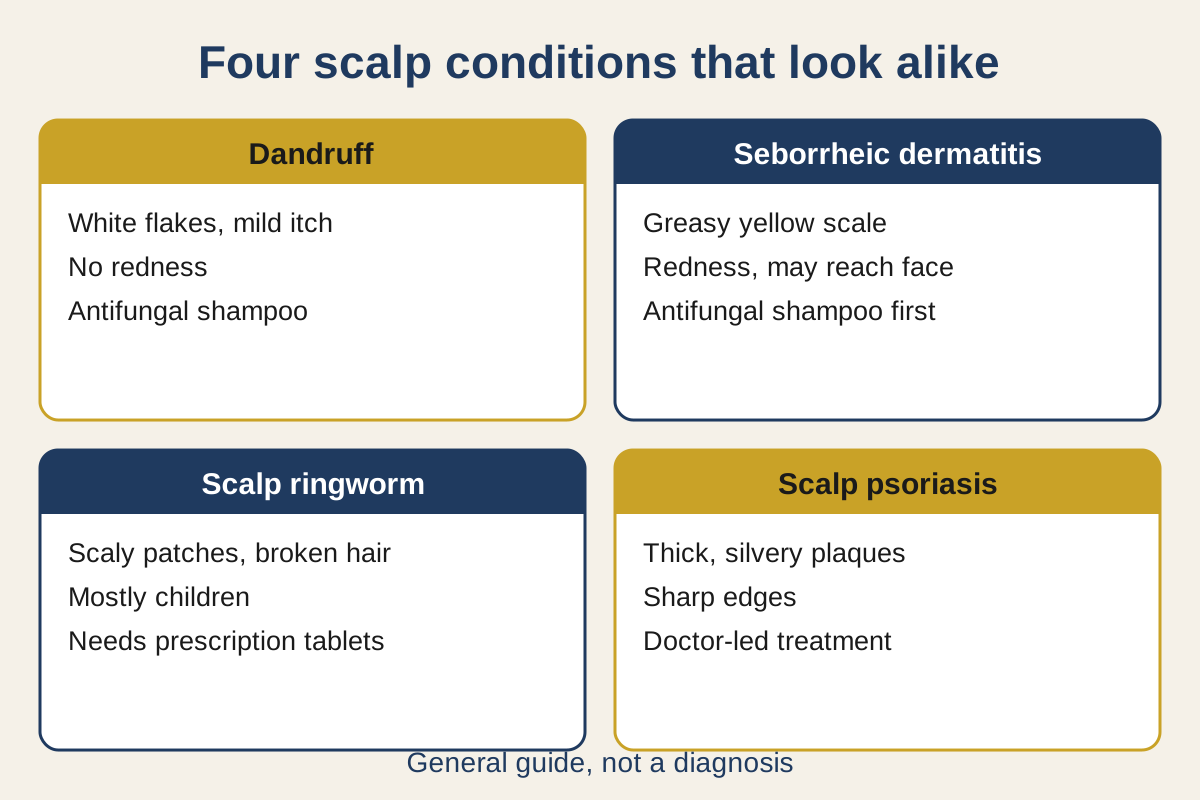
Scalp yeast infection vs seborrheic dermatitis is mostly a question of words: seborrheic dermatitis is one of the main conditions linked to scalp yeast. Scalp yeast infection vs psoriasis is harder to judge by eye; the NHS describes psoriasis as dry, flaky patches with silvery-white scales, and a doctor may need to examine you. Scalp yeast infection vs ringworm matters most, because ringworm needs prescription tablets.
Yeast Infection on Scalp vs Dandruff
The AAD says dandruff may be considered the mildest form of seborrheic dermatitis. Dandruff does not cause inflammation; seborrheic dermatitis does, and it can spread to the eyebrows, ears, beard and sides of the nose.
Dandruff Yeast Infection
A dandruff yeast infection is how many people describe flaking linked to Malassezia. DermNet estimates seborrheic dermatitis affects 3% to 12% of the population, and the NHS notes that stress and cold weather can make dandruff worse. Dandruff is not caused by poor hygiene, the NHS adds, although it may show more if you do not wash your hair regularly.
See a GP or dermatologist if: - flaking or itch has not improved after 4 weeks of anti-dandruff shampoo - your scalp is red, swollen, very itchy or painful - you have scaly patches with broken hairs or bald areas - you also have flaky, itchy patches on your face or body - a child has a scaly scalp with hair loss - you have a weakened immune system, for example from steroids or diabetes
Frequently Asked Questions
Can a Yeast Infection Affect Your Scalp?
Yes, in the sense that Malassezia yeast on the scalp is linked to dandruff, seborrheic dermatitis and Malassezia folliculitis. Candida, the usual cause of genital and mouth yeast infections, is described by DermNet in skin folds and the beard area.
Can a Yeast Infection Spread to Your Scalp?
A genital or mouth yeast infection is caused by Candida, and DermNet describes Candida folliculitis in skin folds and the beard area, not the scalp. Scalp yeast problems come from the Malassezia that already lives there, so they do not spread from elsewhere.
How Do I Know If I Have a Yeast Infection on My Scalp?
You cannot be sure without an examination, because dandruff, seborrheic dermatitis, psoriasis and ringworm can look alike. Flakes with mild itch that improve with antifungal shampoo within 4 weeks fit dandruff. Anything else needs a doctor.
How Long Does Scalp Yeast Infection Last?
Dandruff and seborrheic dermatitis often come and go for years. The AAD says adults may have flare-ups for life, often in winter and early spring. Scalp ringworm needs oral antifungal treatment, which DermNet says usually lasts several months.
How to Tell If You Have a Yeast Infection on Your Scalp?
Look at the pattern: flakes alone, greasy scale with redness, small uniform bumps, or bald scaly patches. Note what helps and what makes it worse. Show those notes and clear photos to a GP or dermatologist, who may take a scraping to confirm.
Is Scalp Yeast Infection Hair Loss Permanent?
It depends on the cause. DermNet describes permanent bald patches mainly after scarring, for example after kerion, a severe inflammatory form of scalp ringworm. That is why patchy hair loss with scale should be treated early by a doctor.
How Do Scalp Fungal Infections Happen?
Malassezia overgrowth happens when conditions favour the yeast: oil, heat, sweat and lower immunity. Scalp ringworm spreads through contact with infected people, animals or objects such as combs, hats and towels, according to the NHS and DermNet.
Can Scalp Fungal Infection Cause Swollen Lymph Nodes?
It can. DermNet notes that regional lymph nodes may be enlarged in tinea capitis. Swollen glands with a scaly, painful scalp, especially in a child, should be seen by a doctor.
What Complications Can a Scalp Yeast Infection Cause?
Most cases cause flaking and itch only, but an untreated infection can do more. Cleveland Clinic lists a build-up of dead, flaky skin, damaged hair follicles and hair loss, and notes that severe infections can spread beyond the skin. The AAD warns that scratching seborrheic dermatitis can lead to a bacterial infection. People with a weakened immune system should see a doctor early.
How Can I Prevent a Scalp Yeast Infection?
You cannot remove Malassezia, but you can make flare-ups less likely. Cleveland Clinic advises keeping the scalp clean and dry and limiting antibiotics and steroids to what a doctor prescribes. DermNet says weekly antifungal use may help prevent Malassezia folliculitis from returning, and the AAD notes that seborrheic dermatitis often flares in winter, early spring and with stress.
Who Is Most Likely to Get Scalp Ringworm?
Mainly children. DermNet says tinea capitis mostly affects children before adolescence, with cases peaking between 3 and 7 years, and can also affect adults with a weakened immune system. It spreads from people, pets and shared items such as brushes, hats and towels, so DermNet advises screening household members and having pets checked by a vet.
Scalp Problems and Hair Restoration
An active scalp infection is treated before any hair restoration is planned. If your scalp has settled and thinning is still the concern, send photos for a free hair analysis. Turkey Hair Center is a Ministry of Health authorized health-tourism intermediary, and procedures take place at authorized partner hospitals. You can also use the contact page or read about hair transplant side effects.
Medical disclaimer: This article is for informational purposes only and is not medical advice. Individual results and recovery vary from person to person. Always follow the written aftercare plan from your own medical team.
Carson CF, Hammer KA, Riley TV. Melaleuca alternifolia (tea tree) oil: a review of antimicrobial and other medicinal properties. Clinical Microbiology Reviews, 2006;19(1):50-62
Amras666 Acute seborrheic dermatitis on the scalp (cover photo, cropped), CC BY-SA 3.0 Wikimedia Commons
Gzzz Tinea capitis in a child (cropped), CC BY-SA 4.0 Wikimedia Commons
Send three photos: front, top and sides. You get a technique recommendation, a graft range and a straight answer about what is achievable, before anyone talks about price.
Your details are with the team
A patient coordinator will get back to you shortly. If you would like to send your photos now, WhatsApp is the fastest way to do it.
We respond quickly, day or night, in your language.
Multilingual team, no obligation
Data protectedKVKK and GDPR compliant, 100% confidential
Authorized Health Tourism Intermediary
Turkey Hair Center is the hair-restoration brand of Healthy Way Tourism, an authorized international health-tourism intermediary. All medical procedures are performed by licensed medical professionals at authorized healthcare facilities in Turkiye, in accordance with the regulations of the Ministry of Health.