What Causes Gray Hair: Causes, Prevention and Treatment Options
Performed at authorized partner hospitals Turkey Hair Center is a Ministry of Health authorized health-tourism intermediary, not a clinic.
Gray hair is caused mainly by ageing: the pigment cells in each hair follicle, called melanocytes, make less melanin over time, so new hairs grow in with little or no colour. Genes set most of the timing, while smoking, stress, vitamin B12 deficiency and thyroid problems can bring it forward.
There is no proven way to stop age-related graying, and this page says so plainly. What you can do is rule out the causes that are treatable, avoid the habits linked to early graying and choose how to manage the gray you have. This guide covers:
how hair loses its colour, starting in the follicle
the causes, from genes and age to stress and medical conditions
what treatment can and cannot do
the questions people ask most about gray hair at different ages
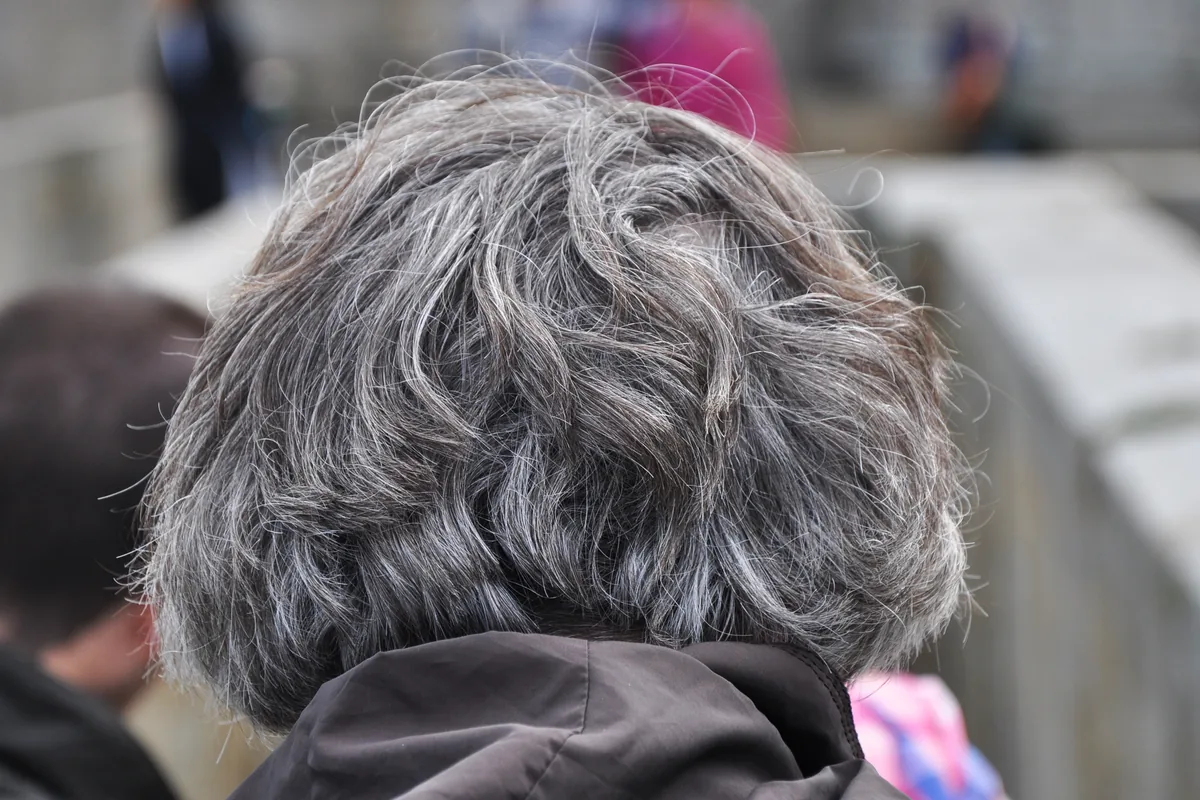
Look closely at this photo and the "gray" is not one colour. White strands with no pigment grow between strands that still have their dark colour, and together they read as gray from a distance. Each hair's colour is decided in its own follicle, which is why graying spreads hair by hair.
What Is Gray Hair?
Gray hair is hair that grows with little or no melanin, the pigment that colours skin, eyes and hair. Cleveland Clinic explains that the more melanin a hair has, the darker it is, and that gray or white hair comes from having little to no melanin.
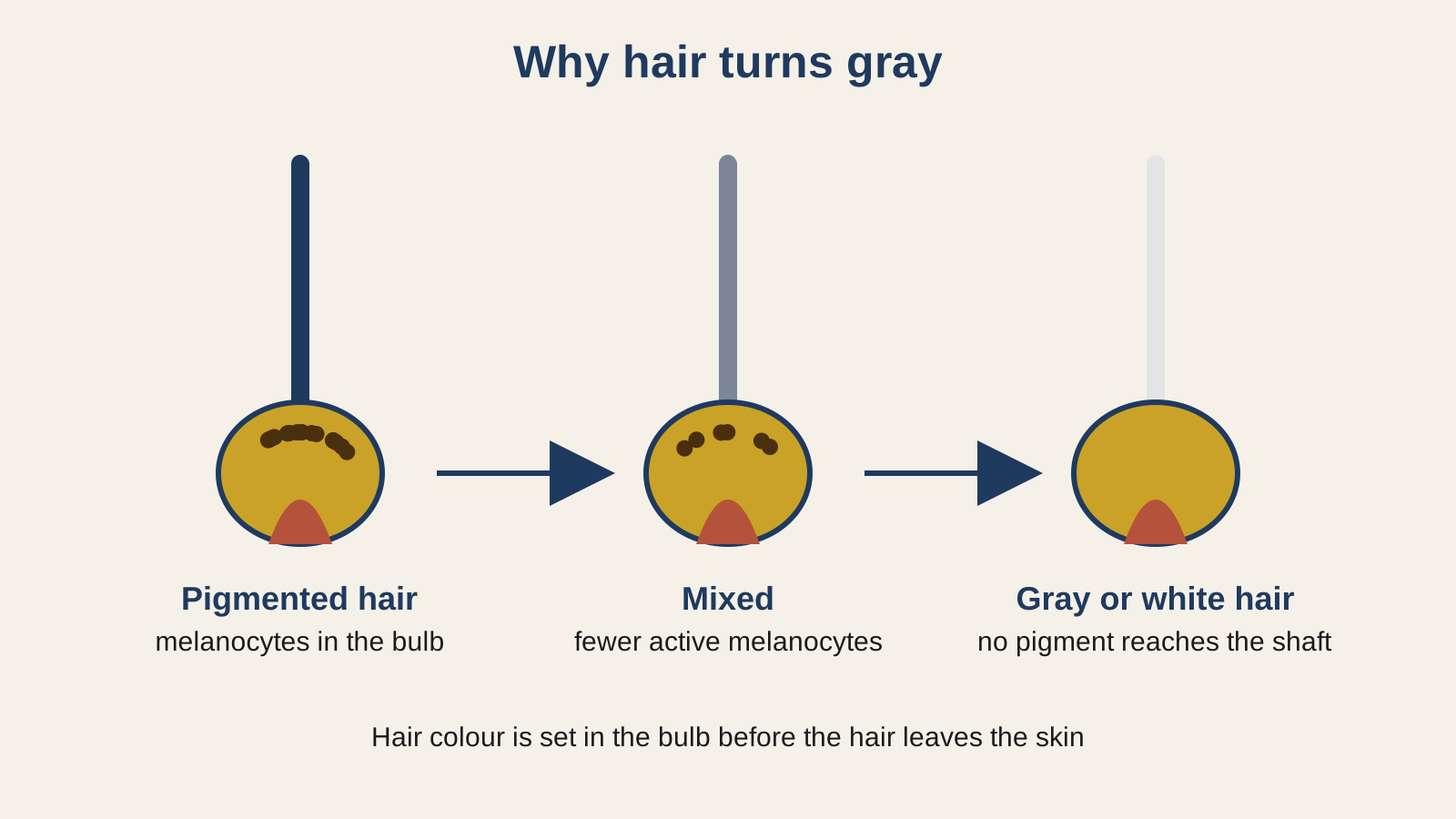
The drawing shows that change inside the follicle. As the pigment cells in the hair bulb decline, the hair first grows with less colour and then with none, which is when it looks white.
A head of "gray" hair is usually a mix. A study of photodegradation in gray hair by Richena and colleagues worked with white fibres and black fibres taken from the same gray hair samples. Seen together, white strands mixed with pigmented ones read as gray or silver from a distance.
Gray hair can also feel different. Cleveland Clinic notes that gray strands might be thicker, wirier or coarser. A review of hair structure by Gavazzoni Dias reports that the medulla, the soft central core of a hair, is present in coarser hair such as gray hair, thick hair and beard hair. Our hair shaft anatomy guide explains those layers.
Graying is not limited to the scalp. Cleveland Clinic lists facial hair, body hair, eyelashes and eyebrows as places that also turn gray or white, and notes that facial or body hair can gray long before scalp hair, or the other way round.
What Causes Gray Hair?
Hair gets its colour in the hair bulb, deep in the follicle. A review by Tobin in the International Journal of Trichology explains that bulb melanocytes pass melanin into the growing hair, mainly into its cortex, and that this happens only while the hair is growing. Once the hair leaves the skin, its colour is fixed.
So a gray hair is not a coloured hair that faded. It grew in without pigment, because the melanocytes in that follicle had stopped making enough of it. Our page on the hair bulb shows where these cells sit.
The change is often gradual rather than all or nothing. Tobin describes gray hair bulbs that still show a much reduced, yet detectable, activity of tyrosinase, the key enzyme for making pigment. That fits what many people see: hairs that look paler or silvery before they turn fully white.
The causes found in the sources we reviewed fall into four groups:
Cause
What the evidence says
Source
Ageing
Melanocytes make less melanin over time; age-related graying cannot be stopped
Cleveland Clinic
Genes
Family history is strongly linked; the first gene region tied to graying lies in IRF4
Sonthalia et al., 2017; Adhikari et al., 2016
Oxidative stress
Gray hair shafts hold high levels of hydrogen peroxide; smoking adds oxidative load
Wood et al., 2009; Kumar et al., 2018
Medical conditions and medicines
Vitamin B12 deficiency, thyroid disease, vitiligo, alopecia areata and some drugs
Cleveland Clinic; Kumar et al., 2018
Age and Genes
Age is the main driver. Cleveland Clinic says most people start getting gray hairs in their 30s or 40s, but the age and speed vary a lot: some go fully gray within 10 years of their first grays, while others never have a full head of gray hair.
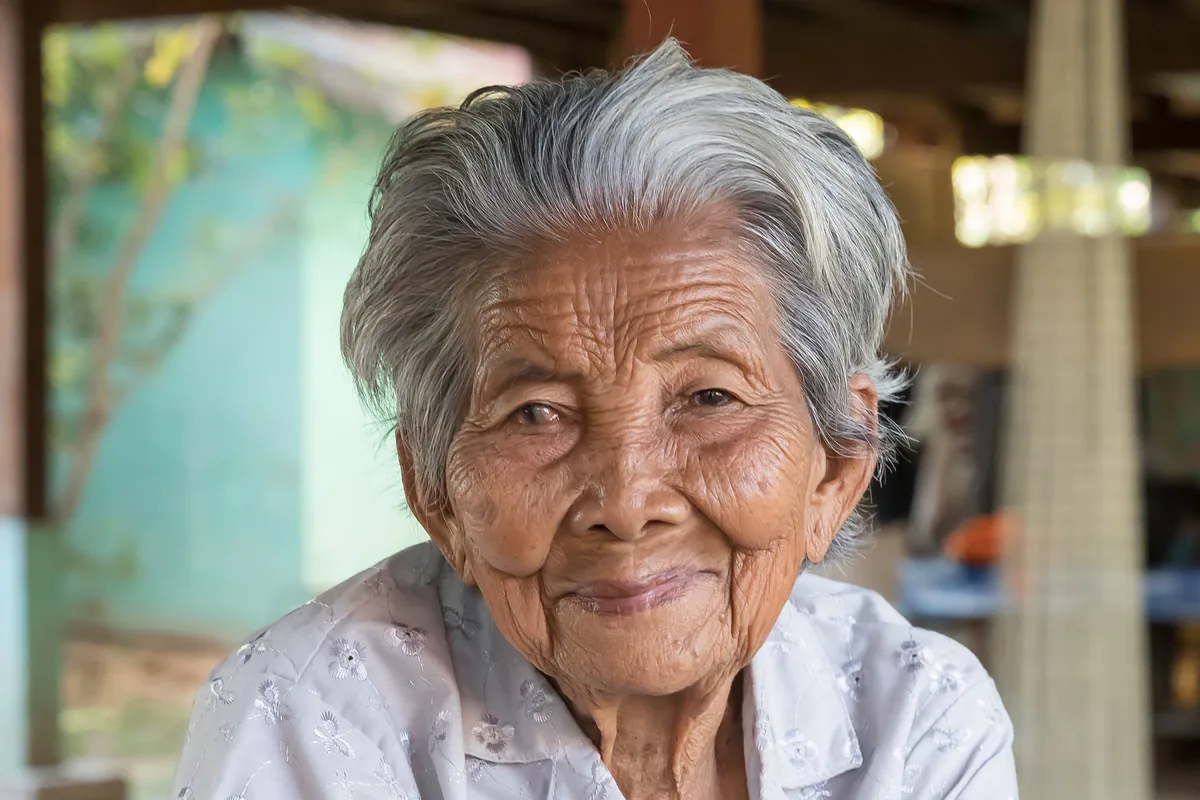
Here almost every hair has lost its colour, with only a few darker strands left. This is the end point of age-related graying that some people reach and others never do, depending largely on their genes.
Genes set much of that timing. In a study of 71 people with early graying by Sonthalia and colleagues, 90.1% had a parent or sibling who had also grayed early. A genetic study of more than 6,000 Latin Americans by Adhikari and colleagues reported the first gene region linked to graying, in the IRF4 gene.
Oxidative Stress
Making pigment produces reactive oxygen species, unstable molecules that can damage cells. Tobin's review notes that oxidative stress may play an important role in graying. A 2009 study by Wood and colleagues in the FASEB Journal found that gray and white scalp hair shafts hold hydrogen peroxide in millimolar concentrations, along with very low levels of the enzymes that normally break it down and repair the damage it does.
Treatment Options
There is no medical treatment that reverses normal graying. A 2025 review in the International Journal of Dermatology states that, to date, no known medical therapies can reverse or prevent premature hair graying. Cleveland Clinic says you cannot stop hair from going gray as you age and probably will not reverse gray you already have.
Treatment therefore works in two ways. The first is finding and treating a medical cause, if there is one. The second is managing how gray hair looks. The 2025 review lists the cosmetic options:
hair colourants, natural or synthetic
hair-thickening fibres, made of keratin, that cling to existing hair
concealing powders and sprays that coat the hair
wigs and hairpieces, which need frequent care and can be costly
Each option has trade-offs. Dyes need repeat applications as new hair grows in at about 1 cm a month, as explained in our guide to how fast hair grows. Fibres and powders wash out. Hairpieces avoid chemicals on the hair but need upkeep.
Hair dye can cause an allergic skin reaction in some people. The 2025 review notes that the common dye ingredient paraphenylenediamine, known as PPD, gave a positive patch test in 4.5% of patients tested in one study. If your scalp, eyelids, forehead or neck itch or swell after colouring, stop using the product and see a doctor. Newer formulas without PPD exist for people with a known allergy.
What Causes Gray Hair and How to Stop It?
This is the question most people really want answered. The honest version is that you cannot stop the graying that comes with age, but you can sometimes slow or stop graying that has another cause. The steps below follow that logic: rule out what is treatable, cut known risks and then decide how to manage the rest.
Can You Stop Age-Related Graying?
No. Cleveland Clinic states this directly, and the 2025 review found no therapy that prevents or reverses premature graying either. Products that promise to turn gray hair back to its old colour are not supported by the research we reviewed.
There is one piece of genuine new science here, but it is narrow. A 2021 study in eLife by Rosenberg and colleagues mapped colour along single hairs and found white or gray hairs that naturally regained pigment, across sexes, ethnic groups, ages and body regions. Some of these changes ran in parallel with stressful periods in a person's life. The authors propose a threshold model in which hairs near the point of turning gray can tip back for a time. That does not show that long-standing gray hair can be brought back to colour.
Causes You Can Check With a Doctor
Some causes of graying can be found and treated. Cleveland Clinic says that if a vitamin deficiency or other condition is behind the graying, treating it may stop or slow it. The conditions linked to graying in the sources we reviewed include:
Vitamin B12 deficiency: Kumar and colleagues report that about 55% of people with pernicious anaemia, a cause of B12 deficiency, grayed before 50, compared with 30% of controls.
Thyroid disease: low thyroid hormone levels are linked to early graying, hair loss and changes in hair texture.
Vitiligo: a skin condition in which pigment cells are lost, which can also affect hair (vitiligo and hair).
Alopecia areata: an immune condition that causes patchy hair loss and is listed by Cleveland Clinic among the conditions that affect hair pigment.
Low copper, iron or other minerals: Kumar and colleagues describe studies that found lower copper, ferritin, calcium and vitamin D levels in some people with early graying.
Certain medicines: Cleveland Clinic lists some cancer treatments, oral retinoids, antimalarial drugs and epilepsy drugs.
Early graying with no family history is the main reason to ask for tests. A review in the International Journal of Trichology notes that some authors suggest checking vitamin B12, folic acid and thyroid levels in people who gray early without a family history. Only a doctor can decide which tests fit you.
Does Stress Turn Hair Gray?
Stress can play a part, though not overnight. Cleveland Clinic explains that stress can trigger changes in the pigment-producing cells, but because hair gets its colour before it grows out, you would see gray hairs grow in after a stressful period, not appear suddenly.
The strongest lab evidence comes from mice. A 2020 study in Nature by Zhang and colleagues found that acute stress in mice activated the sympathetic nerves around the hair follicle. Those nerves released noradrenaline, which caused the melanocyte stem cells to be used up quickly, and once those stem cells were gone, new hairs grew in white. That work has not been repeated in people in the same way.
In humans, the 2021 eLife study is the closest evidence: graying along single hairs sometimes matched stressful periods, and some hairs regained colour later. Cleveland Clinic notes that when stress levels come down, hairs that went gray could grow back in their original colour.
Smoking and Oxidative Stress
Smoking is one of the clearest lifestyle links. Kumar and colleagues report a significant correlation between smoking and premature graying in studies they reviewed. The likely reason is oxidative stress: the 2025 review notes that smoking produces a large quantity of reactive oxygen species, which can damage hair bulb melanocytes.
The link is a correlation, so it does not prove that stopping smoking will bring colour back. It does make smoking the one well-documented habit linked to earlier graying that a person can change.
Diet, Vitamins and Supplements
A balanced diet supports the body in general, and correcting a real deficiency is a medical step a doctor can take. The research does not support taking supplements to prevent or reverse graying in people who are not deficient. Kumar and colleagues note that vitamins and minerals such as biotin, zinc, copper and selenium are being prescribed for early graying, but that the results have not been promising.
If you are thinking about supplements for your hair, a blood test first is more useful than guessing. Our guide to vitamins for hair loss covers what the evidence says about each one.
Covering Gray Hair With Less Damage
For most people, managing gray hair means colouring it. The American Academy of Dermatology gives practical tips:
stay within three shades of your natural colour, because going lighter needs stronger chemicals and causes more damage
have only one chemical service at a time, such as colour, perm or relaxer
leave more time between touch-ups, especially in dry weather
use conditioner after every shampoo
Gray hair has its own quirk. Because white hair has no melanin, light and heat affect it more visibly. The study by Richena and colleagues found that a heat treatment at 81°C made white hair turn more yellow, while visible and infrared light bleached it. Heavy use of hot tools may be one reason gray hair can take on a yellow cast.
Graying and Hair Loss Are Different Problems
Graying and thinning often arrive at similar ages, but they come from different parts of the follicle. Graying means the melanocytes have stopped colouring the hair. Thinning means the follicle is making a smaller hair, or none at all. Our guide to the reasons for hair loss explains the common causes of thinning.
The two can overlap when a transplant is planned. A 2026 article by Park in Clinical, Cosmetic and Investigational Dermatology explains that gray or white hair lowers the colour contrast between hair and scalp, so the scalp can look more visible even when density is kept. It also notes that white hair is harder to see during surgery, which can raise the risk of damaging grafts, and describes dyeing the hair beforehand as one strategy.
How It Compares
Not every loss of colour is the same. The table below compares the patterns described in the sources we reviewed:
Type
Typical age
Pattern
Can it change?
Age-related graying
Usually from the 30s or 40s
Gradual; men often start at the temples and sideburns, women at the front
Cannot be stopped
Premature graying
Before 20 in white people, 25 in Asian people, 30 in Black people
Often runs in families; temples most often first
Treatable causes may slow it
Stress-related graying
Any age
New gray hairs grow in after a stressful period
Some hairs may regain colour
Condition-related loss of colour
Any age
Depends on the condition, such as patches in vitiligo
Depends on treating the condition
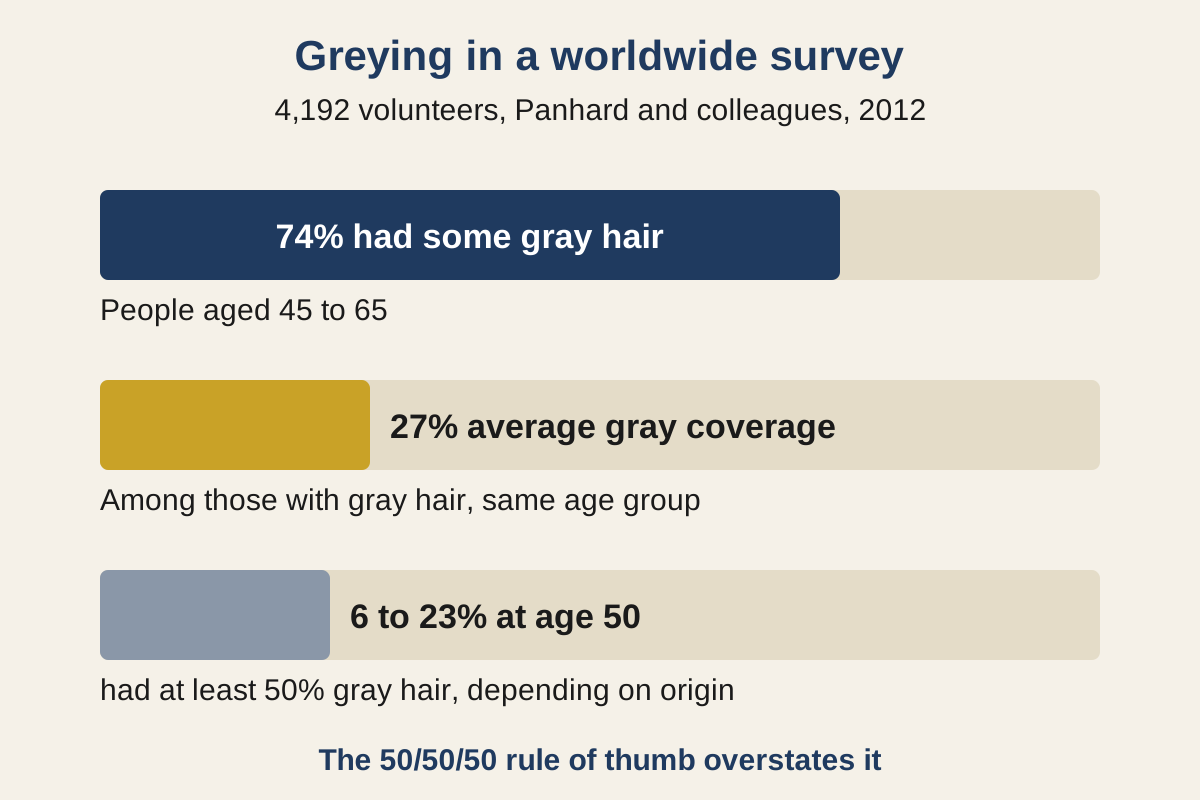
Ethnic background also matters. A worldwide study by Panhard and colleagues of 4,192 people found that 74% of those aged 45 to 65 had some gray hair, with an average gray coverage of 27%. People of Asian and African descent had less gray hair than people of Caucasian origin at the same ages.
The study also tested the old 50/50/50 rule, which says that half of people have at least 50% gray hair by age 50. The real share was 6% to 23%, depending on origin and natural hair colour, well below the rule.
What Makes Your Hair Dry?
Gray hair often feels drier and coarser than pigmented hair, and several things add to that. Cleveland Clinic describes gray strands as possibly thicker, wirier or coarser. Gavazzoni Dias links the medulla to coarser hair, including gray hair.
Hair care adds to the effect. The American Academy of Dermatology notes that colouring and perming can leave hair dry and brittle, which matters because many people with gray hair colour it often. Gavazzoni Dias explains that bleaching, dyeing, rough washing, unprotected drying and sunlight strip the fatty outer layer that helps hair repel water, leaving the surface rougher.
Frequently Asked Questions
What Causes Yellowing of Gray Hair?
White hair has no melanin, so the effects of light and heat show more clearly on it. In the study by Richena and colleagues, heat at 81°C made white hair more yellow, while visible and infrared light bleached it. The full cause of yellowing is not settled, according to the same study.
What Causes Gray Hair in Your 20s?
Usually genes. For white people, graying before 20 counts as premature; for Asian people the line is 25 and for Black people 30, according to the 2025 review. So for a white person, gray hair after 20 is not classed as premature, while for an Asian or Black person in their 20s it may be. If no one in your family grayed early, a doctor can check B12 and thyroid levels.
What Causes Gray Hair in Your 30s?
For most people, normal ageing. Cleveland Clinic says most people start getting gray hairs in their 30s or 40s. Smoking and a strong family history can bring it earlier.
What Causes Gray Hair in Humans?
Gray hair happens when the melanocytes in the hair follicle make less melanin, so new hairs grow in with little or no colour. Age is the main cause, shaped by genes and, in some people, by stress, smoking or medical conditions.
What Causes Gray Hair in Teens?
Gray hair in teens is uncommon but does happen. In the study of 71 people by Sonthalia and colleagues, graying started at an average age of 10.2, as early as 5. Most had a family history of it, and the study found a significant link with vitamin B12 deficiency and low thyroid function, which a doctor can test for.
What Causes Gray Hair in Men?
Mostly age and genes, as in women. The Panhard study found that men had significantly more gray hair than women, while the 2025 review describes graying as affecting both sexes equally within each group but in different places, starting at the temples and sideburns in men.
What Causes Gray Hair in Young Men?
The same factors as in other people, with genes leading. In the Sonthalia study the temples were the most common place for early graying to start, followed by the front of the scalp. Smoking is the main changeable risk linked to early graying.
Does Plucking a Gray Hair Make More Grow?
We found no study showing that plucking one gray hair makes the hairs around it turn gray. Plucking does not remove the follicle: Cleveland Clinic explains that a pulled hair grows back in most cases, so the same follicle will usually produce another gray hair. The review by Kumar and colleagues mentions plucking only as an option when fewer than 10% of scalp hairs are gray.
What Causes Gray Hair in Beard?
The same loss of melanin in the follicle that causes scalp graying. Cleveland Clinic notes that facial hair can turn gray long before scalp hair, or after it, so a gray beard with dark scalp hair is common and not a sign of a problem on its own.
How Can I Delay Gray Hair?
You may be able to slow it, but not prevent it. The American Academy of Dermatology suggests a healthy lifestyle, a balanced diet with antioxidants, vitamins and minerals, enough sleep, not smoking, managing stress and protecting your hair from UV rays. Genes still set most of the timing, so these steps work alongside your family pattern rather than overriding it.
Does Stress Cause Gray Hair?
It can speed it up. The American Academy of Dermatology says stress has been shown to speed up signs of ageing, including gray hair, and links this to norepinephrine (noradrenaline) affecting the pigment cells in the follicle. Gray hairs appear as new hair grows in after a stressful period, not overnight, and some may regain colour when stress eases.
Can Gray Hair Be Reversed?
Usually not. The American Academy of Dermatology says there are no effective medical treatments to add colour back to gray hair, although treating an underlying cause such as a vitamin deficiency may help. The 2021 eLife study found some single hairs regained colour naturally, but that does not apply to long-standing gray. Hair dye remains the main option.
Gray Hair and Thinning at the Same Time?
Gray hair needs no treatment on medical grounds, but thinning can be assessed. If you are going gray and thinning at once, a photo review can show where density has dropped. Send:
Medical disclaimer: This article is for informational purposes only and is not medical advice. Individual results and recovery vary from person to person. Always follow the written aftercare plan from your own medical team.
Sources and medical review
Cleveland Clinic. Gray Hair: Why Does Hair Turn Gray? Cleveland Clinic health library
Cleveland Clinic. Hair Follicle: Function, Structure and Associated Conditions. Cleveland Clinic health library
Tobin DJ. Aging of the hair follicle pigmentation system. International Journal of Trichology, 2009;1(2):83-93
Desai DD, Karim M, Nohria A, et al. Premature hair graying: a multifaceted phenomenon. International Journal of Dermatology, 2025;64(5):819-829
Kumar AB, Shamim H, Nagaraju U. Premature Graying of Hair: Review with Updates. International Journal of Trichology, 2018;10(5):198-203
Panhard S, Lozano I, Loussouarn G. Greying of the human hair: a worldwide survey, revisiting the '50' rule of thumb. British Journal of Dermatology, 2012;167(4):865-873
Sonthalia S, Priya A, Tobin DJ. Demographic Characteristics and Association of Serum Vitamin B12, Ferritin and Thyroid Function with Premature Canities in Indian Patients from an Urban Skin Clinic of North India: A Retrospective Analysis of 71 Cases. Indian Journal of Dermatology, 2017;62(3):304-308
Adhikari K, Fontanil T, Cal S, et al. A genome-wide association scan in admixed Latin Americans identifies loci influencing facial and scalp hair features. Nature Communications, 2016;7:10815
Wood JM, Decker H, Hartmann H, et al. Senile hair graying: H2O2-mediated oxidative stress affects human hair color by blunting methionine sulfoxide repair. FASEB Journal, 2009;23(7):2065-2075
Zhang B, Ma S, Rachmin I, et al. Hyperactivation of sympathetic nerves drives depletion of melanocyte stem cells. Nature, 2020;577(7792):676-681
Richena M, Silveira M, Rezende CA, Joekes I. Yellowing and bleaching of grey hair caused by photo and thermal degradation. Journal of Photochemistry and Photobiology B, 2014;138:172-181
Gavazzoni Dias MF. Hair cosmetics: an overview. International Journal of Trichology, 2015;7(1):2-15
Park JH. White Hair-Induced Increased Scalp Visibility: Clinical Implications for Hair Loss Evaluation and Hair Transplantation. Clinical, Cosmetic and Investigational Dermatology, 2026;19:602144
Send three photos: front, top and sides. You get a technique recommendation, a graft range and a straight answer about what is achievable, before anyone talks about price.
Your details are with the team
A patient coordinator will get back to you shortly. If you would like to send your photos now, WhatsApp is the fastest way to do it.
We respond quickly, day or night, in your language.
Multilingual team, no obligation
Data protectedKVKK and GDPR compliant, 100% confidential
Authorized Health Tourism Intermediary
Turkey Hair Center is the hair-restoration brand of Healthy Way Tourism, an authorized international health-tourism intermediary. All medical procedures are performed by licensed medical professionals at authorized healthcare facilities in Turkiye, in accordance with the regulations of the Ministry of Health.