Blonde Hair Transplant: How It Works and What to Expect
Performed at authorized partner hospitals Turkey Hair Center is a Ministry of Health authorized health-tourism intermediary, not a clinic.
A blonde hair transplant works the same way as any other: healthy follicles are moved from the back and sides of the scalp to thinning areas. Blonde hair can be transplanted; it blends with light skin, but pale hair is harder to see during surgery.
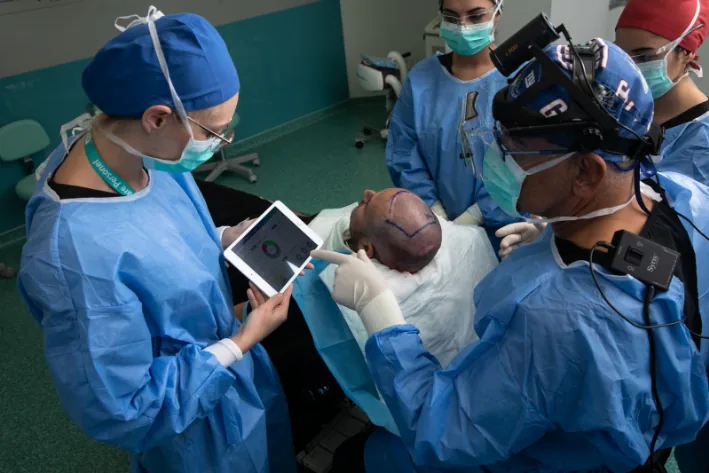
A hair transplant team using a graft calculator during an operation. Photo: Happybloom, CC BY-SA 4.0, via Wikimedia Commons, cropped.
People search for this in different ways, from blonde hair transplant to hair transplant blonde hair, but the questions behind them are similar. This guide covers:
whether blonde hair or bleaching causes hair loss
what the evidence says about transplanting light hair
how long the procedure and the growth take
what decides whether you are a candidate, and what it costs in Turkey
Graft planning follows the same steps for every hair colour, because graft numbers depend on density rather than colour. What blonde hair changes is how the result looks against the scalp, as the sections below explain.
What Is Blonde Hair Transplant?
A blonde hair transplant is a standard hair transplant in a person with naturally blonde hair. The American Academy of Dermatology describes the surgery as moving healthy hairs on your scalp to areas with thinning hair. Nothing about the method changes with hair colour; what changes is how the hair looks against the scalp and how easy it is for the team to see during the procedure. Our hair types guide explains how colour, curl and thickness change visible coverage.
Does Blonde Cause Hair Loss?
Natural blonde hair does not cause hair loss. We found no study linking natural hair colour itself to balding. The American Academy of Dermatology lists hereditary hair loss first among the most common causes, and we found nothing tying it to hair colour. The academy also says men and women of all races can be candidates for a transplant.
Bleaching to become blonde is a different story. The academy's colouring guidance warns that going more than three shades lighter needs stronger chemicals and causes more damage, and suggests staying within three shades of your natural colour. A review by Gavazzoni Dias in the International Journal of Trichology explains that bleaching reduces the cross links inside the hair fibre and leaves it more porous.
The damage shows up as breakage rather than true hair loss:
Breakage: the hair snaps along its length, so you see short pieces without a root.
Shedding: whole hairs fall out from the follicle, each with a small bulb at the end.
Thinning over time: the academy notes that if damage continues, a person may eventually see thinning hair or even bald spots.
A transplant cannot fix breakage. If thin-looking hair comes from bleach damage, new follicles will not help, because the problem is in the hair shaft, not the number of follicles. A transplant is considered only when follicles have been lost, which a scalp exam can confirm.
So if your hair seems thinner after repeated bleaching, the first step is to tell breakage from shedding. Our hair shaft anatomy guide explains how bleach affects the layers of the hair. A dermatologist can check whether a separate cause of hair loss is also present.
Does Blonde Hair Transplant Work? What the Evidence Says
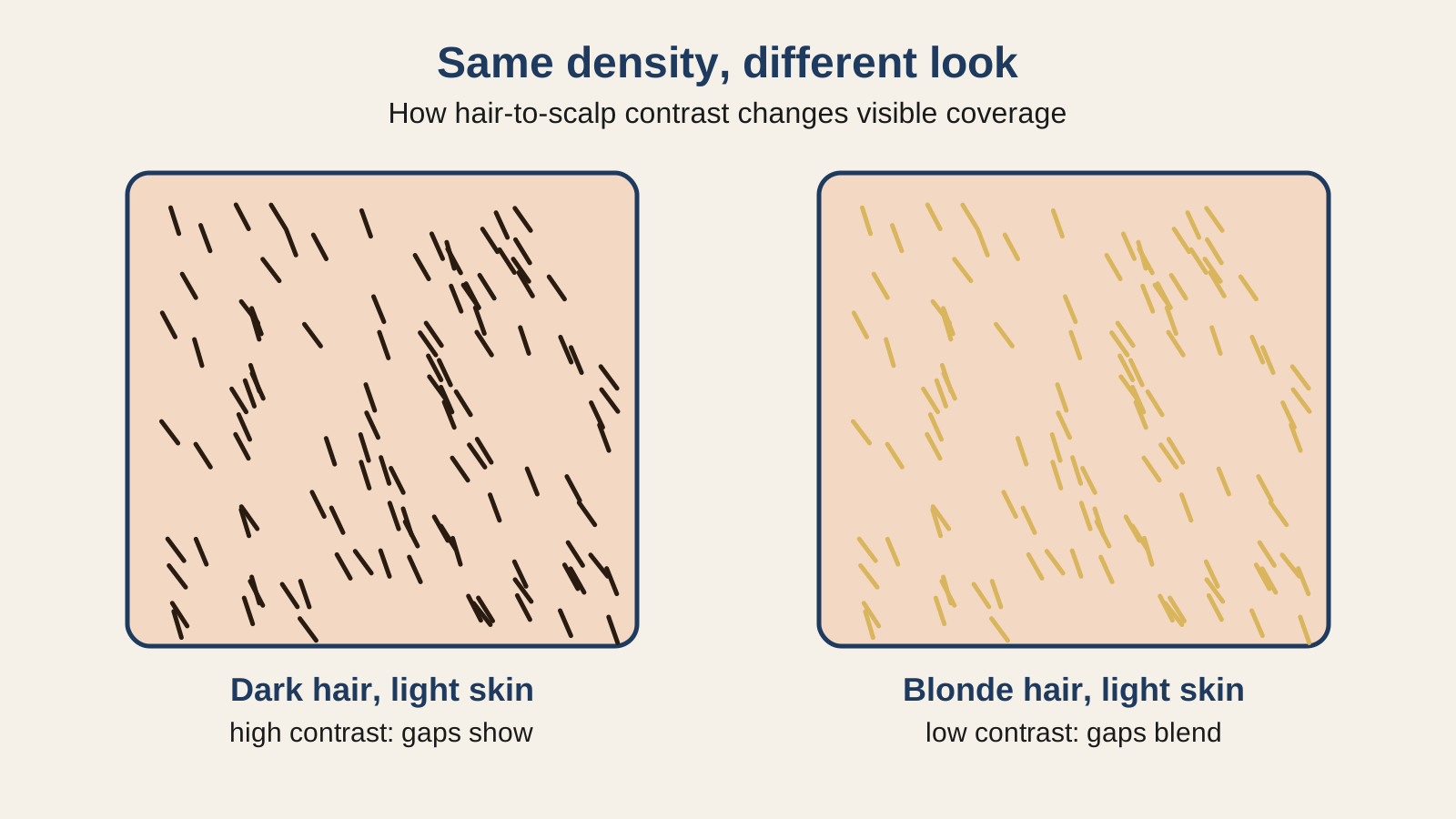
Yes. The procedure moves follicles, and those follicles grow blonde hair in the new area just as dark follicles grow dark hair. Blonde hair transplant results also benefit from contrast. A 2026 article by Park in Clinical, Cosmetic and Investigational Dermatology explains that light hair on light skin lowers hair-to-scalp contrast, so gaps are less visible, while dark hair on light skin makes the scalp stand out.
The same article describes the trade-off. It is about white hair rather than blonde hair, and it is based on clinical experience rather than a controlled study, but the problem is the same: pale hair is hard to see on the skin. We found no study measuring this in blonde patients specifically.
Which Hair Transplant Technique Is Suitable for Blond Hair?
Both main techniques can be used. Park notes that in strip surgery (FUT), dissecting very pale follicles under the microscope is hard without dyeing them first, and that in FUE, low visibility can raise the risk of damaging grafts. Dyeing the hair before surgery is one strategy described. Our FUE hair transplant page explains how FUE grafts are taken.
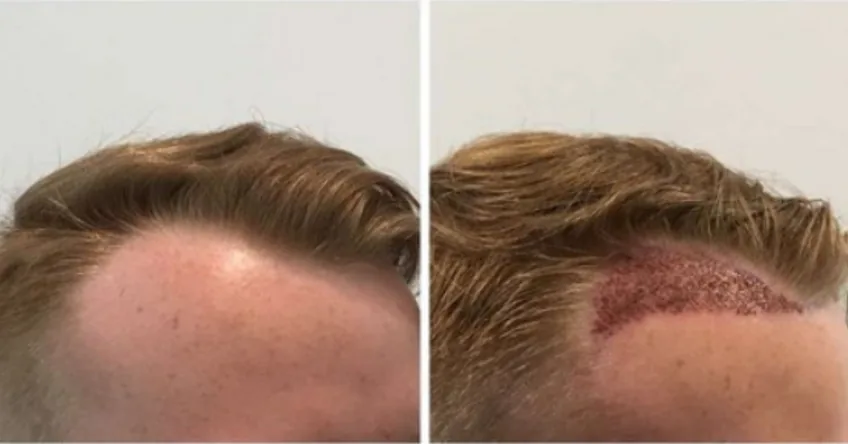
A temple with light-coloured hair before surgery and immediately after grafting. Photo: Adamwilliams34, CC BY 4.0, via Wikimedia Commons, cropped.
The red dots on the right mark where grafts were placed on the day of surgery. This is not the final result: growth takes months, as the timeline below shows.
Can I Have Hair and Beard Transplant at the Same Time?
Sometimes, but it depends on donor supply. Both procedures use donor follicles, and a 2026 review in Frontiers in Medicine lists limiting extraction to 10% to 20% per session as a way to prevent over-harvesting. Our beard transplant page covers that procedure.
Blonde Hair Transplant: How Long Does It Take?
The surgery itself usually lasts 4 to 8 hours, according to the American Academy of Dermatology, and a large session may need a few more hours the next day. Growth takes much longer. The academy explains that transplanted hairs usually fall out between two and eight weeks after surgery, that the area may look thinner by the third month, and that most people see results between six and nine months, with some waiting 12 months.
Stage
Typical timing
Source
Surgery
4 to 8 hours
American Academy of Dermatology
Transplanted hairs shed
2 to 8 weeks after surgery
American Academy of Dermatology
Area may look thinner
Around month 3
American Academy of Dermatology
Most people see results
6 to 9 months
American Academy of Dermatology
Full result
Up to 12 months
Cleveland Clinic
Blonde Hair Transplant: How It Compares
Compared with a transplant in dark hair, the main differences come from colour and contrast:
Coverage: blonde hair on light skin blends with the scalp, so the same number of grafts can look fuller than dark hair on light skin.
Visibility in surgery: pale hair is harder to see, which can make extraction and dissection slower and more demanding.
Growth speed: a 2024 study of preschool children found light hair grew slightly slower than dark hair, 0.325 against 0.352 mm a day. We found no equivalent study in adults.
Graying: a 2025 review notes the highest graying intensities were seen in people with blonde hair, which may matter for long-term planning.
Can Blonde Hair Be Transplanted?
Yes. Hair colour does not decide whether you are a candidate. The American Academy of Dermatology says two things are needed: enough healthy hair on your scalp that can be moved to the area that needs it, and the ability to grow hair in the thinning area. A scalp exam and sometimes a blood test or biopsy help to check both.
The academy also notes that men in their 20s may be asked to wait and start a hair loss medicine first. It adds that a full head of hair may be unrealistic and that a fuller head of hair is a realistic goal.
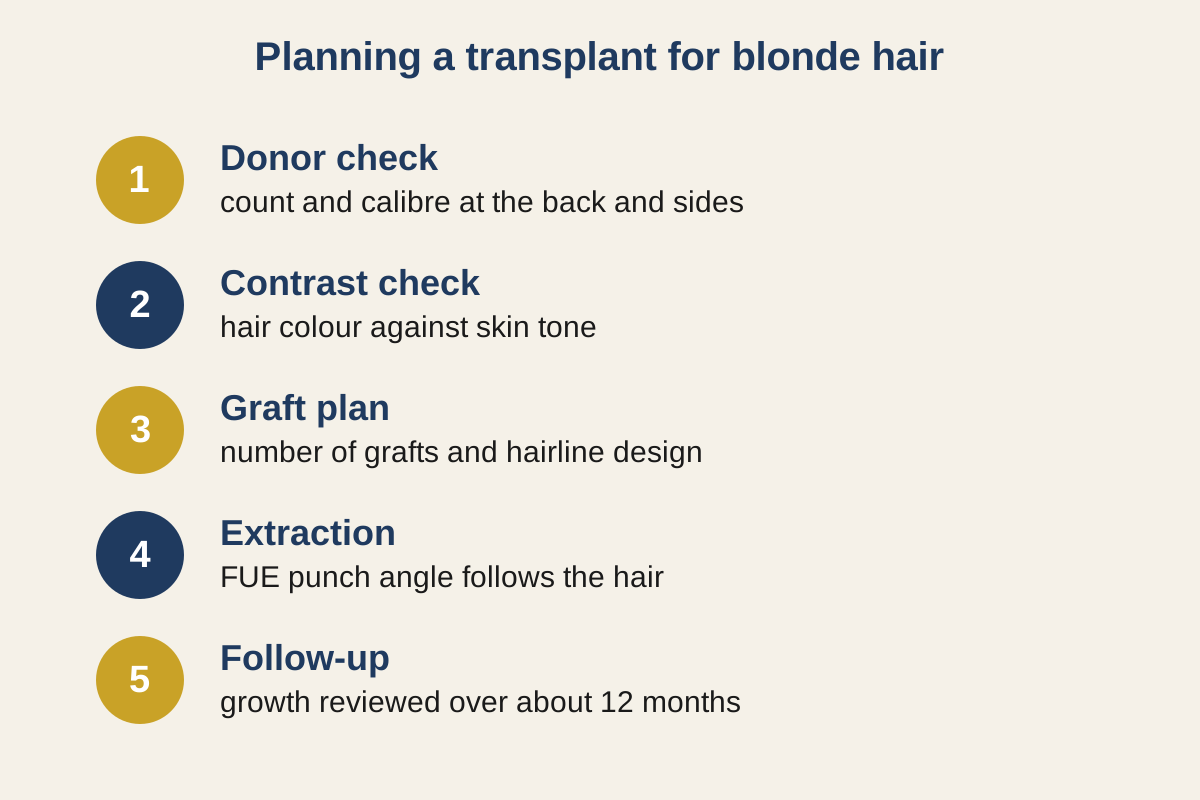
For blonde hair, planning usually follows these steps:
Donor check: count the hairs and measure their thickness at the back and sides.
Contrast check: compare hair colour with skin tone to judge how coverage will look.
Graft plan: set the number of grafts and the hairline design.
Extraction: take each follicle whole, following the angle of the hair.
Follow-up: review growth over about 12 months.
Graft numbers depend on density, not colour. Our guide to how many hairs are on the human head explains donor density. For a common session size, see our page on a 2,000 grafts hair transplant. Questions about 2000 grafts hair transplant results come down to the size of the thinning area and how the hairs are spread across it, so they are best answered after a scalp review.
When to See a Doctor About Blonde Hair Transplant
See a dermatologist before planning surgery if you notice:
sudden or patchy hair loss
heavy shedding that lasts for months
an itchy, painful or scaly scalp
thinning that started after a new medicine
The American Academy of Dermatology notes that an exam, and sometimes a blood test or scalp biopsy, can show why hair is being lost. Finding and treating the cause comes before any decision about surgery.
How Much Does a Blonde Hair Transplant Cost in Turkey?
Hair colour does not change the price. Turkey Hair Center is a Ministry of Health authorized health-tourism intermediary, and procedures take place in authorized partner hospitals. Our all-inclusive packages range from $2,550 to $4,500: Sapphire Prime $2,550, Sapphire Advanced Regrowth $3,000, DHI Comfort $3,350 and Exosapphire Microflow Elite $4,500. Each includes two nights in a hotel, VIP transfers and two years of aftercare advice; flights are not included. Our hair transplant cost page has the details.
Frequently Asked Questions
How Many Hair Transplants Are Successful?
There is no single agreed success figure. A 2026 review in Frontiers in Medicine reports complication rates of 1.2% to 4.7% for FUE. The American Academy of Dermatology notes that results depend largely on the surgeon, so the team's experience matters.
When Was the First Hair Transplant Done?
One of the earliest published reports of scalp hair autografts is Norman Orentreich's 1959 paper in the Annals of the New York Academy of Sciences. The American Academy of Dermatology notes that the large hair plugs of the 1970s and 1980s have given way to moving a few hairs at a time.
Can Blonde People Get Hair Transplants?
Yes. Blonde people can get hair transplants if they have enough healthy donor hair and the thinning area can grow hair. Light hair can be harder to see during surgery, so the team may plan extra steps.
Can Anybody Get a Hair Transplant?
No. The American Academy of Dermatology says you need enough healthy donor hair and the ability to grow hair in the thinning area. A scalp exam, and sometimes tests, show whether you have both.
How Many Actors Have Done Hair Transplant?
There is no reliable count. Many people keep medical procedures private, and we do not speculate about who has or has not had one. Only a person's own public statement confirms it.
Can You Use Donor Hair for a Hair Transplant?
Yes, but it is your own donor hair. The American Academy of Dermatology describes the surgery as moving healthy hairs on your scalp to thinning areas. A 2026 review in Frontiers in Medicine names the back and upper sides of the head as the safe donor area. Hair from another person is not used.
Will I Still Need Hair Loss Medicine After a Transplant?
Possibly. The American Academy of Dermatology explains that hair loss and thinning can continue even after a hair transplant, and that medicine can prevent or slow down new loss. The NHS also notes that your hair might continue to thin around the transplant. Whether you need medicine, and which one, is a decision for your doctor or dermatologist, based on your hair loss pattern and your health.
How Soon Can I Go Back to Work After a Hair Transplant?
It depends on your job and on how you heal. Cleveland Clinic lists days 3 to 5 for returning to work and light activities, and about 3 weeks before going back to exercise or sports. The NHS says you may need 1 to 2 weeks off work and should be very careful with the transplanted hair for the first 2 weeks, because the grafts are not yet secure.
What Side Effects Are Normal After a Hair Transplant?
Cleveland Clinic says side effects are usually temporary and can include crusts or scabs, itching, loss of feeling, pain or throbbing, swelling and tightness. The NHS adds that a tight, achy and swollen scalp for a few days is common. Contact your doctor right away if you have a fever that does not go away, heavy bleeding, severe redness or pain, or pus coming from the cuts.
Thinking About a Transplant With Blonde Hair?
Send clear photos in daylight so the team can see your hair against your scalp:
Medical disclaimer: This article is for informational purposes only and is not medical advice. Individual results and recovery vary from person to person. Always follow the written aftercare plan from your own medical team.
Park JH. White Hair-Induced Increased Scalp Visibility: Clinical Implications for Hair Loss Evaluation and Hair Transplantation. Clinical, Cosmetic and Investigational Dermatology, 2026;19:602144
Send three photos: front, top and sides. You get a technique recommendation, a graft range and a straight answer about what is achievable, before anyone talks about price.
Your details are with the team
A patient coordinator will get back to you shortly. If you would like to send your photos now, WhatsApp is the fastest way to do it.
We respond quickly, day or night, in your language.
Multilingual team, no obligation
Data protectedKVKK and GDPR compliant, 100% confidential
Authorized Health Tourism Intermediary
Turkey Hair Center is the hair-restoration brand of Healthy Way Tourism, an authorized international health-tourism intermediary. All medical procedures are performed by licensed medical professionals at authorized healthcare facilities in Turkiye, in accordance with the regulations of the Ministry of Health.