Performed at authorized partner hospitals Turkey Hair Center is a Ministry of Health authorized health-tourism intermediary, not a clinic.
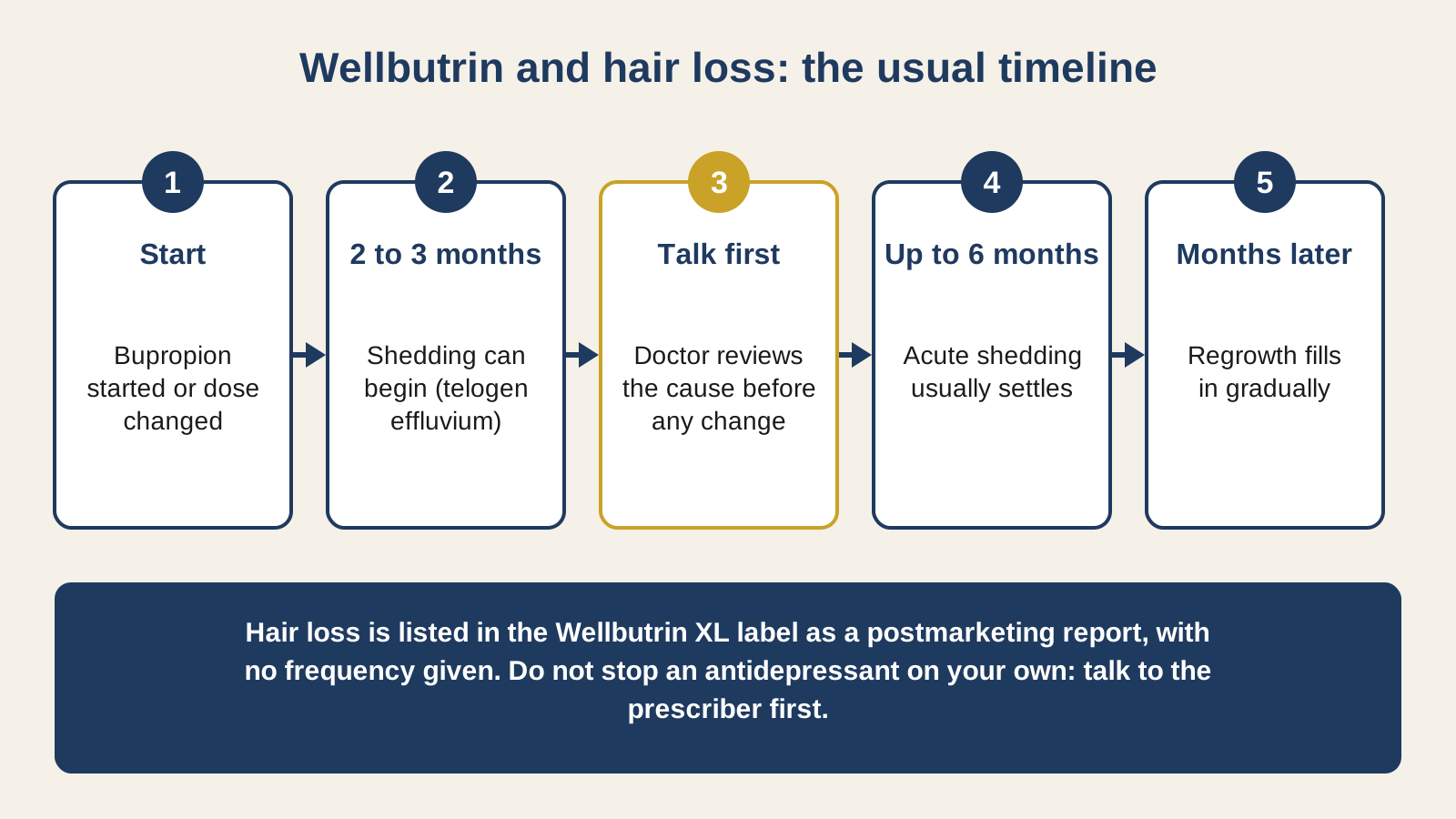
Wellbutrin hair loss is possible but uncommon. Hair loss appears in the Wellbutrin XL label only as a postmarketing report with no frequency, and in a large US claims study bupropion carried a higher hair loss risk than other antidepressants, with one extra case for every 242 people treated for two years.
A box of GlaxoSmithKline's Wellbutrin SR 150 mg tablets with blister strips. Photo: Сергей Фатеев, CC BY-SA 3.0, via Wikimedia Commons, cropped.
The shedding linked to medicines is usually telogen effluvium, a diffuse and temporary shed that starts a few months after a trigger. That timing matters, because depression, stress, weight change and illness can cause the same pattern. This guide covers what the evidence shows about hair loss with Wellbutrin, who seems more vulnerable, how long it lasts and what to discuss with your doctor.
The photo shows a pack of Wellbutrin SR 150 mg with its blister strips. Wellbutrin is the brand name of bupropion, and the label information on hair loss in this guide applies to that active ingredient.
Can Wellbutrin Cause Hair Loss?
Yes, it can, but the link comes from reports and observational data rather than from controlled trials. Wellbutrin is the brand name of bupropion, an antidepressant prescribed for major depression and seasonal affective disorder. The prescribing label lists alopecia under Skin and Subcutaneous Tissue Disorders in section 6.2, Postmarketing Experience.
The label is careful about what that listing means. These reactions are reported voluntarily from a population of uncertain size, so it is not always possible to reliably estimate their frequency or establish a causal relationship to the drug. In other words, the label confirms that cases were reported, not that Wellbutrin causes hair loss in a known share of users.
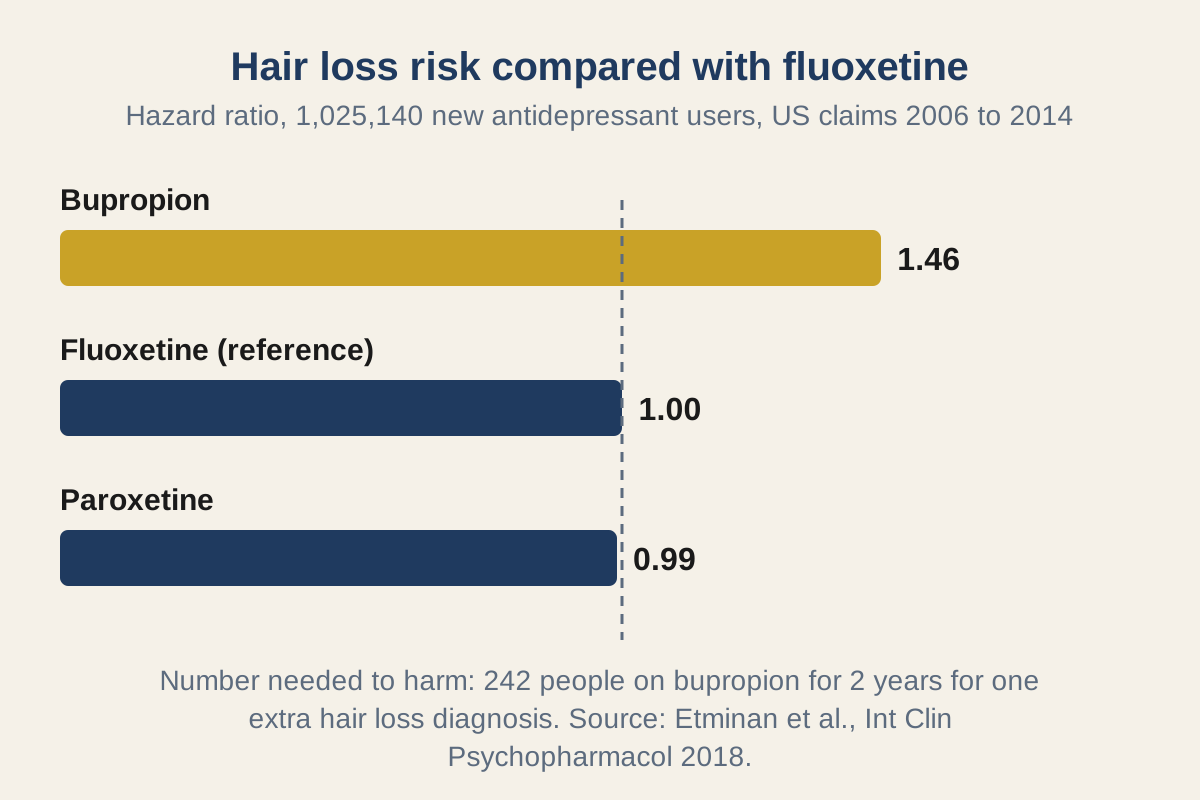
The strongest data comes from a retrospective cohort published in 2018 in the International Clinical Psychopharmacology journal. Researchers followed 1,025,140 new users of ten antidepressants in a US health claims database from 2006 to 2014 until a first diagnosis of alopecia.
Bupropion had the highest risk: compared with fluoxetine, the hazard ratio was 1.46.
The absolute increase was small: 242 people would need to take bupropion for two years for one extra hair loss diagnosis.
Every other antidepressant studied had a lower risk than bupropion, with fluoxetine and paroxetine lowest.
So the honest answer to whether Wellbutrin causes hair loss is that it can be associated with it in some people, the risk looks higher than with common alternatives, and most people taking it will not notice any change in their hair.
Which Patients Are Most Vulnerable?
The research does not give a clear profile. The 2018 cohort did not report results separately for men and women, and the label gives no risk factors for this side effect. What dermatology sources do describe is who tends to shed after any trigger.
People who already have pattern hair loss notice shedding sooner because they have less density to spare. Telogen effluvium can also stack up: weight loss, a recent illness, low iron or a stressful period can all add to the effect of a new medicine. If several of these happened in the same few months, it is hard to say which one started the shed. Stimulants can add to it too, often through appetite and weight loss (Adderall and hair loss).
How to Fix Wellbutrin Hair Loss?
The first step for any Wellbutrin hair loss treatment is a conversation with the prescriber, not a change you make yourself. The American Academy of Dermatology (AAD) says it is essential not to stop taking a medicine before talking with your doctor, because stopping some medicines abruptly can cause serious health problems.
The prescriber can weigh how well the antidepressant is working against the hair change, check other causes with blood tests, and decide whether to continue, adjust or switch. A dermatologist can confirm the type of hair loss with a scalp exam.
Is Hair Loss a Side Effect of Wellbutrin?
It is a listed but unquantified one. Among Wellbutrin hair loss side effects, alopecia sits next to hirsutism (unwanted hair growth), rash and other skin reactions in the postmarketing section of both the Wellbutrin XL and the Wellbutrin SR labels. Neither label gives a percentage, because the reports did not come from a counted group of patients.
Bupropion hair loss side effects are better explained by the type of shedding involved. A 2020 review of telogen effluvium in the journal Cureus lists drugs, including antidepressants, among its triggers. In telogen effluvium a larger share of follicles than usual moves into the resting phase at the same time, and those hairs fall out together about two to three months later.
Weight loss is a second route worth knowing about. The Wellbutrin XL label reports that in the seasonal depression trials, which lasted up to six months, 23% of people on bupropion lost 5 lb or more, against 11% on placebo. In the sustained-release depression trials, 14% to 19% lost more than 5 lb, against 6% on placebo. The AAD lists significant weight loss among the common triggers of excessive shedding.
Source
What it says about hair
Frequency given?
Wellbutrin XL label
Alopecia in postmarketing reports
No
Wellbutrin SR label
Alopecia in postmarketing reports
No
Lexapro (escitalopram) label
Alopecia in postmarketing reports
No
Etminan cohort, 2018
Bupropion had the highest hair loss risk of 10 antidepressants
Hazard ratio 1.46 vs fluoxetine
Telogen effluvium review, 2020
Antidepressants among drug triggers of diffuse shedding
No
Searches for Wellbutrin XL side effects hair loss and Wellbutrin side effects in females hair loss come up often. On sex differences, there is no published comparison: the cohort study did not split its results by sex, so any claim that women are at higher risk is not backed by that data.
Do not stop or cut down an antidepressant on your own because of hair shedding. The Wellbutrin XL label tells prescribers to taper the dose when treatment ends, and the AAD warns that stopping some medicines abruptly can cause serious health problems. Bring photos and dates to your prescriber instead.
Does Wellbutrin Hair Loss Stop?
In most cases medication-related shedding is temporary. The 2020 Cureus review describes acute telogen effluvium as lasting less than six months, and the AAD says that when a trigger is removed, hair usually starts to look normal again within six to nine months.
Hair loss after stopping Wellbutrin is a common worry, and the timeline explains why it can seem to continue. Because hairs are released two to three months after the trigger, shedding can carry on for weeks after a medicine change. Daily loss of 50 to 100 hairs is normal according to the AAD, so the target is a return to that range rather than to zero.
Shedding past six months: ask for a dermatology review, because the loss may be chronic or have another cause.
Thinning in a pattern at the temples, crown or parting: this suggests androgenetic alopecia, which a medicine change will not reverse.
Patches, redness, scale or pain: these point to a scalp condition that needs examination.
Regrowth is gradual. New hairs start short, so the scalp can look thin for months even after the shedding has stopped. Many people judge progress best with photos taken in the same light every few weeks.
Wellbutrin Xl vs Sr Hair Loss
Wellbutrin XL and Wellbutrin SR contain the same active ingredient, bupropion hydrochloride. The difference is how the tablet releases it: SR is sustained release and is usually taken more than once a day, while XL is extended release and is taken once a day. The dose and schedule are set by the prescriber.
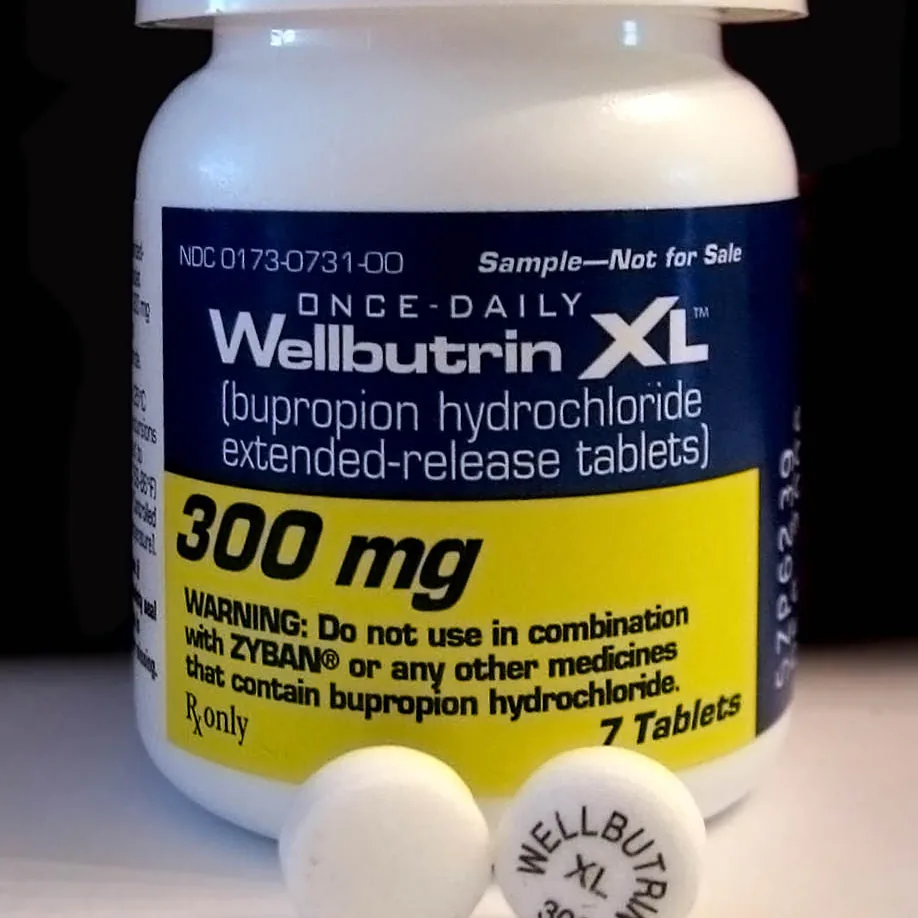
A bottle of Wellbutrin XL 300 mg (bupropion hydrochloride extended-release tablets) with two tablets. Photo: Ragesoss, public domain, via Wikimedia Commons, cropped.
This is the once-daily XL form, labelled as bupropion hydrochloride extended-release tablets. Compare it with the SR pack at the top of this page: the active ingredient is the same, only the release profile differs.
Both labels list alopecia in the same way, as a postmarketing report with no frequency. No study has compared hair loss between the two forms, so there is no evidence that switching from one to the other changes the risk. Any change of formulation should be planned with the prescriber.
Lexapro vs Wellbutrin hair loss is another frequent comparison. Lexapro (escitalopram) is an SSRI, and its label also lists alopecia among postmarketing reports. In the 2018 cohort, every antidepressant studied, escitalopram included, had a lower hair loss risk than bupropion. That does not make Lexapro the right choice for everyone, since the two medicines work differently and have different side effect profiles.
Wellbutrin Hair Thinning
Wellbutrin hair thinning usually means diffuse loss of density across the whole scalp, with more hair in the shower drain and on the pillow. That fits telogen effluvium. It looks different from pattern hair loss, which thins in specific places such as the temples and crown in men or a widening parting in women.
Telling the two apart matters, because they behave differently. A shed caused by a trigger tends to recover once the trigger is gone. Pattern hair loss is gradual and progressive, and a shed can make an existing pattern easier to see for the first time. When both are present, the shed may settle while the pattern stays.
A dermatologist can check this with a pull test, a look at the scalp under magnification and, when needed, blood tests. Common checks for diffuse shedding include iron stores and thyroid function, because these can cause or add to the same pattern. Our guide to the reasons for hair loss explains these other triggers, and the vitamins for hair loss guide covers which deficiencies are linked to shedding.
If the thinning is in a male pattern, the Norwood scale gives a common language for describing it. That is useful when you talk to a doctor, because it separates a short-term shed from long-term pattern loss.
Bupropion Hair Loss
Bupropion and hair loss are discussed together because bupropion is the generic name of Wellbutrin. The same active ingredient is sold under other brand names and as generic tablets, so the information above applies to generic bupropion in its SR and XL forms too.
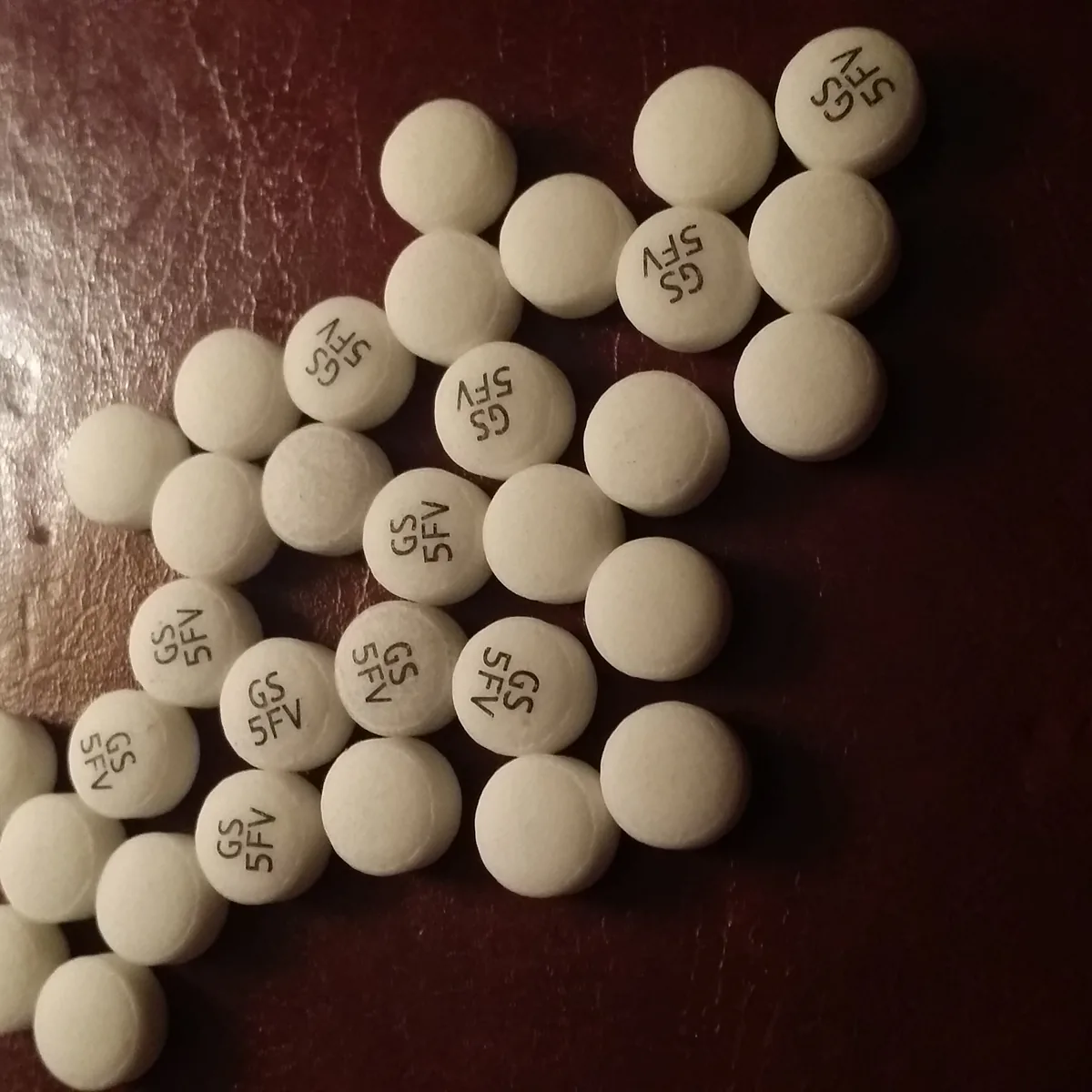
Bupropion 150 mg extended-release tablets sold under the brand name Elontril. Photo: Tery-butyl, CC BY-SA 4.0, via Wikimedia Commons, cropped.
These tablets are bupropion sold under another brand name, Elontril. Whatever name is on the pack, the active ingredient is the same, so the advice to raise any shedding with the prescriber applies equally.
Frequently Asked Questions
Is Hair Loss From Wellbutrin Reversible?
Usually, yes. Hair loss linked to medicines is most often telogen effluvium, which does not damage the follicle. The AAD says hair usually looks normal again within six to nine months after the trigger stops. Shedding that lasts longer, or thinning in a pattern, should be checked by a dermatologist.
How Long Does Wellbutrin Hair Loss Last?
Acute telogen effluvium usually lasts less than six months, according to a 2020 review in Cureus. Because hairs fall two to three months after the trigger, shedding can continue for a while after any change in treatment. Regrowth then takes several more months to fill in.
How to Reverse Wellbutrin Hair Loss?
Start with the prescriber, who can review whether bupropion is the likely cause and whether to continue, adjust or switch. Do not stop the medicine yourself. A dermatologist can rule out iron deficiency, thyroid problems and pattern hair loss, which need their own treatment.
What to Do About Wellbutrin Hair Loss?
Note when the shedding began and what changed in the three months before it, such as a new medicine, weight loss or illness. Take dated photos of the parting and crown. Then book an appointment with the prescriber and, if shedding continues, a dermatologist.
Does Wellbutrin Hair Loss Go Away?
In most people it does. Telogen effluvium is self-limiting once the trigger is dealt with, and new hair grows back from the same follicles. If the shed continues beyond six months, it may be chronic telogen effluvium or another type of hair loss that needs a diagnosis.
Is Wellbutrin Hair Loss Permanent?
There is no evidence that bupropion causes permanent hair loss. Telogen effluvium leaves the follicles intact. Permanent loss is more likely to come from pattern hair loss or a scarring condition that happens to show up at the same time, which is why ongoing thinning deserves a dermatology review.
Is Wellbutrin Hair Loss Temporary?
Yes, in the typical case. The pattern linked to medicines is a temporary shift of follicles into the resting phase. Hair usually recovers within months once the cause is addressed. The label gives no data on how long reported cases lasted, so individual timelines vary.
When Does Wellbutrin Hair Loss Start?
Telogen effluvium usually becomes visible about two to three months after a trigger, according to the 2020 Cureus review. So shedding that began in the first few days of treatment is less likely to be caused by the medicine itself and may have started from an earlier event.
Which Antidepressants Are Most Likely to Cause Hair Loss?
In a 2018 US cohort of 1,025,140 new users of ten antidepressants, bupropion had the highest risk of an alopecia diagnosis. All the others had a lower risk than bupropion; fluoxetine and paroxetine were lowest, and fluvoxamine was highest among the rest. The study was observational, so it shows an association rather than proof that a drug caused the loss.
Is There a Wellbutrin Alternative That Doesn't Cause Hair Loss?
No antidepressant can be called free of this risk. In the 2018 cohort the others had a lower risk than bupropion, but a lower risk is not zero; the Lexapro (escitalopram) label, for example, also lists alopecia among postmarketing reports. Choosing an antidepressant depends on far more than hair, so the decision belongs with your prescriber.
How Can You Stop Hair Falling Out While Taking Bupropion?
We found no study testing a treatment that prevents shedding linked to bupropion. The practical steps are to tell your prescriber, not to stop the medicine yourself, and to ask about blood tests for iron and thyroid problems. The AAD lists weight loss and stress among shedding triggers and says hair tends to regain its fullness within six to nine months.
What Are the Most Common Side Effects of Wellbutrin?
The Wellbutrin XL label lists the most common adverse reactions as dry mouth, nausea, insomnia, dizziness, pharyngitis, abdominal pain, agitation, anxiety, tremor, palpitation, sweating, tinnitus, myalgia, anorexia, urinary frequency and rash. It also carries a boxed warning about suicidal thoughts and behaviors and warns about seizure risk. Hair loss is not among the most common reactions.
Worried About Thinning? Get a Second Opinion
If shedding has settled but your hair still looks thinner than before, the question is often whether a pattern of permanent loss sits underneath. Send clear photos of your hairline and crown for a free hair analysis, and the medical team will tell you whether you are looking at temporary shedding or long-term pattern loss. Turkey Hair Center is a Ministry of Health authorized health-tourism intermediary; procedures take place at authorized partner hospitals.
Medical disclaimer: This article is for informational purposes only and is not medical advice. Individual results and recovery vary from person to person. Always follow the written aftercare plan from your own medical team.
Send three photos: front, top and sides. You get a technique recommendation, a graft range and a straight answer about what is achievable, before anyone talks about price.
Your details are with the team
A patient coordinator will get back to you shortly. If you would like to send your photos now, WhatsApp is the fastest way to do it.
We respond quickly, day or night, in your language.
Multilingual team, no obligation
Data protectedKVKK and GDPR compliant, 100% confidential
Authorized Health Tourism Intermediary
Turkey Hair Center is the hair-restoration brand of Healthy Way Tourism, an authorized international health-tourism intermediary. All medical procedures are performed by licensed medical professionals at authorized healthcare facilities in Turkiye, in accordance with the regulations of the Ministry of Health.