How to Thicken Hair Naturally: Home Remedies & Causes
Performed at authorized partner hospitals Turkey Hair Center is a Ministry of Health authorized health-tourism intermediary, not a clinic.
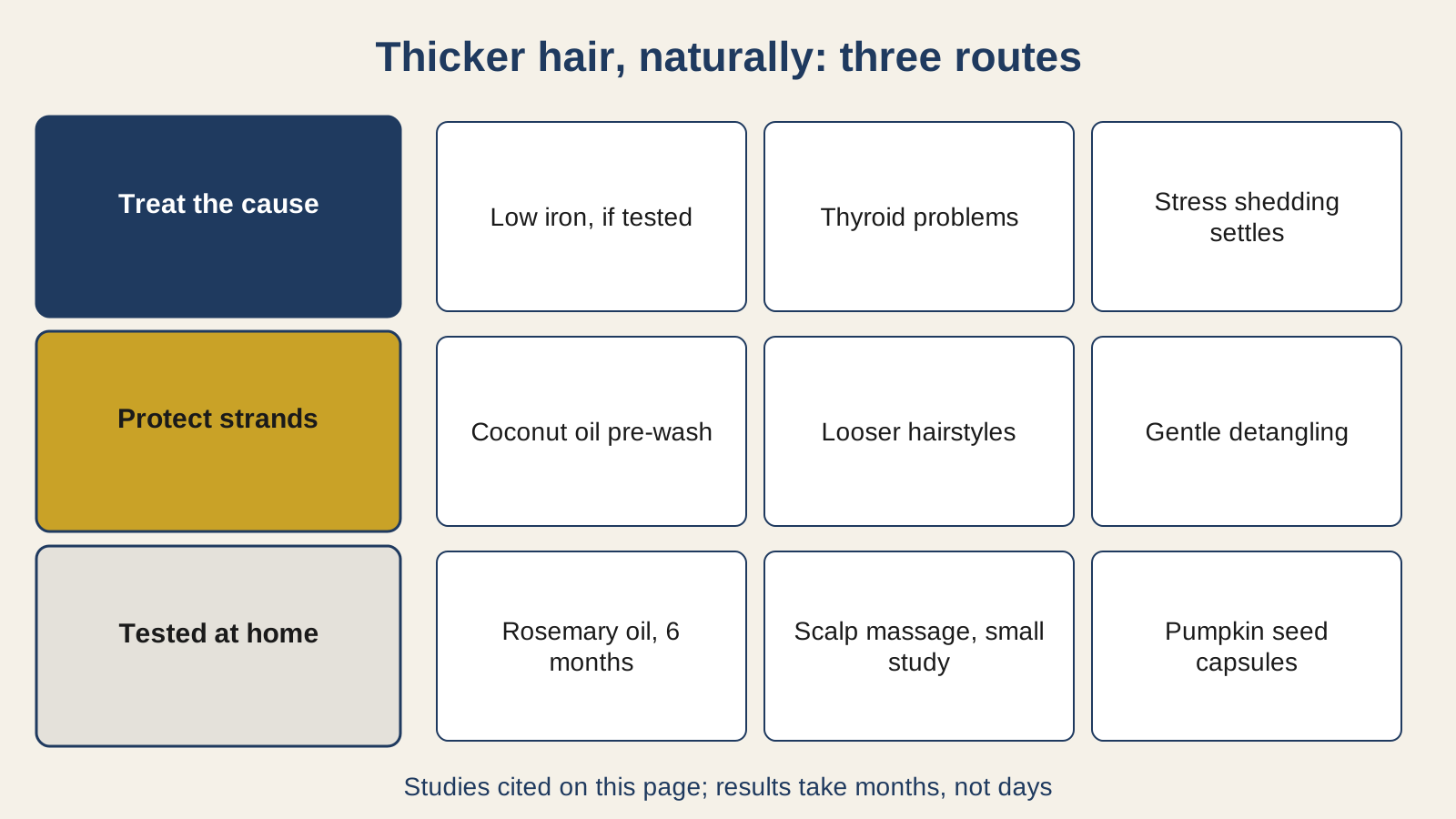
The most reliable way to thicken hair naturally is to find and fix what is thinning it, such as low iron, stress shedding or tight hairstyles, and then protect the strands you have from breaking. A few home methods, including rosemary oil and daily scalp massage, have small studies behind them, but they work over months, not days.
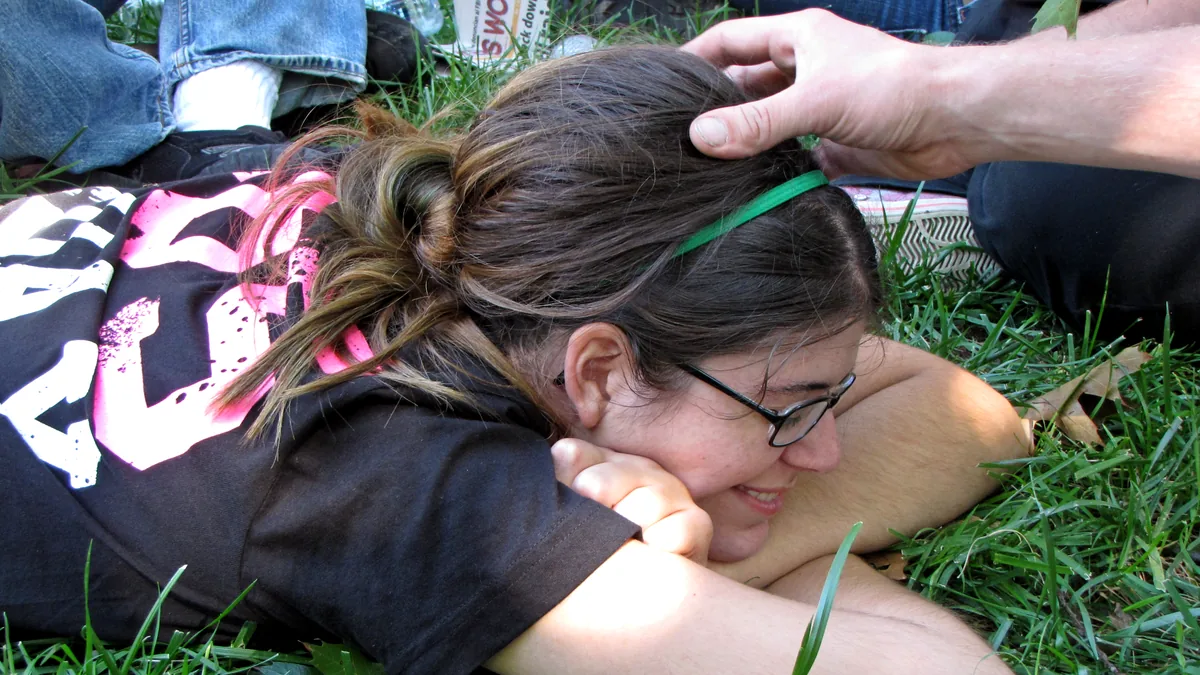
A woman receiving a head massage. Photo: Ben Schumin from Montgomery Village, Maryland, USA, CC BY-SA 2.0, via Wikimedia Commons, cropped.
How to thicken your hair naturally depends on why it is thin. Some people are born with fine hair, some are shedding after illness or childbirth, and some have pattern hair loss that keeps progressing. This guide covers the causes, the home remedies that have been tested and those that have not, what to do when nothing works, and when thin hair can become thick again.
A head massage like this one costs nothing. The study described below used a massage device for 4 minutes a day over 24 weeks, and the change it found in hair thickness was small.
What Causes Thin Hair?
Hair grows in cycles. Each scalp hair has a long growing phase, called anagen, that lasts 2 to 8 years, then a short transition and a resting phase of 2 to 3 months before it falls out. A 2023 review notes that losing about 100 to 150 hairs a day is normal. Thinning happens when more hairs leave the growing phase at once, or when new hairs grow back finer.
The American Academy of Dermatology lists many causes of hair loss. The most common ones behind thinning are:
Pattern hair loss: inherited and driven by the hormone DHT, which shortens the growing phase over time. Our DHT and hair loss guide explains how.
Shedding after a shock: childbirth, illness, an operation or a stressful time can trigger heavy shedding a few months later.
Low nutrients: too little biotin, iron, protein or zinc can cause noticeable hair loss.
Tight hairstyles: hair pulled back tightly over and over can lead to permanent loss, called traction alopecia.
Hormone changes: stopping some birth control pills can cause temporary loss, and pattern loss in women is more common after menopause.
Hair pulling: some people pull their hair, often to relieve stress.
Some people simply have fine hair by nature. Fine strands can look thin even when the number of hairs on the scalp is normal, and our guide to hair types explains the differences. For a fuller list of triggers, read about the reasons for hair loss.
How to Thicken Hair Naturally at Home?
Natural products to thicken hair fall into two groups: those that may help the scalp grow more or thicker hairs, and those that only make existing strands look better. To explain how to thicken hair naturally using proven home remedies, we list only methods with a published study, and we say plainly where there is none.
Method
What was tested
Result
Rosemary oil on the scalp
100 people with pattern loss, 6 months, vs minoxidil 2%
Similar hair count gain in both groups
Daily scalp massage
9 men, 4 minutes a day, 24 weeks
Hair strands slightly thicker
Pumpkin seed oil capsules
76 men, 24 weeks, vs placebo
Hair count +40% vs +10%
Coconut oil before washing
Lab test on hair
Less protein loss from the hair
Egg, olive oil and castor oil masks
No growth trial found
Cosmetic only
Home Remedies for Hair Thickness
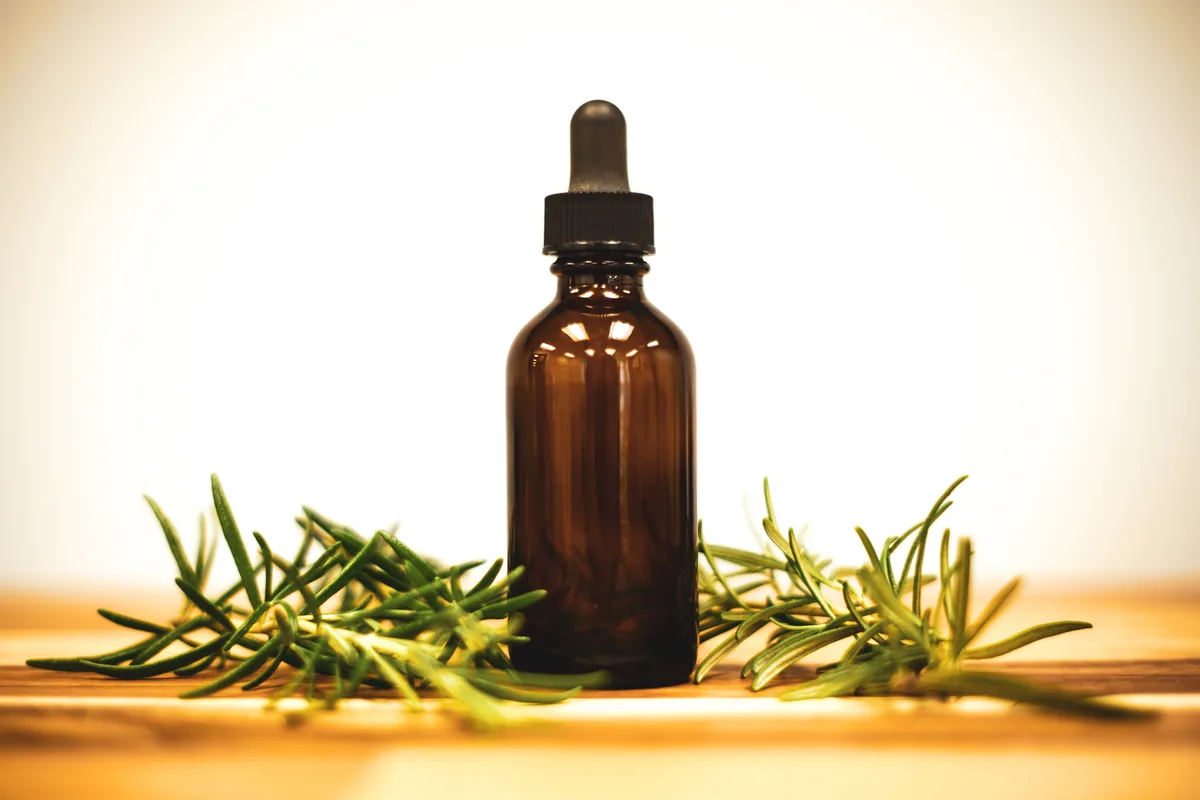
Rosemary oil is the home remedy with the best evidence. In a 2015 trial, 100 people with pattern hair loss used rosemary oil or minoxidil 2% on the scalp. Neither group changed at 3 months, and both had more hair at 6 months. Essential oils must be mixed into a carrier oil, and the oils for hair growth guide covers how.
Rosemary oil in a bottle next to fresh rosemary. Photo: formulatehealth, CC BY 2.0, via Wikimedia Commons, cropped.
The trial did not test a home-made mix, so the result applies to the product used in that study. Follow the dilution printed on the label of any rosemary oil you buy.
Scalp massage is free and low risk. In a small 2016 study, 9 healthy men who used a scalp massage device for 4 minutes a day for 24 weeks had slightly thicker hairs at the end; average hair thickness rose from 0.085 mm to 0.092 mm. A 2019 survey found that 68.9% of people doing daily massage reported their hair loss had stabilised or improved, but a survey cannot show cause and effect.
Egg Masks for Stronger Hair
Egg masks are one of the most shared remedies, but we found no published trial of egg masks for hair thickness or growth. Eggs are a source of protein in the diet, and protein matters for hair, which may be why the idea spread. A mask on the hair, though, does not feed the follicles under the skin.
If you like how an egg mask leaves your hair feeling, any benefit is cosmetic and lasts until the next wash. Rinse with cool water so the egg does not set in the hair, and skip it if you are allergic to eggs.
Olive Oil to Moisturize Scalp
Olive oil is often suggested for a dry scalp. We found no trial showing that it thickens hair. In a mouse study of oils on the skin, olive oil actually slowed the repair of the skin barrier, while sunflower oil helped. That does not mean olive oil harms everyone's scalp, but it is a reason to patch test it first.
For dry hair rather than a dry scalp, coconut oil has better data: a 2003 lab study found it reduced protein loss from hair when applied before or after washing, while sunflower and mineral oil did not.
Castor Oil to Support Hair Health
Castor oil is popular for thicker hair and brows. A 2022 review of 22 studies found weak evidence that it improves hair shine and no good evidence that it grows hair. It is also very thick: a case report described long hair that matted into a hard mass after a castor and coconut oil treatment and had to be cut off.
If you use it, mix a small amount with a lighter oil, apply it to the lengths and comb it through gently.
What to Do If These Don't Work?
If home methods have not helped after several months, the next step is a diagnosis. A GP or dermatologist can check for iron deficiency, thyroid problems and patterns of loss that point to a specific cause. A 2019 review recommends iron supplementation for people with pattern loss or shedding who have low iron, but found no support for biotin or vitamin E supplements in these conditions.
More is not better with supplements. The same review notes that too much vitamin A can cause hair loss, as can too much selenium, and that high-dose biotin can give false results on blood tests. Our guide to the best vitamins for hair loss explains when testing makes sense, and our collagen for hair growth guide covers what that supplement can and cannot do.
See a doctor if your hair loss is sudden, comes out in patches, or comes with a sore, red or scaly scalp. Do not start high-dose vitamins or minerals without a blood test, because some of them cause hair loss when taken in excess.
How Therapy May Help Hair Thinning?
When stress is behind the shedding, the American Academy of Dermatology notes that the shedding stops once the stress ends and the body readjusts. If hair loss is causing you distress, the NHS says your GP may be able to arrange counselling.
When thinning comes from pulling out your own hair, a condition called trichotillomania, the NHS says it is commonly treated with a type of cognitive behavioural therapy called habit reversal training. This can include keeping a diary of pulling, finding triggers and replacing pulling with another action.
How to Make Your Hair Thicker Naturally?
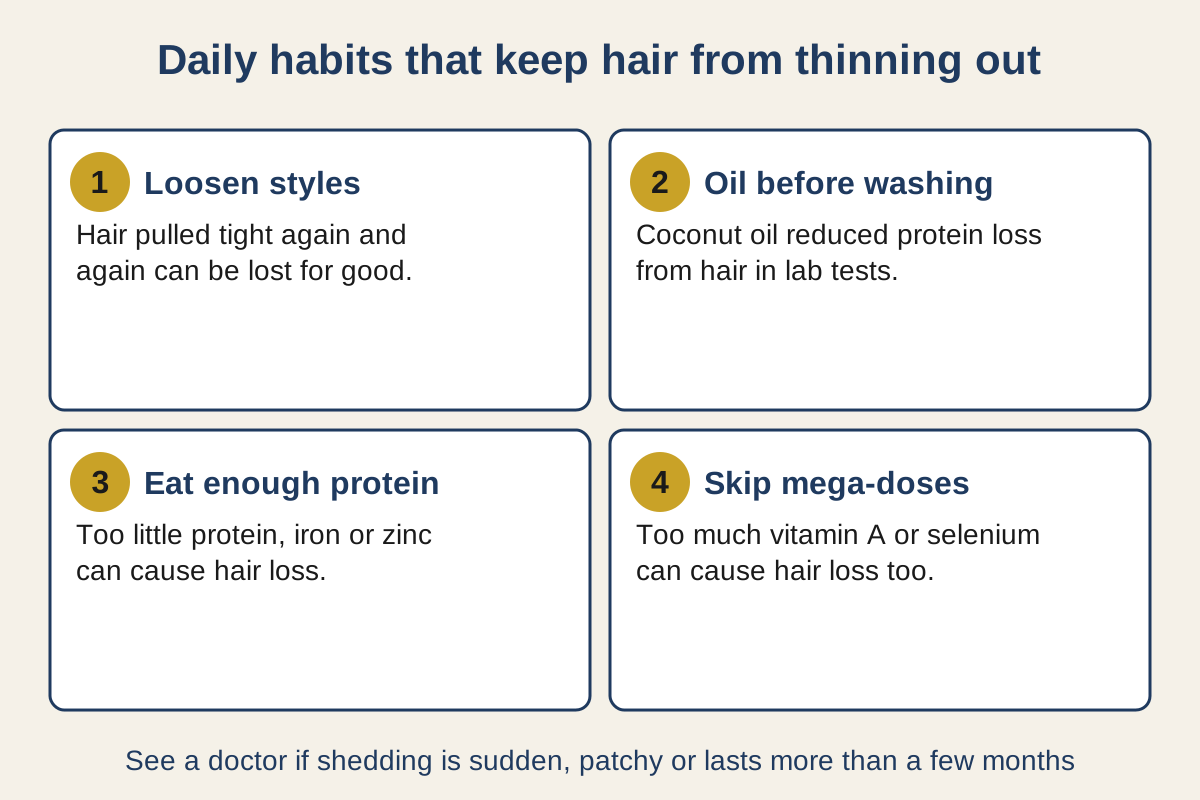
Making hair look thicker naturally is mostly about keeping the hairs you already have. These habits are low cost and supported by the sources above:
Loosen your hairstyles. Tight ponytails, braids and buns worn every day can cause permanent traction loss.
Treat your hair gently. Detangle slowly from the ends rather than pulling a brush through knots from the root.
Oil before washing. Coconut oil before shampoo reduced protein loss from hair in lab tests.
Eat enough protein and iron. Shortages of these are among the listed causes of hair loss.
Massage your scalp daily. A few minutes a day is safe and had a small effect on strand thickness.
Give it time. Hair follows its cycle, so judge changes over 3 to 6 months.
If your hair is dry or breaks easily, it may help to know how it absorbs water; our hair porosity guide explains how to test it at home.
Can Thin Hair Become Thick Again?
Sometimes. Whether it can depends on the cause. Shedding after stress, illness or childbirth usually settles on its own, and the NHS notes that hair loss caused by a medical condition usually stops or grows back once you have recovered. Pattern hair loss is different: it tends to progress, and natural methods may slow it at best.
When Hair Loss Is Reversible?
Hair loss is often reversible when the follicles are still alive and the trigger is removed:
Shedding after childbirth, illness or stress, once the trigger has passed.
Loss from low iron or protein, once the shortage is corrected.
Temporary loss after stopping some types of birth control pills.
Hair loss during chemotherapy, which usually starts to regrow within months of finishing.
Not every loss comes back. For traction alopecia caused by years of tight hairstyles, the American Academy of Dermatology says regrowth is not possible, but further loss can be prevented by changing how you wear your hair.
When thinning is caused by pattern hair loss, natural methods have limits. A 2024 review notes that only finasteride and minoxidil are FDA-approved for it, and both are used under medical guidance. You can see how male pattern loss progresses on the Norwood scale.
When a doctor confirms that loss is advanced and stable, a hair transplant moves follicles from the back of the scalp to thinning areas. Turkey Hair Center is a Ministry of Health authorized health-tourism intermediary, and procedures take place in authorized partner hospitals. Women can read about hair transplant for women and who is a candidate.
Frequently Asked Questions
How to Thicken Hair Naturally in a Month?
A month is too short for real change. Scalp hair grows about 0.35 mm a day, roughly 1 cm a month, and trials of rosemary oil saw no difference at 3 months. In a month, you can start good habits and stop the things that cause breakage.
How to Thicken Hair Naturally in a Week?
You cannot grow thicker hair in a week. In 7 days, hair grows only about 2.5 mm. What you can do is reduce breakage, loosen tight styles and see a doctor if shedding is heavy. Any product promising thicker hair in a week is describing a cosmetic effect.
How to Thicken Hair Naturally After Menopause?
A 2026 systematic review found that female pattern hair loss and another condition called frontal fibrosing alopecia are strongly linked to the years after menopause. Because these need a diagnosis, see a dermatologist before relying on home remedies. Gentle care and enough protein and iron still help.
How to Thicken Hair Naturally Black Woman?
A 2026 review of Afro-textured hair notes that dryness and breakage are the most common concerns, and that some long-term protective styles raise the risk of traction alopecia. Keep braids and weaves loose, wash regularly with suitable products, and see a dermatologist early if your edges thin.
How to Thicken Hair Naturally Women Permanently?
No natural method gives permanent results. Shedding from a temporary cause can recover fully, but pattern hair loss tends to continue over time. Home habits help protect the hair you have; for lasting change in pattern loss, talk to a dermatologist about your options.
How to Get Longer Thicker Hair Naturally?
Hair grows about 1 cm a month, so longer hair comes from keeping the ends from breaking. Detangle gently, avoid tight styles and harsh treatments, and use a little oil on dry lengths. Thickness at the root depends on the follicles, which is where the causes above come in.
How to Thicken Hair Fast?
There is no fast natural way to grow thicker hair, because new hair grows only about 1 cm a month. For real change, find the cause of thinning and give any method at least 3 to 6 months.
How to Make Hair Thicker and Fuller Naturally Home Remedies?
The home remedies with the most support are rosemary oil on the scalp and daily scalp massage, both in small studies over months. Coconut oil before washing helps reduce damage. Egg, olive oil and castor oil masks have no growth trials.
Is Your Hair Still Thinning?
If you have tried natural methods for months and your hairline or crown still looks thinner, the pattern of loss can tell you a lot. Send clear photos for a free hair analysis, and the medical team will tell you what they see and what your options are.
Medical disclaimer: This article is for informational purposes only and is not medical advice. Individual results and recovery vary from person to person. Always follow the written aftercare plan from your own medical team.
Sources and medical review
Natarelli N, Gahoonia N, Sivamani RK. Integrative and mechanistic approach to the hair growth cycle and hair loss. Journal of Clinical Medicine, 2023;12(3):893
Koyama T, Kobayashi K, Hama T, Murakami K, Ogawa R. Standardized scalp massage results in increased hair thickness by inducing stretching forces to dermal papilla cells in the subcutaneous tissue. Eplasty, 2016;16:e8
English RS, Barazesh JM. Self-assessments of standardized scalp massages for androgenic alopecia: survey results. Dermatology and Therapy, 2019;9(1):167-178
Cho YH, Lee SY, Jeong DW, et al. Effect of pumpkin seed oil on hair growth in men with androgenetic alopecia: a randomized, double-blind, placebo-controlled trial. Evidence-Based Complementary and Alternative Medicine, 2014;2014:549721
Rele AS, Mohile RB. Effect of mineral oil, sunflower oil, and coconut oil on prevention of hair damage. Journal of Cosmetic Science, 2003;54(2):175-192
Darmstadt GL, Mao-Qiang M, Chi E, et al. Impact of topical oils on the skin barrier: possible implications for neonatal health in developing countries. Acta Paediatrica, 2002;91(5):546-554
Phong C, Lee V, Yale K, Sung C, Mesinkovska N. Coconut, castor, and argan oil for hair in skin of color patients: a systematic review. Journal of Drugs in Dermatology, 2022;21(7):751-757
Bin Rubaian NF, Alzamami HFA, Amir BA. An overview of commonly used natural alternatives for the treatment of androgenetic alopecia, with special emphasis on rosemary oil. Clinical, Cosmetic and Investigational Dermatology, 2024;17:2495-2503
Van Neste D. Thickness, medullation and growth rate of female scalp hair are subject to significant variation according to pigmentation and scalp location during ageing. European Journal of Dermatology, 2004;14(1):28-32
Send three photos: front, top and sides. You get a technique recommendation, a graft range and a straight answer about what is achievable, before anyone talks about price.
Your details are with the team
A patient coordinator will get back to you shortly. If you would like to send your photos now, WhatsApp is the fastest way to do it.
We respond quickly, day or night, in your language.
Multilingual team, no obligation
Data protectedKVKK and GDPR compliant, 100% confidential
Authorized Health Tourism Intermediary
Turkey Hair Center is the hair-restoration brand of Healthy Way Tourism, an authorized international health-tourism intermediary. All medical procedures are performed by licensed medical professionals at authorized healthcare facilities in Turkiye, in accordance with the regulations of the Ministry of Health.