Performed at authorized partner hospitals Turkey Hair Center is a Ministry of Health authorized health-tourism intermediary, not a clinic.
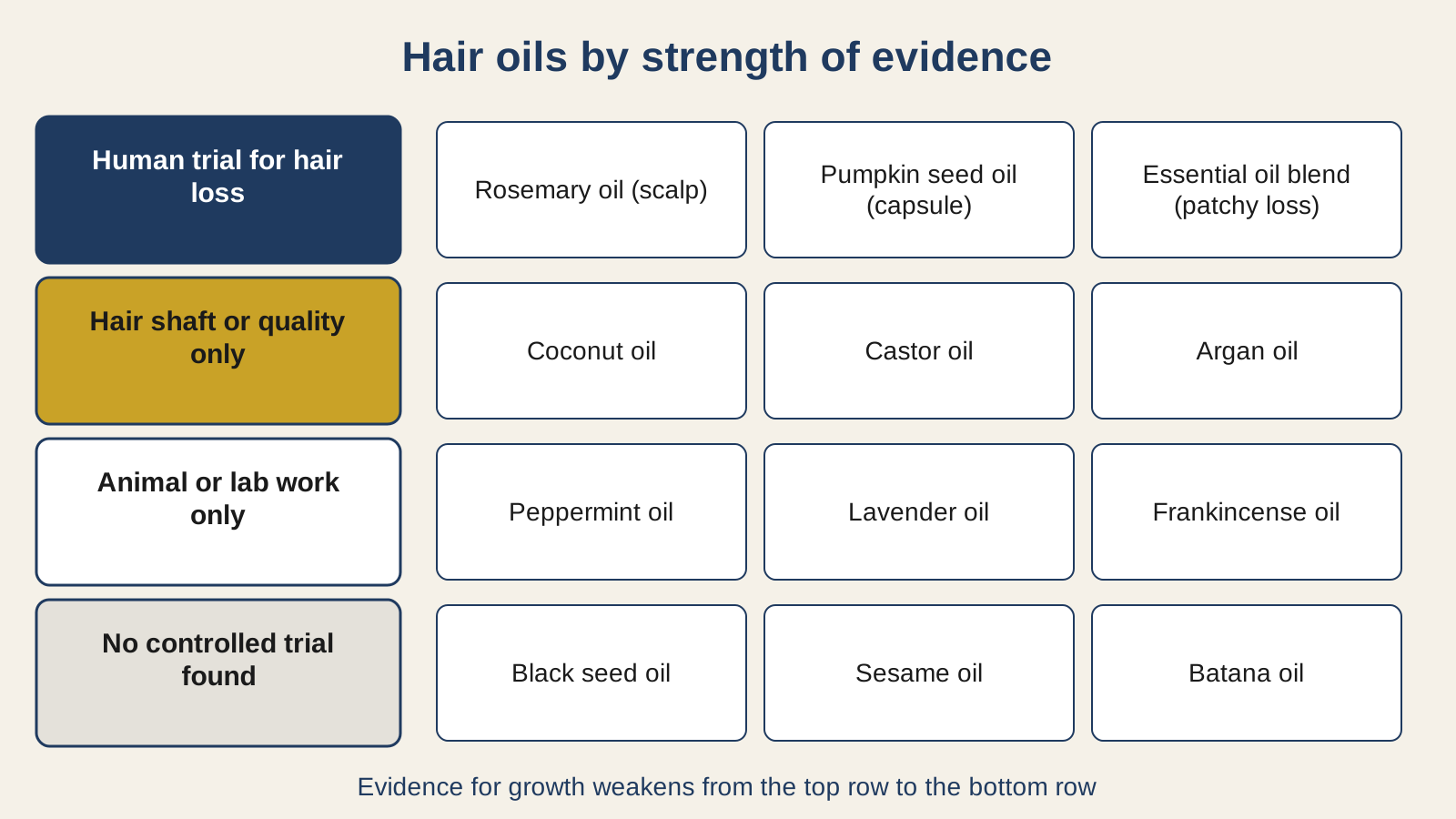
Only two oils for hair growth have a human trial behind them: rosemary oil rubbed into the scalp and pumpkin seed oil taken as a capsule. Coconut, castor and argan oil can make the hair shaft look and feel better, but they have no good evidence for growing new hair.
Most other popular oils, from black seed to batana, have animal or lab data at best, or no controlled trial at all. This guide goes oil by oil, says what each study actually measured, and explains how to use an oil without irritating the scalp. If your hair loss is patterned, spreading or sudden, an oil is not a diagnosis, and a doctor should look at it first.
Rosemary Oil
Rosemary oil for hair growth rests on one randomized trial. Panahi and colleagues gave 100 people with androgenetic alopecia either rosemary oil or minoxidil 2% for 6 months. Neither group changed at 3 months; both had more hair at 6 months, with no significant difference between them.
Benefits: a plausible option for mild pattern loss in men and women who cannot use minoxidil.
How to use: the trial applied it to the scalp, not the lengths, for months, not weeks.
Side effects: scalp itching rose in both groups, though less often with rosemary than with minoxidil.
One trial against a low-strength drug is a starting point, not proof. A 2024 review still lists only finasteride and minoxidil as FDA-approved treatments for pattern hair loss.
Castor Oil
Castor oil for hair growth and thickness is one of the most repeated home remedies, but the evidence does not support it. A 2022 systematic review of 22 studies found weak evidence that castor oil improves hair shine and no strong evidence that it grows hair or treats baldness.
Castor oil is very thick. A case report in the International Journal of Trichology describes a woman whose long hair matted into a hard mass right after a coconut and castor oil treatment; the tangle could not be undone and the hair had to be cut. For men and women alike, use a small amount, mix it with a lighter oil and comb it through gently.
Pumpkin Seed Oil
Pumpkin seed oil is the one oil with a placebo-controlled trial, and it was taken by mouth. In a 2014 trial, 76 men with mild to moderate pattern hair loss took pumpkin seed oil capsules or a placebo for 24 weeks. Hair counts rose by 40% in the oil group and 10% in the placebo group, and side effects were similar.
The trial included men only, so the results do not answer questions about pumpkin seed oil for hair loss in women. Side effects in the study were no different from placebo, but anyone on other medicines should ask a doctor before starting a supplement. Collagen is another popular supplement with only early evidence (collagen for hair growth).
Black Seed Oil
Black seed oil comes from Nigella sativa, a plant with a long history in folk medicine. We searched the indexed medical literature and found no controlled trial of black seed oil on its own for hair loss. Claims online usually borrow from lab studies on the seed's other uses.
That does not mean it harms hair; it means nobody has shown that it helps. Treat it as a scalp oil with unknown growth effects and patch test it first.
Jojoba Oil
Jojoba is chemically not an oil at all. A 2021 review in Polymers describes it as about 98% wax esters, which is why it feels light and spreads easily. It is used in conditioners and hair oils for that texture, and folk medicine has long claimed it promotes hair growth.
For jojoba oil and alopecia, the only clinical use we found is as a carrier. In the aromatherapy trial for alopecia areata described below, jojoba was part of the carrier mix given to both groups, and the essential oils, not the carrier, made the difference. In two mouse studies, jojoba served as the plain control.
Sesame (Til) Oil
Sesame oil and til oil are the same product; "til" is the Hindi name for sesame. It is widely used for head massage in South Asia. We found no controlled human trial of sesame oil for hair growth, so its benefits for hair rest on tradition and on what any oil does to the hair surface.
Til Oil for Hair Benefits
As a pre-wash oil, til oil can reduce friction while you comb and leave the lengths softer. Those are cosmetic effects on hair that has already grown. They do not change how many follicles are active.
Sesame Oil for Hair Benefits
Sesame oil is a vegetable oil rich in fatty acids, so it coats the hair shaft like other plant oils. The honest summary is the same as for til oil: pleasant to use, low cost, and no trial showing more growth.
Frankincense Oil
Frankincense oil comes from Boswellia resin. In a 2016 lab study, Boswellia serrata essential oil slowed the growth of several skin and scalp microbes, including Malassezia yeast, in test plates. That is a lab finding about microbes, not about hair growth.
We found no human trial of frankincense oil for hair growth. Claims about frankincense benefits for hair, or frankincense oil on the scalp for thicker hair, go further than the data.
Synergistic Oil Combinations
The best-known blend trial is a 1998 study in Archives of Dermatology. 86 people with alopecia areata massaged either thyme, rosemary, lavender and cedarwood oils in a carrier, or the carrier alone, into the scalp every day for 7 months. 44% of the essential oil group improved, against 15% of the carrier group. Because the oils were mixed, the result cannot be credited to any one oil.
Coconut Oil
Coconut oil protects hair that already exists. A 2003 lab study in the Journal of Cosmetic Science found coconut oil reduced protein loss from hair when used as a pre-wash or post-wash treatment, while sunflower and mineral oil did not. The authors linked this to lauric acid, which is small enough to enter the hair shaft.
The 2022 systematic review agreed that coconut oil helps brittle hair and head lice, with limited evidence on hair growth. So coconut oil for hair growth and thickness is better described as coconut oil for less breakage.
Argan Oil
Argan oil is popular in serums and leave-in products. The same 2022 review found no significant evidence that argan oil improves hair growth, hair quality or scalp infestation. It may still make dry ends feel smoother.
When to Use Argan Oil for Hair Growth?
If you use argan oil, use it on the lengths after washing, for shine and softness. Do not rely on it as an argan oil hair loss treatment; it has not been shown to work as one.
Oil as a Hair Growth Treatment
An oil for hair loss treatment makes sense only when you know the cause of the loss. Pattern hair loss is driven by DHT, a hormone, and our guide to DHT and hair loss explains why oils rarely change it. Stress shedding, iron deficiency and thyroid problems need their own treatment.
Oil
Best evidence
What it showed
Use it for
Rosemary
Human trial, 100 people
Similar hair count gain to minoxidil 2% at 6 months
Mild pattern loss, as a trial of 6 months
Pumpkin seed
Human trial, 76 men (capsule)
40% vs 10% hair count rise
Discuss with a doctor first
Essential oil blend
Human trial, 86 people
44% vs 15% improved in alopecia areata
Only alongside a dermatologist
Coconut
Lab and clinical review
Less protein loss, less breakage
Brittle lengths
Castor
Clinical review
Some shine, no growth evidence
Shine, in small amounts
Argan, olive, almond
No growth evidence found
Cosmetic only
Dry ends
Sudden hair loss, round bald patches, or shedding with a sore, scaly or inflamed scalp should be checked by a dermatologist before you try any oil. These can be signs of conditions that need medical treatment, and an oil can delay the diagnosis.
Olive oil and almond oil appear in many lists of the best oil for hair loss treatment, but we found no controlled trial for either.
Natural Oils for Hair Growth at Home
Hair oil home remedies are cheap and mostly safe, which is why they are popular for women and men alike. The best oil for hair growth at home is the one that matches the problem:
Thinning at the crown or temples: rosemary oil on the scalp, given at least 6 months.
Dry, breaking lengths: coconut oil before washing.
Frizz and shine: a few drops of argan or jojoba oil after washing.
Patchy hair loss: see a dermatologist before using anything at home.
Olive oil home remedies for hair growth are popular, but olive oil slowed skin barrier repair in a mouse study, so a patch test is worth doing first.
How to Use Oils for Hair Growth?
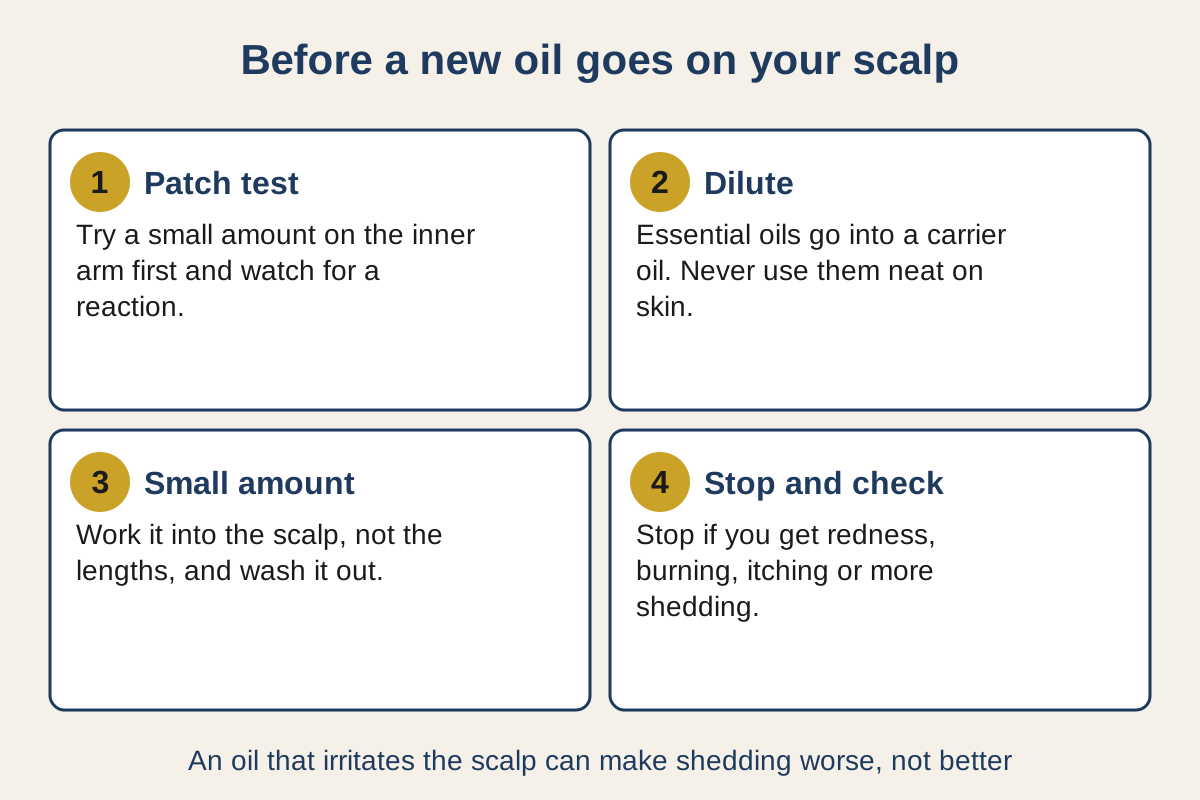
How you use an oil matters as much as which one you choose. Essential oils such as rosemary or peppermint are concentrated and must go into a carrier oil before they touch skin. Base oils such as coconut, mustard or batana oil can go on directly, but less is more.
Test a small amount on the inner arm first.
Part the hair and apply the oil to the scalp with your fingertips.
Massage gently for a few minutes, then leave it on for a short time.
Wash it out with a mild shampoo so it does not build up on the scalp.
Does Oil for Hair Growth Work?
For most oils, the answer is no, or not yet shown. The claimed oil for hair growth benefits, including onion oil, lauki oil and batana oil benefits, come from tradition and marketing; we found no controlled trials of these oils. The two human trials for pattern loss, rosemary and pumpkin seed, are small and have not been repeated at scale. Oregano oil has no human trial either (oregano oil for hair growth).
What Essential Oil Volatiles Do at the Follicle?
Essential oils are mixes of small, volatile compounds. In mice, 3% peppermint oil for 4 weeks increased follicle number and depth and raised growth markers such as IGF-1. Lavender oil did something similar in another mouse study. Mouse skin cycles differently from the human scalp, so these results show a mechanism worth testing, not a treatment.
Hair Growth Oil Side Effects
Any oil can irritate a sensitive scalp, and a red, itchy scalp can shed more. Watch for these signs and stop if you see them:
Redness, burning or itching that lasts after washing.
Bumps, scaling or weeping skin.
More shedding than usual in the weeks after starting.
Tangling or matting with thick oils such as castor.
Minoxidil is a drug, not a hair oil. The FDA-approved product label warns users to stop and ask a doctor about chest pain, a fast heartbeat, dizziness, sudden weight gain or swollen hands and feet, and not to use it for sudden or patchy hair loss. Fish oil is an oral supplement, so discuss it with a doctor. For palm, batana, nao and sesa oil, we found no published safety data for scalp use.
Frequently Asked Questions
What Oils Make Your Hair Grow Faster?
No oil has been shown to make hair grow faster than its natural rate. Rosemary oil matched minoxidil 2% in hair count after 6 months in one trial, and pumpkin seed oil capsules beat placebo in another. Both changed hair count, not growth speed.
Does Batana Oil for Hair Growth Work?
We found no published controlled trial of batana oil for hair growth. It may soften hair like other plant oils. Claims that it regrows hair are not backed by clinical data, so treat it as a cosmetic oil and patch test it first.
Can Olive Oil Help for Hair Growth?
There is no trial showing that olive oil grows hair. It can coat and soften the lengths. In a mouse study on skin, olive oil slowed barrier repair, so people with a sensitive or flaky scalp should test it on a small area first.
Is Almond Oil Good for Hair Growth?
Almond oil is a light conditioning oil, but we found no clinical trial of almond oil for hair growth. Use it for softness and shine if you like it. Anyone with a nut allergy should avoid it.
When to Use Rosemary Oil for Hair Growth?
The trial participants used rosemary oil on the scalp over 6 months, and no change showed at 3 months. If you try it, use it consistently and judge it at 6 months. Stop if your scalp becomes irritated.
When to Apply Castor Oil for Hair Growth?
Castor oil has no good evidence for growth. If you use it for shine, apply a small amount mixed with a lighter oil before washing, and comb it through. Avoid using large amounts on long hair because of the risk of matting.
When to Use Batana Oil for Hair Growth?
Without trial data, there is no proven best time. Most people use batana oil as a pre-wash treatment and wash it out. If your hair loss is getting worse, see a doctor instead of waiting for an oil to work.
When an Oil Is Not Enough
If you have been losing hair for more than a few months, or you can see your scalp through thinning areas, it is worth finding the cause. Our guide to why hair falls out covers the common reasons, and the Norwood scale shows how male pattern loss progresses. Women can read about hair transplant for women and who is a candidate. If you would like a second opinion on your photos, start with a free hair analysis.
Medical disclaimer: This article is for informational purposes only and is not medical advice. Individual results and recovery vary from person to person. Always follow the written aftercare plan from your own medical team.
Cho YH, Lee SY, Jeong DW, et al. Effect of pumpkin seed oil on hair growth in men with androgenetic alopecia: a randomized, double-blind, placebo-controlled trial. Evidence-Based Complementary and Alternative Medicine, 2014;2014:549721
Phong C, Lee V, Yale K, Sung C, Mesinkovska N. Coconut, castor, and argan oil for hair in skin of color patients: a systematic review. Journal of Drugs in Dermatology, 2022;21(7):751-757
Rele AS, Mohile RB. Effect of mineral oil, sunflower oil, and coconut oil on prevention of hair damage. Journal of Cosmetic Science, 2003;54(2):175-192
Hay IC, Jamieson M, Ormerod AD. Randomized trial of aromatherapy. Successful treatment for alopecia areata. Archives of Dermatology, 1998;134(11):1349-1352
Gad HA, Roberts A, Hamzi SH, et al. Jojoba oil: an updated comprehensive review on chemistry, pharmaceutical uses, and toxicity. Polymers, 2021;13(11):1711
Oh JY, Park MA, Kim YC. Peppermint oil promotes hair growth without toxic signs. Toxicological Research, 2014;30(4):297-304
Lee BH, Lee JS, Kim YC. Hair growth-promoting effects of lavender oil in C57BL/6 mice. Toxicological Research, 2016;32(2):103-108
Sadhasivam S, Palanivel S, Ghosh S. Synergistic antimicrobial activity of Boswellia serrata essential oil with various azoles against pathogens associated with skin, scalp and nail infections. Letters in Applied Microbiology, 2016;63(6):495-501
Darmstadt GL, Mao-Qiang M, Chi E, et al. Impact of topical oils on the skin barrier: possible implications for neonatal health in developing countries. Acta Paediatrica, 2002;91(5):546-554
Bin Rubaian NF, Alzamami HFA, Amir BA. An overview of commonly used natural alternatives for the treatment of androgenetic alopecia, with special emphasis on rosemary oil. Clinical, Cosmetic and Investigational Dermatology, 2024;17:2495-2503
Natarelli N, Gahoonia N, Sivamani RK. Integrative and mechanistic approach to the hair growth cycle and hair loss. Journal of Clinical Medicine, 2023;12(3):893
Send three photos: front, top and sides. You get a technique recommendation, a graft range and a straight answer about what is achievable, before anyone talks about price.
Your details are with the team
A patient coordinator will get back to you shortly. If you would like to send your photos now, WhatsApp is the fastest way to do it.
We respond quickly, day or night, in your language.
Multilingual team, no obligation
Data protectedKVKK and GDPR compliant, 100% confidential
Authorized Health Tourism Intermediary
Turkey Hair Center is the hair-restoration brand of Healthy Way Tourism, an authorized international health-tourism intermediary. All medical procedures are performed by licensed medical professionals at authorized healthcare facilities in Turkiye, in accordance with the regulations of the Ministry of Health.