How Often to Wash Hair: A Schedule by Scalp and Hair Type
How often to wash an oily, dry, curly or flaky scalp, whether a daily wash harms your hair, how much shedding on wash day is normal, and how to wash on minoxidil or after a transplant.
12sources
10in PubMed
15min read
Written by Nazmi Güldeş, Certified Trichologist · Medically reviewed by Dr. Teuku Adifitrian, Sp.BP-RE (Dr. Tompi), Plastic, Reconstructive and Aesthetic Surgeon · Last reviewed 31 October 2026
Reading level
How often to wash hair depends on your scalp, not on a fixed rule. If your roots look greasy by the next morning, a daily wash is fine. If your scalp feels tight, every few days may suit you better.
The old fear that frequent washing damages hair isn't backed by the research we read. The useful question is what your scalp does on the second and third day after a wash, so we start there and then give you a simple way to test your own schedule in two weeks.
1Quick answerThe short answer, in a few sentences
How Often Should You Wash Your Hair?
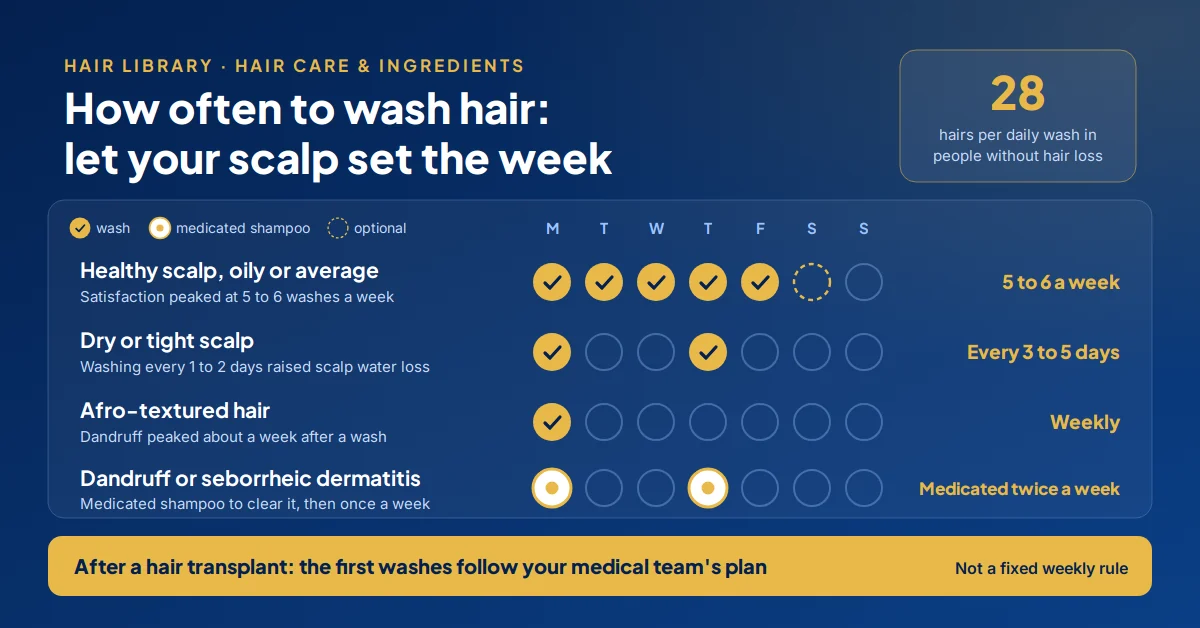
Wash when your scalp gets oily, itchy or flaky, and space washes out if it feels tight. Daily washing doesn't harm healthy hair: in adults without scalp disease, satisfaction peaked at 5 to 6 washes a week.[1] Advice for curly and Afro-textured hair runs from weekly to every 2 to 3 weeks, and flakes can mean you wash too little.
Two things pull in opposite directions. Sebum, the scalp's natural oil, builds back after every wash, while washing very often raised water loss through the scalp skin in one study. Your schedule is the balance point between the two, and it differs from one person to the next.
2Complete guideFrom oily scalps and dandruff to Afro-textured hair and transplants
How Often to Wash Hair by Scalp and Hair Type
Start from what you notice, not from what a bottle tells you. Find the row that sounds most like your scalp, then fine-tune it with the two-week test below. If you're unsure of your curl pattern, our hair type chart shows all twelve.
What you notice
What it usually means
Schedule to try
Adjust if
Roots flat and greasy by the next morning
Oil spreading down the hair from the scalp
Daily, or 5 to 6 times a week
Your ends feel dry: condition the ends only
Scalp feels tight or dry, little oil by day 3
Frequent washing may be raising water loss from the skin
Every 3 to 5 days
Itch or flakes start: add a wash
Curly, coily or Afro-textured hair that feels dry
Dry lengths that need conditioner along their full length
Weekly to every 2 to 3 weeks
Flakes return before wash day: wash sooner
Flakes and itch
Possibly dandruff or seborrheic dermatitis
A medicated shampoo twice a week, then once a week
Not clear after the trial's 2 to 4 weeks: see a doctor
You use topical minoxidil
Shampooing first isn't needed
Any schedule; apply it once the scalp is dry
Nothing to adjust
You've just had a hair transplant
A healing scalp with new grafts
Your medical team's plan
Only on their advice
The last column is our own advice, built from the studies cited in the sections below.
A Two-Week Test to Find Your Schedule
Week 1: keep your current schedule. On day 2 and day 3 after each wash, note three things: greasy roots, itch or flakes, and a tight feeling.
Week 2: change one step. Add a wash if you noted greasy roots or flakes, or drop one if your scalp felt tight.
Day 15: compare your notes and keep the schedule that left your scalp most comfortable on days 2 and 3.
Later: test again if your scalp starts to feel different, or every few years, since oil output falls with age.
Oily Scalp, Straight or Fine Hair
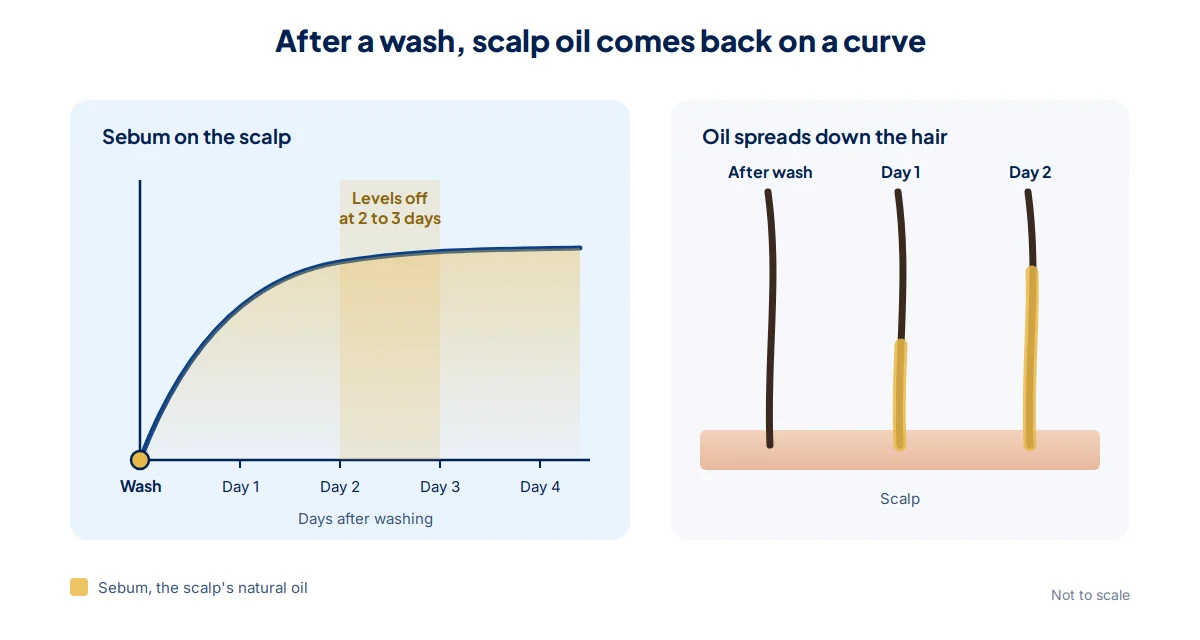
Oil comes back on a curve. After a wash, sebum on the scalp climbs and then levels off 2 to 3 days later, in every ethnic group studied.[2]
What looks like greasy hair is mostly oil travelling down the strands. In people who see their hair as greasy, it travels further, even when the amount at the roots is the same.[3]
How sebum returns after a wash. Not to scale. Illustration: Turkey Hair Center.
If your roots look flat by the next morning, wash daily. The American Academy of Dermatology suggests the same for straight hair on an oily scalp, with conditioner on the ends only.[4]
Dry Scalp, Headwear and Hijab
A scalp that feels tight rather than oily may do better with fewer washes. In women who wear a hijab, washing every 1 to 2 days made the scalp lose more water through the skin than washing every 3 to 5 days, while its moisture level didn't change.[5]
That was one small study, and it didn't look at hair loss or the hair itself. It's still a sensible reason to try every 3 to 5 days if your scalp feels tight under a headscarf. If a covered scalp also itches and flakes, our guide to scalp yeast infection covers that.
Curly, Coily and Afro-Textured Hair
The two sources here give different intervals. In 60 women of African descent, one wash eased dandruff and itch, but the benefit was gone after a week, so the researchers recommend weekly washing to manage dandruff and itch.[6]
The American Academy of Dermatology's general advice is to shampoo dry, textured, curly or thick hair when needed, at least once every 2 to 3 weeks.[4] We'd start at weekly if you get flakes or itch, and stretch the gap only while your scalp stays free of both.
A coily scalp isn't dry by default: of seven ethnic groups, African American participants had the most scalp oil 2 to 3 days after a wash.[2] It's the lengths that need care, so put conditioner along the full length of dry or curly hair. Our Type 4 hair guide covers moisture and styling between washes.
Dandruff, Seborrheic Dermatitis and Scalp Psoriasis
Flakes can mean you wash too little. Not shampooing often enough is one common reason the AAD gives, along with the wrong conditioner, oil or scalp moisturizer.[4]
A medicated shampoo brings its own timetable. In a large trial, ketoconazoleGlossaryKetoconazole is an antifungal medicine sold as a shampoo. It is fungicidal, blocking the ergosterol that scalp yeast needs for its cell membrane. Open in the glossary → 2% twice a week for 2 to 4 weeks cleared dandruff or seborrheic dermatitisGlossarySeborrheic dermatitis causes an itchy, flaky, scaly rash on oily areas such as the scalp. It is the Malassezia-linked condition most people mean by a scalp yeast infection. Open in the glossary → in most people, and once a week afterwards kept it from coming back far better than a plain shampoo.[7] Use it on its days and your usual shampoo in between; our ketoconazole shampoo guide explains the details.
Treatment shampoos for psoriasis are covered in our scalp psoriasis entry. If itch is the main problem, start with our itchy scalp entry.
Men, Women and Age
Your schedule isn't fixed for life. Men made more scalp sebum than women in every group studied, and older people made less than younger ones.[2]
Men. You make more scalp oil, and the controlled test found no harm from a daily wash, so there's no reason to avoid one.
Women. You make less scalp oil than men on average. The hijab study above is the only schedule test in women on this page, so use the two-week test to find your own.
Older adults. Oil output falls with age, so a schedule that suited you at 25 is worth testing again later.
Is It Bad to Wash Your Hair Every Day?
Not for a healthy scalp, in the studies we found. The worry that frequent washing strips or weakens hair is common, but the most direct test pointed the other way.
What the Studies Found
Two studies in Asian adults without scalp disease reached the same answer. In everyday life, people were most satisfied with their hair and scalp at 5 to 6 washes a week, and in a controlled test a daily wash beat a weekly one on every measure, with no damage to the hair.[1]
That's a clear result, but a narrow one. Both studies were in Asian adults with healthy scalps, so they tell you less about coily hair or a scalp condition.
Washing Myths, Checked
"Washing every day makes your hair fall out." No study we found shows this. Cutting back only means more hair at the next wash.
"Skipping washes trains your scalp to make less oil." We found no study showing this, so there's no reason to put up with a greasy, itchy scalp in the hope that it adapts.
"A flaky scalp needs fewer washes." Not necessarily: too little shampooing is one common cause of flakes.
"Afro-textured hair should be washed as little as possible." Washing eased dandruff and itch in women with Afro-textured hair, and the relief faded within a week.
"You must shampoo before putting on minoxidil." The UK leaflet says it isn't necessary.
Does Washing Your Hair Every Day Cause Hair Loss?
We found no study linking daily washing to hair loss. If you cut back on shampooing out of fear, more hair turns up at the next wash, and the bigger pile feeds the fear.[8]
Some hair in the drain is normal. In a careful wash test, people without hair loss shed about 28 hairs per daily wash, people with pattern hair loss about 52 and people with telogen effluviumGlossaryTelogen effluvium is sudden diffuse shedding that follows illness, childbirth or stress. Shedding usually starts two to three months after the trigger, and it is usually self-limiting once the trigger is removed. Open in the glossary → about 125.[9]
Those are averages with a wide spread, so one heavy wash means little. A count over three days tells you far more than a glance at the drain.
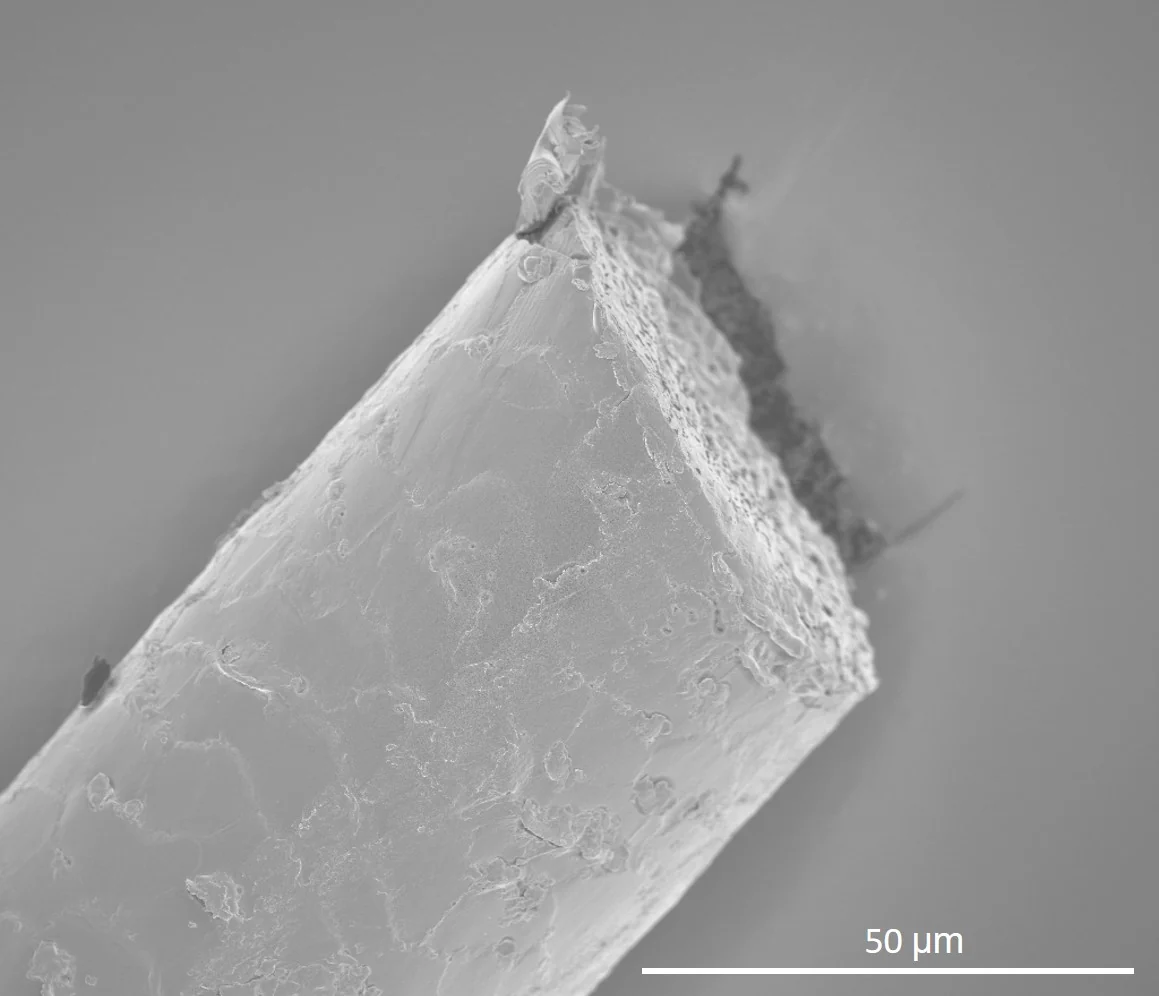
The photo shows the cuticleGlossaryThe cuticle is the overlapping outer layer of the hair strand, the layer you touch. It decides hair porosity: when its scales lie flat and tight, water struggles to get in. Open in the glossary →, the overlapping scales that cover each hair. Shampoo touches it at every wash, yet daily washing did no measurable damage in the controlled test; rough drying and high heat are the habits dermatologists warn about. Our hair breakage entry covers the rest.
Washing on Minoxidil or After a Hair Transplant
Washing While You Use Minoxidil
You don't need to change your schedule. The UK leaflet for minoxidilGlossaryMinoxidil is an established medication for certain types of hair loss. It is a drug, not a hair oil, and the FDA-approved label says not to use it for sudden or patchy hair loss. Open in the glossary → 5% solution says shampooing first isn't necessary; if you do wash, apply it about an hour later so the scalp is fully dry, and before any gel or spray.[10]
After swimming, it can go on as soon as your hair is dry. Our minoxidil entry covers the full routine.
Washing After a Hair Transplant
For the first days after surgery, your medical team's protocol replaces any routine. It sets when the first wash happens, what to use and how to rinse without pressing on the graftsGlossaryA graft is a follicular unit taken from the donor area and placed in the thinning area. It holds one to four hairs, rarely more, so 2,000 grafts is roughly 3,600 to 4,600 hairs. Open in the glossary →.
Timing is part of that plan for a reason. In a large study of transplant patients, starting post-operative care later than day 3 was one of the risk factors for folliculitisGlossaryFolliculitis is inflammation of the hair follicles. It often looks like a sudden acne breakout; each spot may have a red ring, and the skin can itch or feel painful. Open in the glossary →.[11]
A transplant is mainly used for androgenetic alopeciaGlossaryAndrogenetic alopecia, or pattern baldness, is the pattern hair loss behind most male and female thinning. It is primarily driven by genetic predisposition and sensitivity to androgen hormones. Open in the glossary →, in people whose loss goes beyond what medicines or smaller procedures can do.[12] Heavy shedding is a different problem: in the wash test above, people with telogen effluvium lost more than twice as many hairs per wash as people with pattern loss, and thicker ones.
Persistent heavy shedding has causes of its own, and in otherwise healthy people nutrition, especially iron, can play a part.[8] That cause is worth finding before anyone talks about a transplant.
Frequently Asked Questions
How often should you wash your hair if you have dandruff?
Often more, not less, since too little shampooing is one common cause of flakes. Add a medicated shampoo: ketoconazole 2% twice a week, then once a week, cleared dandruff and held back relapse in a large trial.
How do you treat an oily scalp?
Wash it as often as it gets oily, daily if needed, working the shampoo into the scalp and keeping conditioner on the ends. We found no evidence that washing more often makes a scalp oilier. If oily roots come with flakes and itch, follow the dandruff advice above.
Does washing your hair make it grow faster?
No study we found shows that washing changes how fast hair grows. What washing changes is the scalp, which did better with more frequent washing in the studies above. Our guide on how fast hair grows covers the rate itself.
Should you wash thinning hair less often?
No. Washing less only means more hair turns up at the next wash. In a wash test, people with pattern hair loss shed about twice as many hairs per wash as people without it.
Why wash your hair with cold water?
We found no trial showing that a cold rinse adds shine or protects hair. Use whatever temperature feels comfortable on your scalp.
Does hard water change how often you should wash?
We found no study that tested a wash schedule in hard water, so there's no evidence-based reason to change yours. If your hair feels rough, look at heat and rough towelling first, since those are known ways to damage it.
What happens if you don't wash your hair for a long time?
Oil, flakes and itch build up. In women with Afro-textured hair, dandruff was back at its worst a week after a wash, and too little shampooing is a common cause of flakes in any hair type.
How long after a hair transplant can you wash your hair?
Follow your medical team's protocol, which sets the first wash. Starting post-operative care later than day 3 was linked with folliculitis in a large study. Our post-operative hair wash guide has the day-by-day steps.
Who Needs More Than a New Wash Schedule?
Most people can settle on a schedule by trial: wash when the scalp gets oily or itchy, and space washes out if it feels tight. A routine won't fix heavy shedding or thinning that keeps spreading, because those have causes of their own.
A new schedule is enough if your only problems are greasy roots, a tight scalp or flakes that clear with a medicated shampoo.
See a doctor if flakes and itch don't settle after a month of medicated shampoo.
Have your hair loss assessed if you shed far more than usual for weeks, or your parting or hairline is changing.
If you see more hair than usual on wash days and want to know whether it's shedding, pattern loss or both, send three photos for a free hair analysis. The medical team will tell you whether a hair transplant fits your case or whether something else should come first, with no obligation. You can also message us on WhatsApp.
About the Author
Written by: Nazmi Güldeş, Certified Trichologist. Nazmi Güldeş focuses on patient education around androgenetic alopecia, evaluating miniaturization through dermoscopy, and assessing candidates for medical treatments and hair transplants.
Editorial Policy & Trust
This entry was drafted with the help of AI writing tools and edited by our team, then medically reviewed by Dr. Teuku Adifitrian, Sp.BP-RE (Dr. Tompi) on 31 October 2026. AI is never used as a source: every study cited here was checked against PubMed on 31 October 2026. Key figures are marked with their source, and every source is listed at the end of this entry. Read how we work in our editorial policy.
3 questions
Test yourself
Check what you remember from this entry. Each answer links back to the section that explains it.
In adults with healthy scalps, how often did washing give the highest satisfaction?
Satisfaction peaked at 5 to 6 washes a week, and a daily wash beat a weekly one on every measure. Read the section
About how many hairs did people without hair loss shed in a daily wash?
About 28 on average, against about 52 in pattern hair loss and about 125 in telogen effluvium. Read the section
How often do researchers recommend washing Afro-textured hair to manage dandruff?
Dandruff peaked again about a week after a wash, so the authors recommend weekly washing. Read the section
3Scientific evidenceStudy types, references and how to cite this entry
12sources
Evidence behind this entry: 10 publications indexed in PubMed (1995 to 2026): 7 clinical studies, 2 reviews and 1 clinical trial. Plus the UK patient leaflet for minoxidil 5% cutaneous solution and an American Academy of Dermatology patient guide. 4 sources have free full text.
Randomized trialpeople assigned to treatments by chance
Reviewsummarises many studies
Clinical studya study in people without random groups
Guideline or labela professional body, or the official drug label
Punyani S, Tosti A, Hordinsky M, et al. The Impact of Shampoo Wash Frequency on Scalp and Hair Conditions. Skin Appendage Disorders. 2021;7(3):183-193.Clinical studyPubMedDOIFree full text
Pouradier F, Liu C, Wares J, et al. The worldwide diversity of scalp seborrhoea, as daily experienced by seven human ethnic groups. International Journal of Cosmetic Science. 2017;39(6):629-636.Clinical studyPubMedDOI
Gao J, Liu C, Zhang S, et al. Revisiting, in vivo, the hair regreasing process by the Sebuprint method. Skin Research and Technology. 2019;25(1):79-87.Clinical studyPubMedDOIFree full text
American Academy of Dermatology. Tips for healthy hair. AAD public information.GuidelineSource page
Mughni FA, Widaty S, Nilasari H, et al. Measurements of Scalp Transepidermal Water Loss and Hydration in Women Wearing Hijab Correlated with Hair Wash Frequency. International Journal of Trichology. 2024;16(1-6):16-24.Clinical studyPubMedDOIFree full text
Fajuyigbe D, Sewraj P, Connétable S, et al. Weekly hair washing: The recommended solution for women with afro-textured hair to alleviate dandruff and scalp discomfort. The Journal of Dermatology. 2024;51(4):518-525.Clinical studyPubMedDOI
Peter RU, Richarz-Barthauer U. Successful treatment and prophylaxis of scalp seborrhoeic dermatitis and dandruff with 2% ketoconazole shampoo: results of a multicentre, double-blind, placebo-controlled trial. The British Journal of Dermatology. 1995;132(3):441-445.Clinical trialPubMedDOI
Rushton DH. Nutritional factors and hair loss. Clinical and Experimental Dermatology. 2002;27(5):396-404.ReviewPubMedDOI
Li X, Wang X, Wang C, et al. Hair Shedding Evaluation for Alopecia: A Refined Wash Test. Clinical, Cosmetic and Investigational Dermatology. 2022;15:117-126.Clinical studyPubMedDOIFree full text
Medicines and Healthcare products Regulatory Agency. Regaine for Men Extra Strength (minoxidil 5% w/v cutaneous solution): patient information leaflet. PL 15513/0148. Revised December 2024.Drug labelSource page
Zhou Y, Zhang J, Yi Y, et al. Characterization and Risk Factors of Folliculitis after Hair Transplantation: A Multicenter Retrospective Study. Plastic and Reconstructive Surgery. 2024;154(6):1115e-1122e.Clinical studyPubMedDOI
Brinks AL, Needle CD, Kearney CA, et al. Hair Transplant: Patient Candidacy, Medical Optimization, and Surgical Considerations. International Journal of Dermatology. 2026;65(2):245-256.ReviewPubMedDOI
Güldeş, N. (2026, October 31). How often to wash hair: A schedule by scalp and hair type. Turkey Hair Center Hair Library. https://turkeyhaircenter.com/how-often-to-wash-hair/
@misc{guldes2026howoftentowashhair,
  author       = {Güldeş, Nazmi},
  title        = {How often to wash hair: A schedule by scalp and hair type},
  howpublished = {Turkey Hair Center Hair Library},
  year         = {2026},
  month        = oct,
  url          = {https://turkeyhaircenter.com/how-often-to-wash-hair/},
  note         = {Last updated 31 October 2026}
}
TY  - ELEC
AU  - Güldeş, Nazmi
TI  - How often to wash hair: A schedule by scalp and hair type
T2  - Turkey Hair Center Hair Library
PY  - 2026
DA  - 2026/10/31
UR  - https://turkeyhaircenter.com/how-often-to-wash-hair/
N1  - Last updated 31 October 2026
ER  -
Send three photos: front, top and sides. You get a technique recommendation, a graft range and a straight answer about what is achievable, before anyone talks about price.
Your details are with the team
A patient coordinator will get back to you shortly. If you would like to send your photos now, WhatsApp is the fastest way to do it.