Performed at authorized partner hospitals Turkey Hair Center is a Ministry of Health authorized health-tourism intermediary, not a clinic.
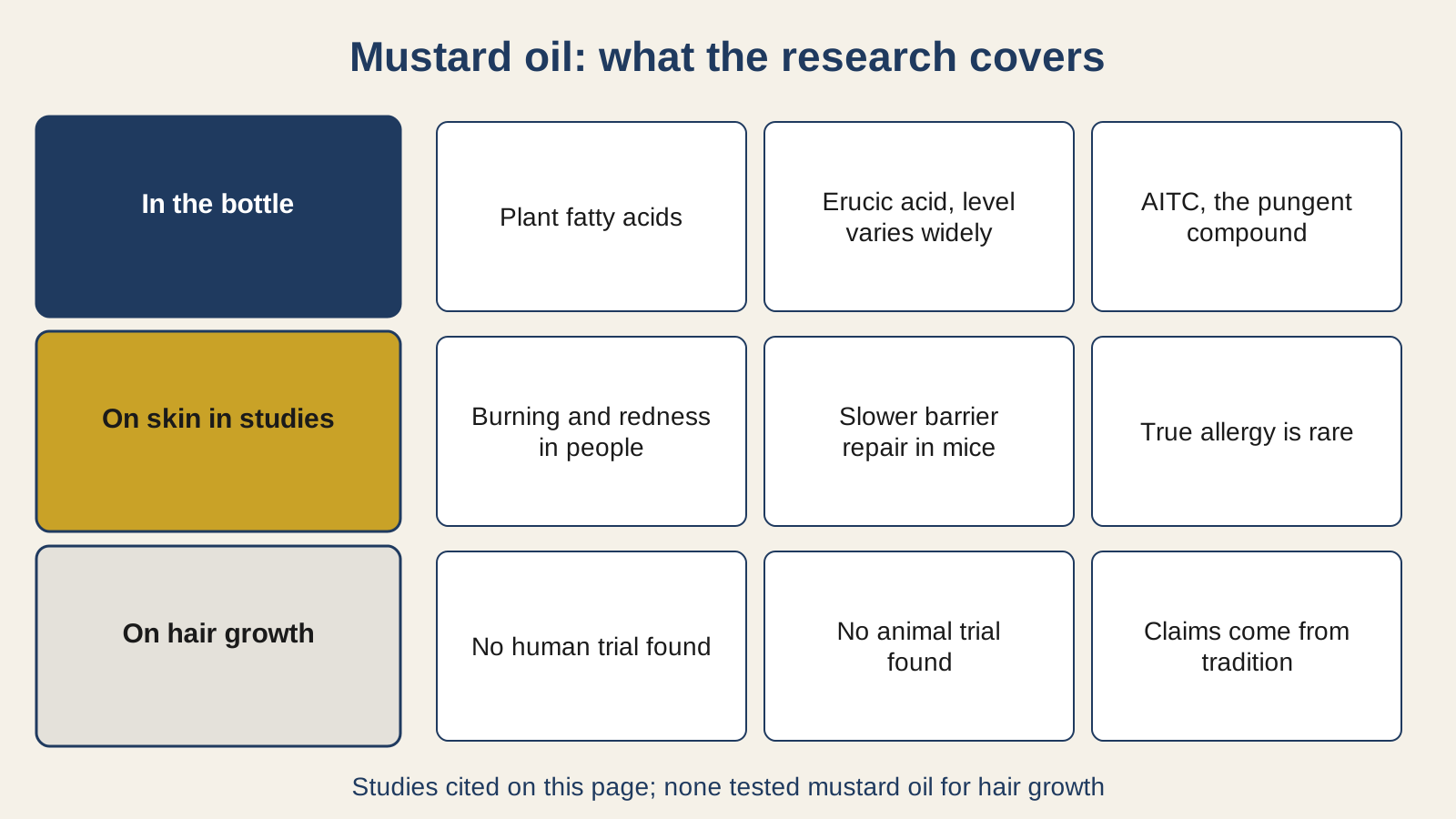
Mustard oil for hair is a traditional scalp oil, but there is no clinical trial showing that it helps hair grow. What research does show is that its pungent compound irritates skin, so the main question is whether your scalp tolerates it, not whether it will thicken your hair.
People ask "is mustard oil good for hair" because it has been used on the scalp for generations, especially in South Asia, where it is called sarso or sarson oil. This guide covers what mustard oil uses for hair are realistic, what the safety studies found, and how to use it with less risk. If you are already shedding a lot, read the section on hair fall first.
What Does Mustard Oil Do for Hair?
On the hair shaft, mustard oil behaves like other plant oils: it coats the strands, reduces friction when you comb and can make dry ends feel softer. On the scalp, it does something most hair oils do not. Its sharp compound, allyl isothiocyanate (AITC), activates pain-sensing nerve endings in skin; a 2004 study in Nature showed that mustard oils excite sensory nerve fibres through the TRPA1 channel.
That warming or stinging feeling is often taken as proof that the oil "works". It is a nerve response, not a sign of hair growth.
What Is Mustard Oil Used for in Hair Care?
Traditional uses are simple: a pre-wash scalp massage, a softening oil for dry lengths, and a home mask mixed with other kitchen ingredients. A 2024 review of mustard plants repeats the claim that rubbing the oil on the scalp helps baldness, but the sources behind that sentence are a 1990 consumer medicine guide and a paper on biodiesel production, not a hair study.
Can Mustard Oil Cause Hair Fall?
No study has measured hair fall after mustard oil use, so there is no direct answer. What we do know points to caution. In 40 volunteers, mustard oil applied to the skin caused burning pain and neurogenic inflammation, the redness and swelling that follow nerve activation. In mice, a single application damaged the outer skin layer and slowed its repair.
A scalp that is red, sore or inflamed is not a good place for hair to grow. If you notice more hair on your pillow or in the shower after starting mustard oil, stop and see whether the shedding settles. Our guide to the reasons for hair loss covers the other common causes worth ruling out.
Mustard Oil and Dandruff Treatment
Dandruff is linked to a yeast that lives on the skin, and the NHS recommends anti-dandruff shampoos that contain ketoconazole, coal tar or salicylic acid, used for up to 4 weeks. AITC has antifungal activity against Candida yeast in lab tests. No study has tested mustard oil on dandruff in people, and oil left on a flaky scalp can make the flakes stick rather than lift. Oregano oil is in a similar position, with lab activity against yeast and no human trial (oregano oil for hair growth).
The NHS advises seeing a GP if dandruff is still there after 4 weeks of medicated shampoo, if the scalp is red or swollen, or if flaky patches appear on the face or body.
Make a Mustard Oil Hair Mask
If you want a mask for dry lengths, use a small amount of mustard oil blended with a milder oil, apply it to the lengths rather than the scalp, and wash it out after a short time. Masks that also contain lemon, garlic or onion add more irritants to an already pungent oil.
Use Mustard Oil as a Scalp Treatment
Keep scalp use brief and gentle. Do not scrub it in, do not use it on broken skin, and avoid it if you have eczema or psoriasis on the scalp, because the barrier is already weak.
Use Mustard Oil as a Quick Pre-Shampoo Treatment
A pre-shampoo treatment is the lowest-risk way to use it. The oil softens the lengths, then the shampoo removes it before it has long contact with the skin.
How to Use Mustard Oil for Hair?
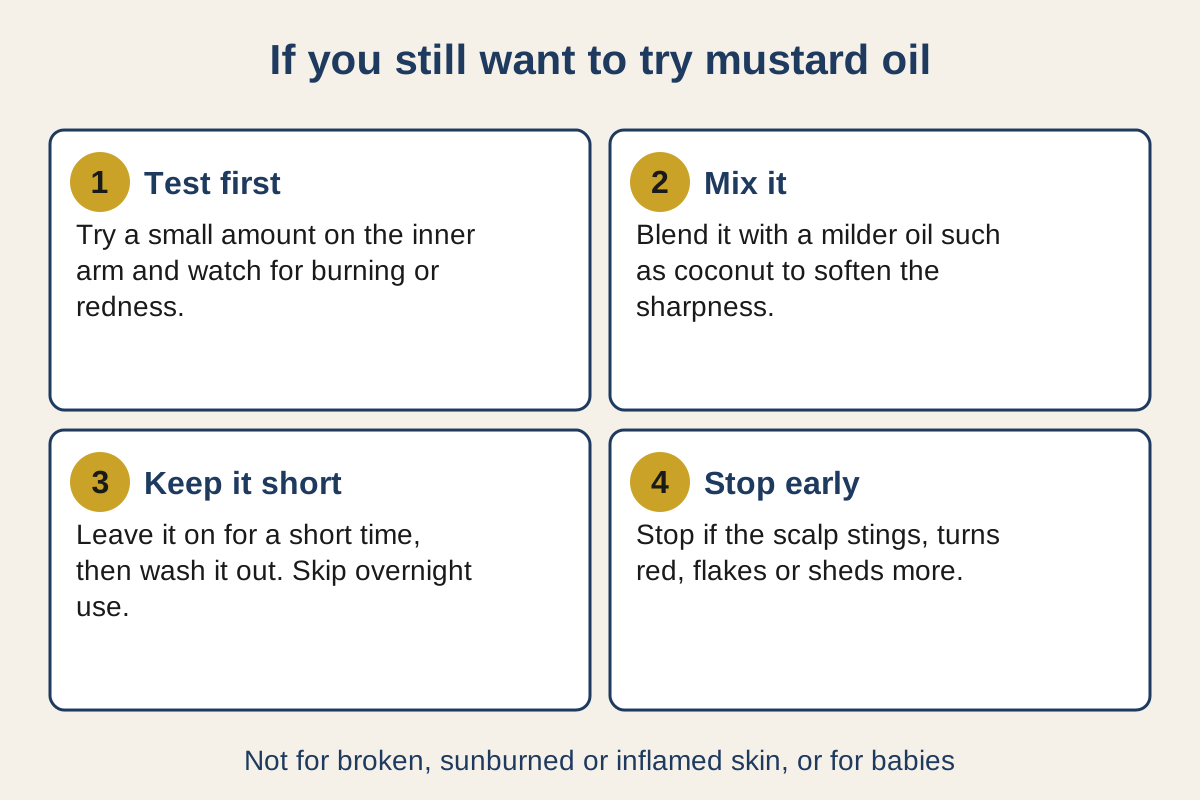
Mustard oil for hair: how to use it with the least irritation comes down to amount, contact time and your skin's reaction. These steps apply whether your goal is softer hair or you simply follow a family habit:
Test a small amount on the inner arm and watch for redness or burning.
Mix it with a milder oil so the mixture is less sharp.
Apply it to the scalp with your fingertips, without rubbing hard.
Wash it out with a mild shampoo after a short time.
How to Use Mustard Oil for Hair Growth Overnight?
We do not recommend overnight use. The skin studies found irritation within minutes to hours, and in mice, applying it twice a day for 7 days kept the skin barrier from recovering. Hours of contact under a pillow increases that exposure without any shown gain for hair growth.
Does Mustard Oil Work for Hair Growth?
There is no evidence that it does. We searched the indexed medical literature and found no human or animal trial of mustard oil for hair growth or hair loss. Claims about mustard oil for hair benefits come from tradition and from the warming feeling on the scalp.
By comparison, our guide to oils for hair growth shows which oils do have trials: rosemary oil on the scalp and pumpkin seed oil taken as a capsule. Pattern hair loss is driven by the hormone DHT, explained in our DHT and hair loss guide, and mustard oil has never been shown to affect it.
Question
What the evidence says
Source type
Does it grow hair?
No trial found
Literature search
Does it irritate skin?
Yes, burning and redness in people
Human skin study
Does it harm the skin barrier?
Slowed barrier repair in mice
Animal study
Is allergy common?
Rare: 2 of 259 patients tested positive to AITC
Patch test study
Is it consistent between bottles?
Erucic acid ranged from 0.3% to 50.8%
Food analysis
Benefits of Mustard Seed Oil for Hair
The realistic benefits of mustard seed oil for hair are cosmetic:
Softer, less tangled lengths after a pre-wash oiling.
Less friction when combing long or curly hair.
A low-cost oil that many people already have at home.
None of these change how many hairs grow from the scalp.
Mustard Oil for Hair: Side Effects
The side effects of mustard oil for hair come mostly from its effect on skin. Watch for:
Burning or stinging that does not fade quickly after washing.
Redness, swelling or a rash on the scalp, forehead or neck.
Dry, peeling or flaky skin after repeated use.
Itching or more shedding in the weeks after starting.
A study of 500 newborns in rural Nepal who had daily mustard oil massage found that redness and rash worsened over the first two weeks and water loss through the skin rose by day 28. There was no comparison group, so the oil cannot be blamed alone, but it is one more reason not to use it on babies. We found no evidence that mustard oil for grey hair reverses greying.
See a dermatologist if your scalp burns, blisters or weeps after using any oil, or if you have hair loss with redness, scaling or patches. These signs can point to contact dermatitis, infection or another scalp condition that needs a proper diagnosis.
How to Use Mustard Oil for Hair Safely?
Use a small amount, keep it away from the eyes, wash it out, and stop at the first sign of irritation. Skip it entirely on broken, sunburned or inflamed skin.
How Long Should You Leave Mustard Oil in Your Hair?
There is no tested best time, because no study has measured hair results at different contact times. The safety data support keeping it short: in mice, swelling after mustard oil on the ear peaked at about 30 minutes. For mustard oil for hair, how long to leave it is best answered as a short pre-wash treatment, then shampoo.
If your scalp feels hot or tight, wash it out sooner. If it stays red after washing, do not reapply the next day.
Sarso Oil for Hair
Sarso oil, also written sarson oil, is the Hindi name for mustard oil. It is the same product, pressed from mustard seeds, and the same evidence applies. Kitchen-grade oils vary: in a test of German and Australian products, erucic acid ranged from 0.3% to 50.8%, and 7 of 9 mustard oils were above the food limit.
Erucic acid matters mainly when the oil is eaten, and a 2023 review notes that heart effects seen in rats have not been confirmed in people. For hair use, the bigger issue is skin irritation. If sarso oil is part of your family routine, the safest version is a short pre-wash oiling with a patch test first.
Frequently Asked Questions
What Can I Mix with Mustard Oil for Hair?
A milder oil such as coconut oil is the simplest choice, because it softens the sharpness of mustard oil. Avoid mixing it with lemon juice, garlic or onion, which add more irritants. Always test the mixture on a small area of skin first.
Can I Use Mustard Oil for Hair Everyday?
Daily use is not a good idea. In mice, twice-daily application for 7 days kept the skin barrier from recovering. If you use mustard oil at all, use it occasionally as a short pre-wash treatment and give the scalp time to settle between uses.
Can I Use Mustard Oil for Hair During Pregnancy?
There are no studies on mustard oil for hair during pregnancy. Skin can be more sensitive at that time, and hair shedding after birth has other causes. Ask your doctor or midwife before using any new product, and see our postpartum hair loss guide for shedding after delivery.
Is Mustard Oil Good for Hair Growth and Thickness?
There is no evidence that it improves hair growth or thickness. It can make the lengths feel softer, which may look fuller, but it does not add hairs. If your hair is getting thinner, find the cause first rather than relying on an oil.
Is Mustard Oil Bad for Hair?
It is not harmful to the hair shaft itself. The risk is to the scalp skin: burning, redness and a weaker skin barrier in studies. Used briefly and washed out, many people tolerate it, but stop if your scalp reacts.
Does Mustard Oil Expire for Hair?
Yes. Plant oils break down in storage, which is why a 2026 food study tracked the oxidative quality of mustard oil kept in brown glass bottles over 3 months. If the oil smells rancid or has changed colour, throw it away. Keep it closed, cool and out of direct light.
When to Use Mustard Oil for Hair?
The lowest-risk time is just before washing your hair, so the oil has short contact with the scalp. Avoid using it before going out in the sun, before bed, or on a scalp that is already irritated.
Where to Buy Mustard Oil for Hair?
It is sold in grocery stores and online. Choose a product that lists what is in it and how it was pressed. Product quality varies a lot, as shown by the wide range of erucic acid found in mustard oils tested in Germany and Australia.
Worried About Thinning Hair?
If you have been using oils for months and your hair is still thinning, an assessment of the pattern will tell you more than another product. Send clear photos of your hairline and crown for a free hair analysis, and the medical team will tell you what they see. You can also read our guide to the best vitamins for hair loss.
Medical disclaimer: This article is for informational purposes only and is not medical advice. Individual results and recovery vary from person to person. Always follow the written aftercare plan from your own medical team.
Sources and medical review
Jordt SE, Bautista DM, Chuang HH, et al. Mustard oils and cannabinoids excite sensory nerve fibres through the TRP channel ANKTM1. Nature, 2004;427(6971):260-265
Heyer G, Hornstein OP, Handwerker HO. Reactions to intradermally injected substance P and topically applied mustard oil in atopic dermatitis patients. Acta Dermato-Venereologica, 1991;71(4):291-295
Darmstadt GL, Mao-Qiang M, Chi E, et al. Impact of topical oils on the skin barrier: possible implications for neonatal health in developing countries. Acta Paediatrica, 2002;91(5):546-554
Summers A, Visscher MO, Khatry SK, et al. Indicators of skin barrier integrity among newborns massaged with mustard oil in rural Nepal. Journal of Perinatology, 2018;38(1):64-70
Lerbaek A, Rastogi SC, Menné T. Allergic contact dermatitis from allyl isothiocyanate in a Danish cohort of 259 selected patients. Contact Dermatitis, 2004;51(2):79-83
Patil SB, Jadhav AK, Sharma RK, et al. Antifungal activity of allyl isothiocyanate by targeting signal transduction pathway, ergosterol biosynthesis, and cell cycle in Candida albicans. Current Medical Mycology, 2023;9(2):29-38
Rahman M, Khatun A, Liu L, Barkla BJ. Brassicaceae mustards: phytochemical constituents, pharmacological effects, and mechanisms of action against human disease. International Journal of Molecular Sciences, 2024;25(16):9039
Rahim MA, Nadeem M, Ramadan MF, et al. Temperature-assisted crystallization of mustard oil for erucic acid reduction and its impact on phenolic compounds, sterols and oxidative quality of oil during ambient storage. Food Science and Nutrition, 2026;14:e71883
Send three photos: front, top and sides. You get a technique recommendation, a graft range and a straight answer about what is achievable, before anyone talks about price.
Your details are with the team
A patient coordinator will get back to you shortly. If you would like to send your photos now, WhatsApp is the fastest way to do it.
We respond quickly, day or night, in your language.
Multilingual team, no obligation
Data protectedKVKK and GDPR compliant, 100% confidential
Authorized Health Tourism Intermediary
Turkey Hair Center is the hair-restoration brand of Healthy Way Tourism, an authorized international health-tourism intermediary. All medical procedures are performed by licensed medical professionals at authorized healthcare facilities in Turkiye, in accordance with the regulations of the Ministry of Health.