Can You Regrow Hair in 3 Weeks? Timeline & Home Remedies
Performed at authorized partner hospitals Turkey Hair Center is a Ministry of Health authorized health-tourism intermediary, not a clinic.
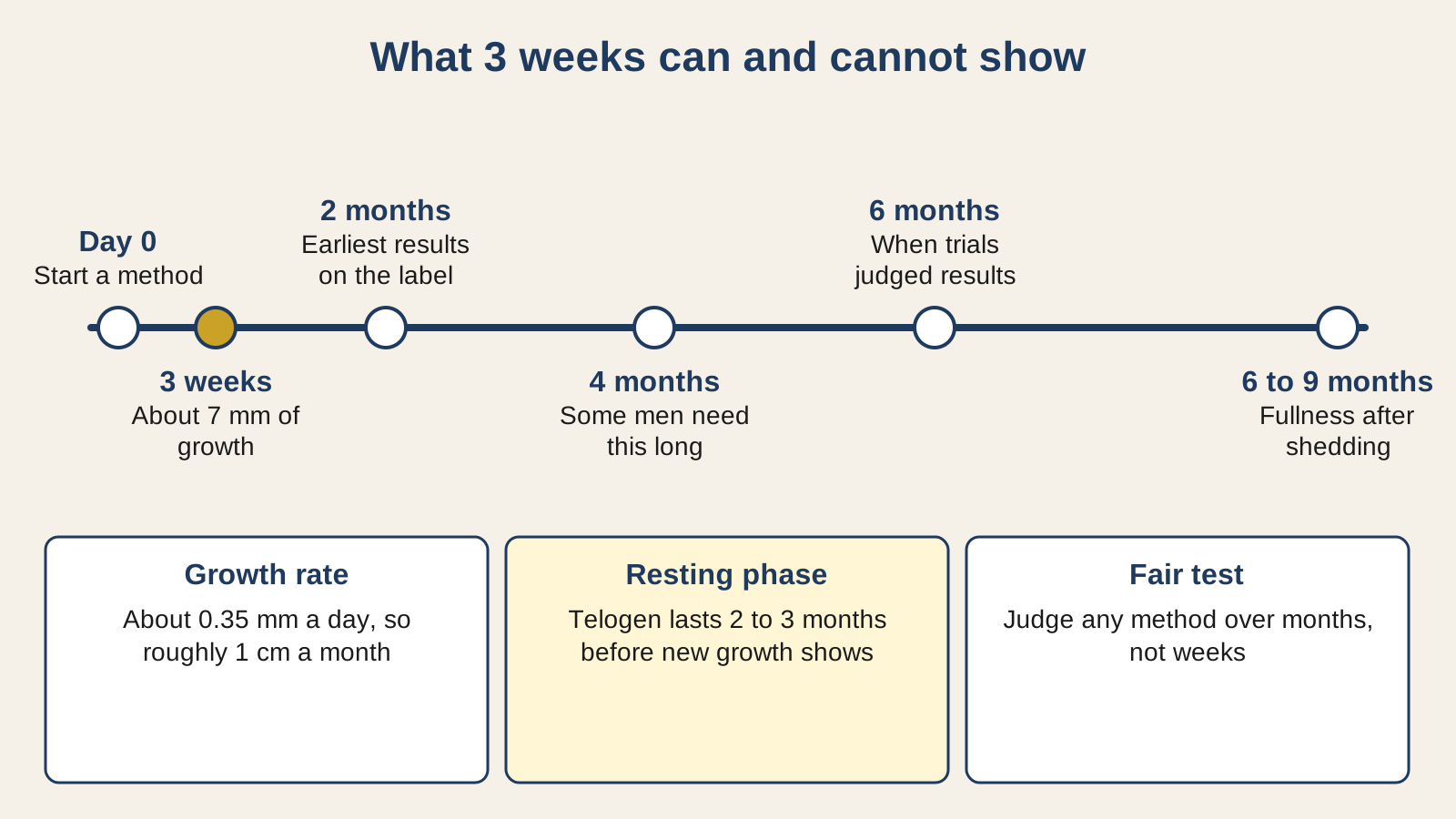
No, you cannot regrow hair in 3 weeks. Scalp hair grows about 0.35 mm a day, so in 21 days a growing hair gets only about 7 mm longer, and a follicle that has stopped growing first spends 2 to 3 months in a resting phase. What 3 weeks can do is help you find the cause and start a plan.
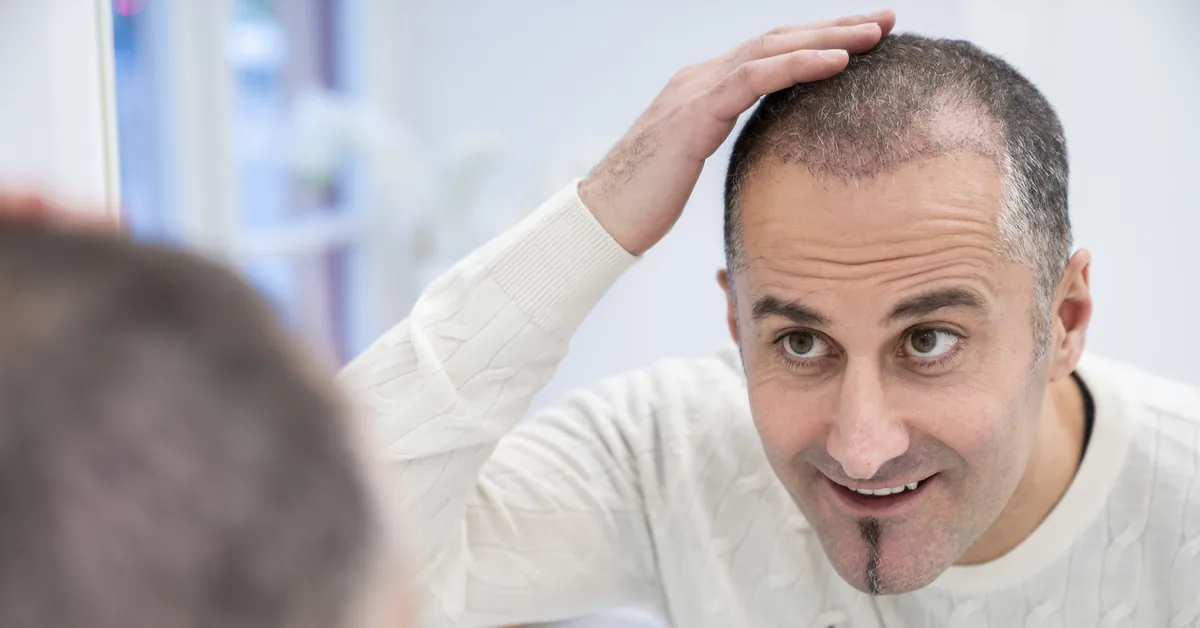
A man checking his hairline for hair loss in a mirror. Photo: KimLantz, CC BY-SA 4.0, via Wikimedia Commons, cropped.
If you searched for how to regrow hair in 3 weeks, you probably want a fast fix for thinning or shedding. This guide explains why the hair cycle makes that impossible, what is realistic in 21 days, which home remedies and treatments have been tested, how long each one takes according to its label or trial, and what to do over your first three weeks so that the following months count.
A daily look in the mirror like this one rarely shows a real change within 3 weeks. Photos taken in the same light and position and compared a month apart give a fairer picture, as explained further down.
Understanding the Hair Growth Cycle
Every hair on your scalp grows from a follicle that works in cycles. A 2023 review of the hair cycle describes it simply: a long growing phase, a short transition, a resting phase and a shedding phase. Each follicle cycles on its own schedule, which is why you do not lose all your hair at once, and each one goes through ten to thirty cycles in a lifetime.
Most people have about 100,000 scalp hairs at any time. The American Academy of Dermatology and the NHS both say it is normal to lose between 50 and 100 hairs a day. Those hairs are the ones that have finished their cycle, and in a healthy scalp a new hair is already forming beneath each one.
The length of each phase is the key to the 3 week question. Scalp hair stays in the growing phase for 2 to 8 years, which is why it can grow so long. When a hair stops growing, it does not restart the next day. It moves through the transition and then rests for months before the follicle makes a new hair.
The speed of growth matters too. A study that measured more than 3,000 scalp hairs in women found that pigmented hairs grew about 0.35 mm a day. That works out to roughly 1 cm a month. Even a follicle that restarts growing on day one of your plan would produce a hair only a few millimetres long by the end of week three.
Four Growth Phases
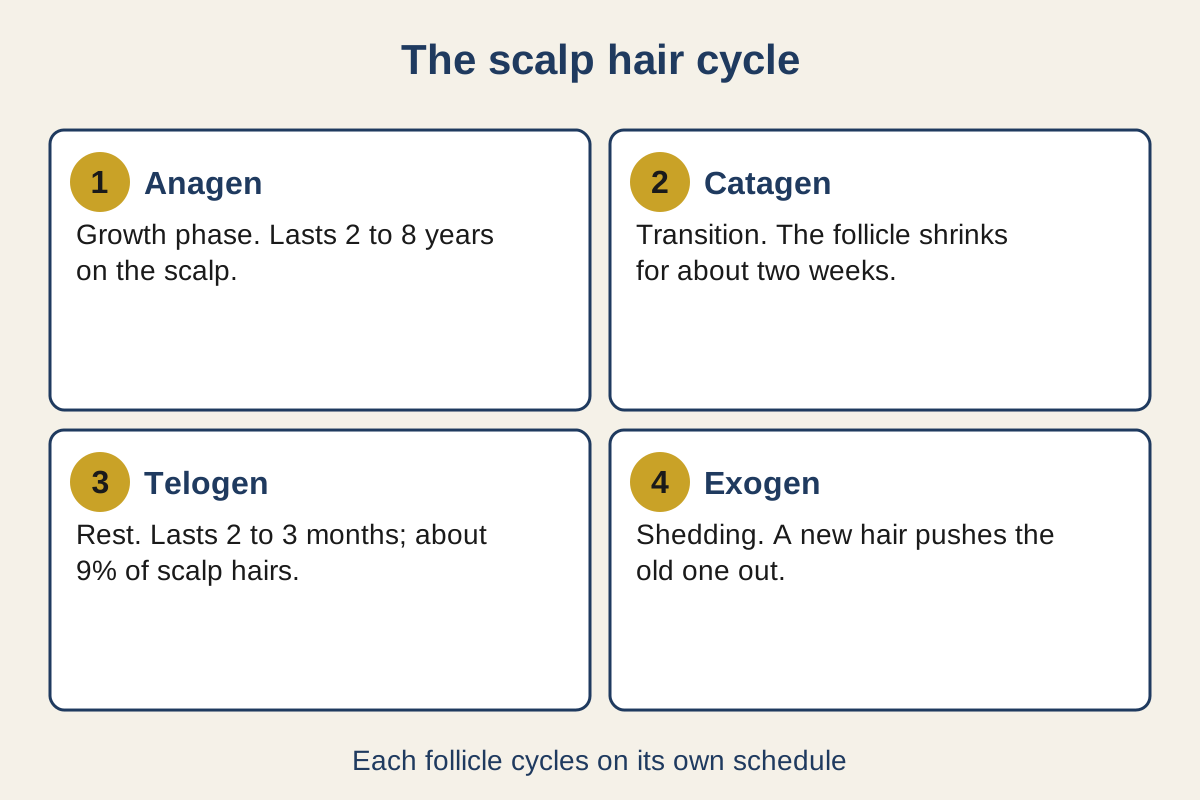
The 2023 review lists four phases, shown in the chart below:
Anagen, the growth phase. On the scalp it lasts 2 to 8 years. Eyebrow follicles, for comparison, stay in this phase for only 2 to 3 months, which is why brows stay short.
Catagen, the transition. The follicle shrinks and detaches from the cells that feed it. This lasts about two weeks.
Telogen, the resting phase. It lasts about two to three months. About 9% of scalp hairs are in this phase at any time.
Exogen, the shedding phase. A new hair grows up under the old one and pushes it out.
The same review notes that the growth phase gets shorter with age, so hair tends to become thinner and weaker over time. When many hairs enter the resting phase too early, the result is heavy shedding, called telogen effluvium.
Common Causes of Hair Loss That Affect Regrowth
Whether hair grows back, and how fast, depends on why it fell out. The American Academy of Dermatology separates two problems that people often mix up:
Hair shedding: more hairs than usual fall out, but the follicles keep working. This is telogen effluvium.
Hair loss: something stops the hair from growing. Hair will not regrow until the cause stops.
Excessive shedding often follows a stressful event. The AAD lists losing 20 pounds or more, giving birth, a high fever, an operation, recovering from an illness, a lot of ongoing stress and stopping birth control pills. Most people notice the shedding a few months after the event. A new mother, for example, may see heavy shedding about two months after giving birth, peaking at about four months. Our postpartum hair loss guide covers that timeline in detail.
This delay is important for anyone trying to regrow hair in 3 weeks. If your shedding started recently, the trigger may have happened two or three months ago, and hairs that are already in the resting phase will still fall out over the coming weeks, whatever you put on your scalp.
Other common causes include:
Pattern hair loss: inherited and driven by the hormone DHT, which shortens the growing phase over time. The NHS describes male and female pattern baldness as permanent. Our DHT and hair loss guide explains the process.
Low iron or weight loss: the NHS lists iron deficiency and weight loss among causes of temporary hair loss.
Illness and thyroid problems: a 2023 review notes that an underactive or overactive thyroid can cause reversible, diffuse hair loss.
Cancer treatment: the AAD notes that hair tends to regrow once chemotherapy or radiation stops.
Tight hairstyles and harsh products: both appear on the AAD list of hair loss causes.
The right treatment depends on the cause, and that is why a 3 week plan should start with a diagnosis rather than a product. The NHS advises seeing a GP to find out what is causing your hair loss before going to a commercial hair clinic. A GP may be able to tell the cause just by looking at your hair, and you should mention it if the loss is affecting your wellbeing.
Here is how the main causes line up with what helps:
Cause
What usually helps
Realistic timeline
Shedding after stress, illness or birth
Time, once the trigger has passed
Fullness returns in 6 to 9 months (AAD)
Low iron
Treating the deficiency, after a blood test
Varies; ask your doctor
Pattern hair loss
Minoxidil or finasteride, under medical guidance
Results from 2 to 4 months on the minoxidil label
Medicine or treatment side effect
Talk to your doctor before stopping
Hair tends to regrow after the treatment ends
Sudden patchy loss
A dermatologist's diagnosis
Depends on the condition
Two points from the NHS are worth keeping in mind. First, most hair loss does not need treatment because it is either temporary or a normal part of getting older. Second, no treatment is 100% effective, and finasteride and minoxidil only work for as long as they are used.
If thinning follows a pattern at the temples or crown, you can compare it with the stages on the Norwood scale before you see a doctor.
How to Regrow Hair With Home Remedies?
Home remedies are the most searched part of this topic, so it is worth being precise about what has been tested. We list only methods with a published human study, and we say plainly where the evidence stops. None of them showed a result within 3 weeks.
The home methods with human studies are:
Rosemary oil on the scalp: compared with minoxidil 2% in a 2015 trial of 100 people with pattern hair loss. Neither group changed at 3 months; both had more hair at 6 months.
Daily scalp massage: 9 healthy men used a massage device for 4 minutes a day. After 24 weeks their hairs were slightly thicker.
Pumpkin seed oil capsules: 76 men with pattern loss took capsules or a placebo for 24 weeks. Hair count rose by about 40% with the capsules and about 10% with placebo.
Many other popular home remedies, such as egg masks, have no published trial showing regrowth, and a remedy that has not been tested cannot be given a timeline. Our oils for hair growth guide covers which oils have human studies and how to dilute essential oils safely.
Rosemary oil in a glass dropper bottle, with fresh rosemary sprigs. Photo: formulatehealth, CC BY 2.0, via Wikimedia Commons, cropped.
Rosemary oil is usually sold as a concentrated essential oil in a small dropper bottle like this one. Dilute it in a carrier oil and patch test it before putting it on the scalp, as the FAQ below explains.
Can You Regrow Hair Naturally in 3 Weeks?
No natural method has been shown to regrow hair in 3 weeks. Searches for how to regrow hair naturally in 3 weeks for men usually concern pattern loss, which tends to progress and responds slowly even to approved drugs. For women, the most common cause of sudden thinning is shedding after a trigger, which settles over months as the body readjusts.
The same applies to the narrower searches. To regrow hair naturally in 3 weeks with oil, food or a shampoo is not possible on the evidence we found: the rosemary oil trial saw no change at 3 months, nutrients only help when you are short of them, and anti-dandruff shampoos treat dandruff rather than hair loss.
What's Realistic in 21 Days?
In 21 days you can expect:
About 7 mm of new length on hairs that are already growing.
No visible new hairs from follicles that were resting.
Possibly continued shedding, if a trigger happened months ago.
You can also use the 21 days to book a GP appointment, get blood tests, take baseline photos and change the habits that break or pull out hair.
Natural Hair Regrowth: Fix Nutrient Shortages First
Food is often presented as the fastest natural route to regrow hair. The evidence says something narrower: fixing a shortage can help, but extra nutrients on top of a normal diet have not been shown to grow more hair.
A 2019 review of vitamins and minerals in hair loss reached these conclusions:
Iron: supplements are recommended for people with pattern loss or shedding who have low iron, which means a blood test comes first.
Biotin and vitamin E: the review found no support for supplements in these conditions.
Vitamin A and selenium: too much of either can cause hair loss.
High-dose biotin: it can give false results on some blood tests, so tell your doctor if you take it.
For everyday eating, the safest approach is a balanced diet with enough protein and iron, since shortages of these appear on the list of hair loss causes. Our guide to the best vitamins for hair loss explains when testing makes sense, and our collagen for hair growth guide covers what that supplement has and has not shown.
Dutasteride: A Prescription Drug, Not a Home Remedy
Some articles on regrowing hair in 3 weeks present dutasteride as a key ingredient. It is not a natural product or a home remedy. It is a prescription medicine that blocks the conversion of testosterone to DHT. Its US label approves it for an enlarged prostate in men, not for hair loss, and states that it is not indicated for use in women.
A 2025 network analysis of 33 studies in men with pattern hair loss ranked oral dutasteride as the most effective option, measuring results at 24 and 48 weeks, not weeks. The label also carries warnings: pregnant women should not handle the capsules because of a risk to a male fetus, patients should not donate blood until 6 months after the last dose, and side effects include impotence and decreased libido. Use it only if a doctor prescribes it.
Plant-Based Ingredients: What the Trials Show
Plant-based products are popular, but a 2024 review of natural alternatives for pattern hair loss notes that the only FDA-approved medicines for it are finasteride and minoxidil, and that more research is needed to establish how well herbal remedies work. Rosemary oil and pumpkin seed oil have the clearest trials, as described above, and both were judged over 6 months.
If you try a plant-based product, check what the active ingredient is, patch test it on a small area of skin and give it months, not weeks.
How to Regrow Hair Fast?
There is no way to make a follicle grow hair faster than its natural rate. The fastest real progress comes from three steps: finding the cause early, removing the trigger and starting a tested treatment if you need one. The AAD notes that the sooner treatment begins for hair loss, the better the outlook.
Fast products are mostly cosmetic. Volumising shampoos, fibres and styling can make hair look fuller the same day, but they do not change what the follicles produce.
For pattern hair loss, the fastest tested option on the label is minoxidil. The men's 5% label says results may occur at 2 months with twice-daily use, that some men need at least 4 months, and that the product will not work for all men. Our guide does hair growth serum work compares it with cosmetic serums.
How Long Does My Hair Grow in 3 Weeks?
At about 0.35 mm a day, a growing scalp hair gains roughly 7 mm in 3 weeks. The rate varies by person, scalp area and hair colour: the same study found that white hairs grew slightly faster than pigmented ones. You may notice the difference in a short haircut, but not in overall density.
How Many Weeks Does It Take for Hair to Grow Back?
It depends on the cause. After stress, illness or childbirth, the AAD says hair tends to regain its normal fullness within 6 to 9 months. With minoxidil for pattern loss, the label says to expect 2 to 4 months before results. For loss caused by a treatment, hair tends to regrow once the treatment stops.
Hair Growth in 3 Weeks: What You Can Measure
Hair growth in 3 weeks is real, but it is length, not new hair. Every growing hair on your head adds a few millimetres. What does not change in that time is the number of hairs or how thick the ponytail feels, because both depend on how many follicles are in the growing phase.
This is why 3 weeks of hair growth is hard to judge by eye. A useful way to check progress is to measure what can be measured:
Length: mark a short section of hair at the root line and compare after 3 weeks.
Shedding: note roughly how many hairs you see after washing or brushing.
Photos: take pictures of the parting and crown in the same light and position.
Scalp: note any redness, scaling or soreness, which needs a doctor.
Why Results Lag Behind Effort
Treatments that work do not show quickly, and that is not a sign they have failed. In the rosemary trial, neither rosemary oil nor minoxidil 2% made a difference at 3 months; both did at 6 months. A follicle that is moved from rest back into growth needs time to grow a hair long enough to see.
Some treatments even cause more shedding at first. A 2019 review of minoxidil reports a trial in women where shedding was reported by 12.5% of foam users and 17.5% of solution users. The same review notes that stopping treatment leads to shedding within 3 to 4 months. If shedding is heavy or lasts, talk to your doctor rather than stopping on your own.
See a doctor quickly if your hair falls out suddenly or in patches, if your scalp is red, sore or scaly, or if hair loss comes with weight loss, tiredness or other symptoms. Do not start prescription medicines or high-dose vitamins without medical advice.
What to Do Over Three Weeks?
Three weeks is not enough to regrow hair, but it is enough to set up the months that follow. Use it as a starting plan.
Week 1 Focus
Book a GP or dermatologist appointment, especially if shedding is heavy or sudden.
Write down anything that happened 2 to 4 months ago: illness, fever, surgery, childbirth, weight loss, a new medicine or a stressful event.
Take baseline photos of your parting, hairline and crown in good light.
List every supplement you take, so your doctor can check doses.
Week 2 Focus
Get any blood tests your doctor recommends, such as iron levels.
Loosen tight ponytails, braids and buns, and treat wet hair gently.
Review your diet for protein and iron; do not start high-dose supplements without results.
If you want to try a home method, choose one with a trial, such as rosemary oil diluted in a carrier oil or daily scalp massage.
Week 3 Focus
Go through your results and diagnosis with your doctor.
If you have pattern hair loss, ask whether minoxidil or another treatment suits you, and what side effects to watch for.
Set a review date at least 3 to 6 months away.
Repeat your photos in the same light and position.
Track Changes
Compare photos once a month rather than every day. Daily checks make normal variation look like progress or loss. Keep notes on shedding, new triggers and any side effects, and bring them to your follow-up appointment.
Reduced Shedding
If your loss is shedding after a trigger, less shedding is usually the first sign of recovery, and it can take months. The AAD notes that if the stressor continues, shedding can last much longer, so dealing with ongoing stress is part of the plan.
New Short Hairs: Usually Later
Short new hairs along the hairline or parting are a good sign, but they usually appear after months, not weeks. The minoxidil label gives 2 months as the earliest point for results, and the trials in this guide judged results at 6 months.
Frequently Asked Questions
Can Your Hair Grow Back in 3 Weeks?
Not in a visible way. A growing hair gains about 7 mm in 3 weeks, and a follicle that has stopped growing first rests for 2 to 3 months. Hair lost to shedding usually regains its fullness in 6 to 9 months, according to the American Academy of Dermatology.
Is It Really Possible to Regrow Hair Naturally in 3 Weeks?
No. No natural method has a study showing regrowth within 3 weeks. In the best known trial, rosemary oil and minoxidil 2% showed no change at 3 months and an improvement at 6 months. Claims of regrowth in 3 weeks describe cosmetic effects or normal growth.
What Natural Method Works Fastest?
None works fast. Rosemary oil, scalp massage and pumpkin seed oil capsules each have a small human study, judged over about 6 months. If shedding comes from a shortage such as low iron, treating it after a blood test helps more than any oil or mask.
Does Rosemary Oil Really Regrow Hair?
In one 2015 trial of 100 people with pattern hair loss, rosemary oil gave a similar gain in hair count to minoxidil 2% at 6 months. That is one trial, and a 2024 review says more research is needed. Always dilute it in a carrier oil and patch test it first.
Can Nutrition Alone Regrow Hair?
Only if a shortage is causing the loss. A 2019 review recommends iron supplements for people with low iron, but found no support for biotin or vitamin E in common types of hair loss. Too much vitamin A or selenium can cause hair loss, so test before taking supplements.
Do I Need a Dermatologist for Natural Hair Regrowth?
It helps if your hair loss is sudden, patchy, heavy or getting worse, or if your scalp is sore or red. The NHS advises seeing a GP first to find the cause. A diagnosis tells you whether natural methods make sense or whether you need a different treatment.
What's the Minimum Commitment to See Natural Regrowth?
Plan on at least 3 to 6 months. The rosemary oil and pumpkin seed oil trials both judged results at about 6 months, and the scalp massage study ran for 24 weeks. Take monthly photos so you can compare fairly over that time.
Can I Combine Natural Methods with Prescription Treatments?
Ask your doctor first. Prescription treatments such as finasteride have known side effects: a 2026 review found sexual side effects in 1.9% to 6.7% of men on oral finasteride in trials, compared with 0.9% to 3.9% on placebo. Your doctor can check that oils or supplements will not irritate your scalp or interact.
What's the Best Natural Hair Regrowth Method for Women?
No natural method has strong evidence for women. Sudden thinning in women is often shedding after a trigger, which usually settles over months. For female pattern hair loss, the AAD notes that 2% and 5% minoxidil products are approved, that it takes about 6 to 12 months to judge them, and that treatment works best when started at the first sign of loss. See a doctor to find the cause.
How Can I Speed Up Hair Growth?
You cannot make a follicle grow faster than its natural rate of about 0.35 mm a day. What speeds up real progress is finding the cause early, removing the trigger and, for pattern loss, starting a tested treatment. The AAD says the sooner treatment begins, the better the outlook. Volumising products and fibres change how hair looks, not how fast it grows.
Can Hair That Has Fallen Out Grow Back?
It depends on why it fell out. With shedding after stress, illness or childbirth, the follicles keep working, and the AAD says fullness tends to return within 6 to 9 months. With hair loss, something stops the hair from growing, and it will not regrow until that cause stops. A GP or dermatologist can tell which one you have.
How Soon Does Minoxidil Start Working?
Not within 3 weeks. The men's 5% minoxidil label says results may appear at 2 months with twice-daily use and that some men need at least 4 months. For women, the AAD advises using it for about 6 to 12 months before judging how well it works. Some people notice extra shedding after starting, as a 2019 review describes; ask your doctor if it is heavy.
Is Your Hair Still Thinning?
If you have been shedding for months or your hairline or crown keeps getting thinner, the pattern of loss can show what is behind it. Our guide on how to thicken hair naturally covers the habits that protect the hair you have. Send clear photos for a free hair analysis, and the medical team will tell you what they see and which options may fit your situation.
Medical disclaimer: This article is for informational purposes only and is not medical advice. Individual results and recovery vary from person to person. Always follow the written aftercare plan from your own medical team.
Sources and medical review
Natarelli N, Gahoonia N, Sivamani RK. Integrative and mechanistic approach to the hair growth cycle and hair loss. Journal of Clinical Medicine, 2023;12(3):893
Van Neste D. Thickness, medullation and growth rate of female scalp hair are subject to significant variation according to pigmentation and scalp location during ageing. European Journal of Dermatology, 2004;14(1):28-32
Koyama T, Kobayashi K, Hama T, Murakami K, Ogawa R. Standardized scalp massage results in increased hair thickness by inducing stretching forces to dermal papilla cells in the subcutaneous tissue. Eplasty, 2016;16:e8
Cho YH, Lee SY, Jeong DW, et al. Effect of pumpkin seed oil on hair growth in men with androgenetic alopecia: a randomized, double-blind, placebo-controlled trial. Evidence-Based Complementary and Alternative Medicine, 2014;2014:549721
Gupta AK, Bamimore MA, Williams G, Talukder M. Comparative efficacy of minoxidil and 5-alpha reductase inhibitors monotherapy for male pattern hair loss: network meta-analysis study of current empirical evidence. Journal of Cosmetic Dermatology, 2025;24(7):e70320
Złotowska A, Jastrząb-Miśkiewicz B, Krajewski PK. Sexual dysfunction associated with 5α-reductase inhibitors in the treatment of androgenetic alopecia: a systematic review. Frontiers in Medicine, 2026;13:1787706
Bin Rubaian NF, Alzamami HFA, Amir BA. An overview of commonly used natural alternatives for the treatment of androgenetic alopecia, with special emphasis on rosemary oil. Clinical, Cosmetic and Investigational Dermatology, 2024;17:2495-2503
Send three photos: front, top and sides. You get a technique recommendation, a graft range and a straight answer about what is achievable, before anyone talks about price.
Your details are with the team
A patient coordinator will get back to you shortly. If you would like to send your photos now, WhatsApp is the fastest way to do it.
We respond quickly, day or night, in your language.
Multilingual team, no obligation
Data protectedKVKK and GDPR compliant, 100% confidential
Authorized Health Tourism Intermediary
Turkey Hair Center is the hair-restoration brand of Healthy Way Tourism, an authorized international health-tourism intermediary. All medical procedures are performed by licensed medical professionals at authorized healthcare facilities in Turkiye, in accordance with the regulations of the Ministry of Health.