
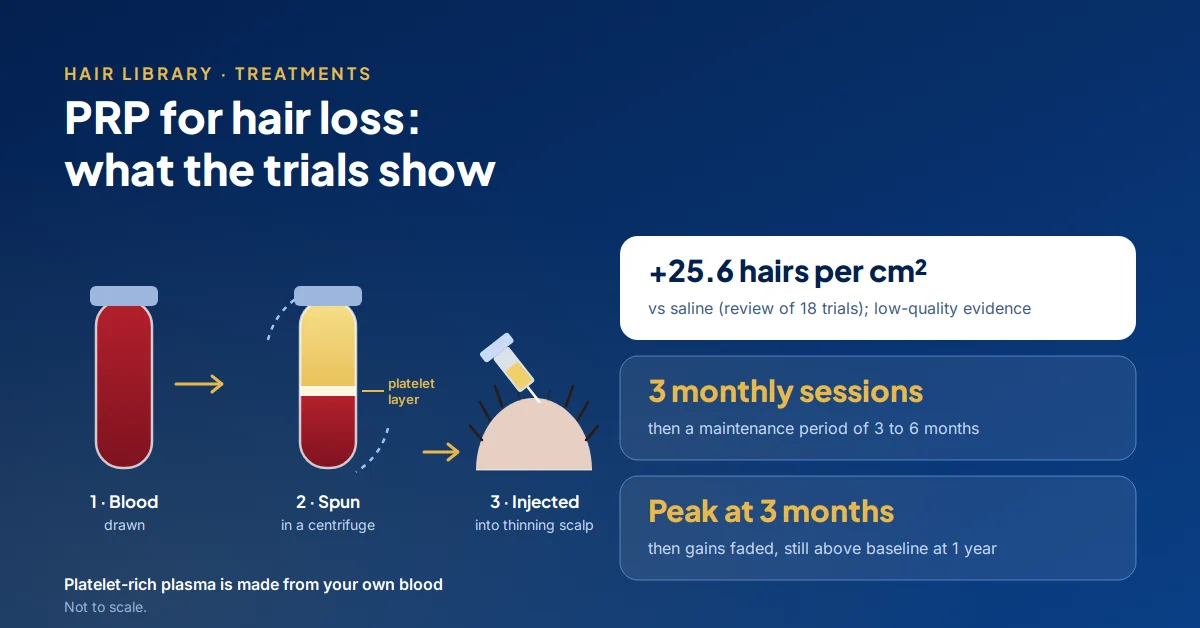
PRP for Hair Loss
We explain what PRP for hair loss can and cannot do: what trials found, how many sessions guidance suggests, side effects, and where PRP fits with a transplant.
Reviewed 31 Oct 2026
Hair Library · Category
What published research says about medicines, light therapy and other treatments for hair loss, including their side effects.
We explain what PRP for hair loss can and cannot do: what trials found, how many sessions guidance suggests, side effects, and where PRP fits with a transplant.
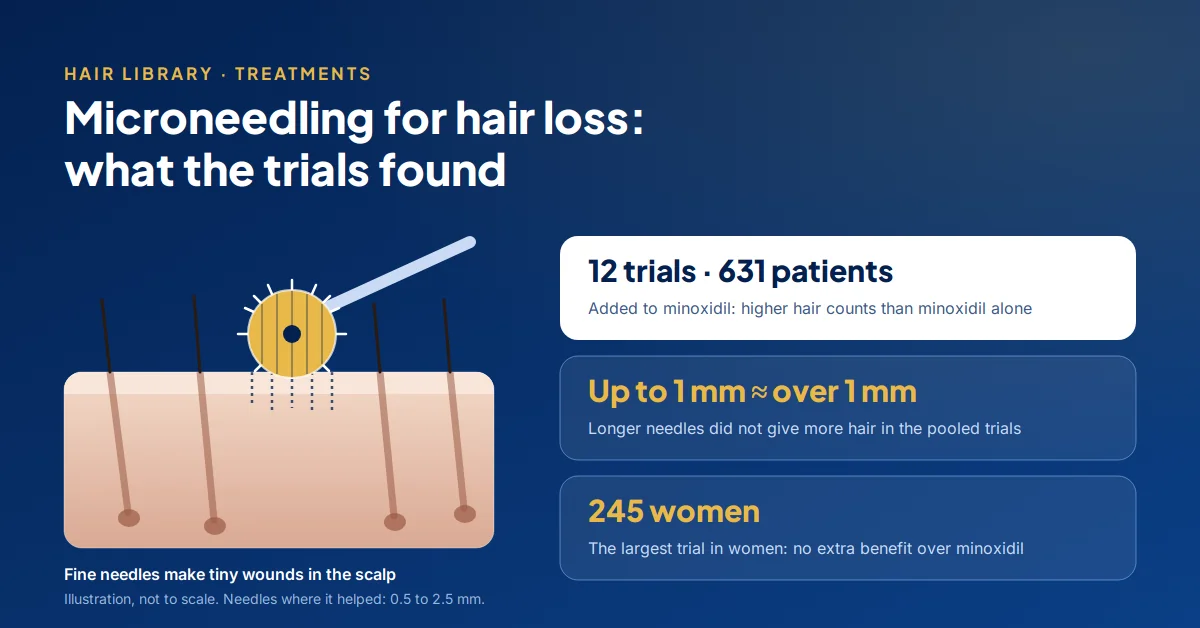
We explain how microneedling for hair loss works, what the trials found with minoxidil, which devices and needle lengths they used, and where a transplant fits.
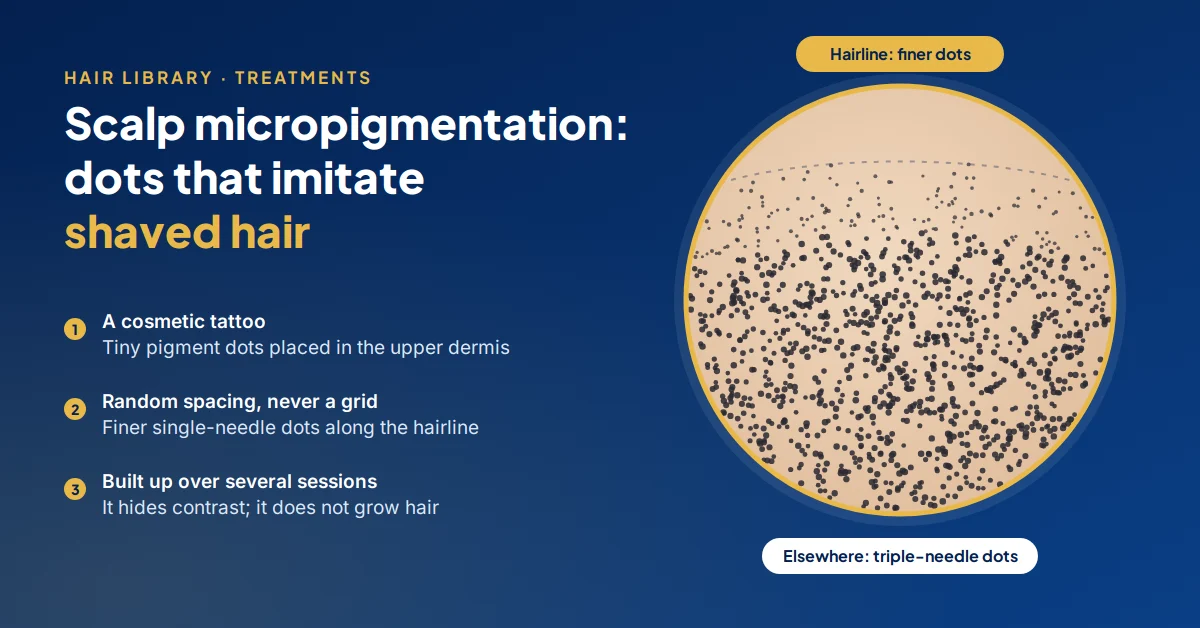
We explain how scalp micropigmentation works, how many sessions it takes, how long the dots last, what can go wrong and how SMP compares with a hair transplant.

We explain how minoxidil works, how topical and oral forms compare, how to apply it, when shedding and results appear, and where it fits with a hair transplant.

We explain how dutasteride blocks both DHT enzymes, how it compares with finasteride in trials, its side effects and the blood donation and PSA checks it needs.

We explain how finasteride lowers DHT, what results to expect month by month, how common side effects are, and how it works with minoxidil or a hair transplant.
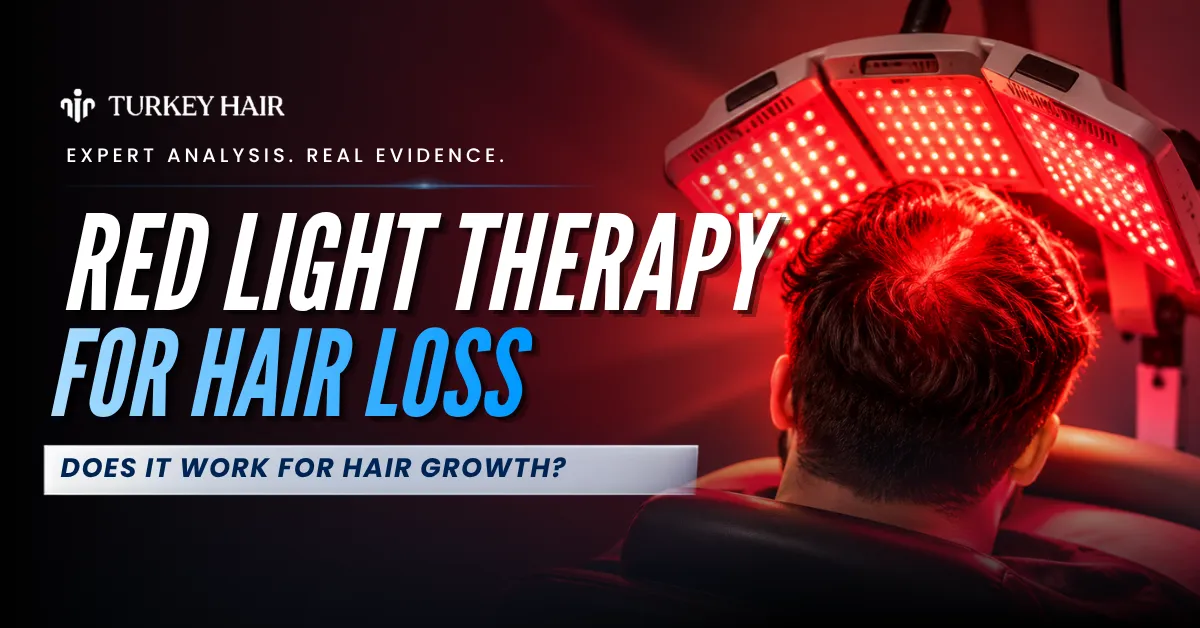
Does red light therapy work for hair loss? Review the evidence, who may benefit, how LLLT is used, expected results, safety, devices and alternatives.
Does spironolactone work for hair loss in women? What studies found, how long it takes, side effects, potassium tests, pregnancy risks and why men avoid it.
PFS hair guide: what post-finasteride syndrome is, what regulators and trials say, whether it can be treated or prevented, and what happens to hair after.
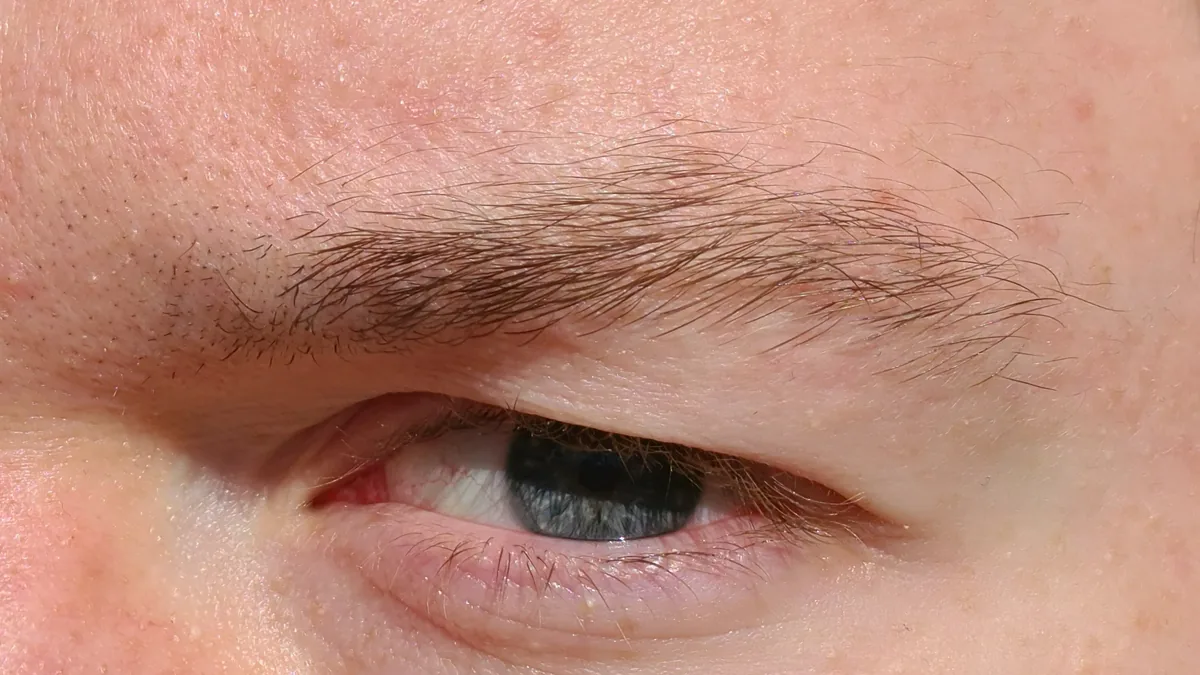
Minoxidil for eyebrows is off-label. What the brow trials found, side effects near the eyes, Latisse vs minoxidil, and when an eyebrow transplant fits better.
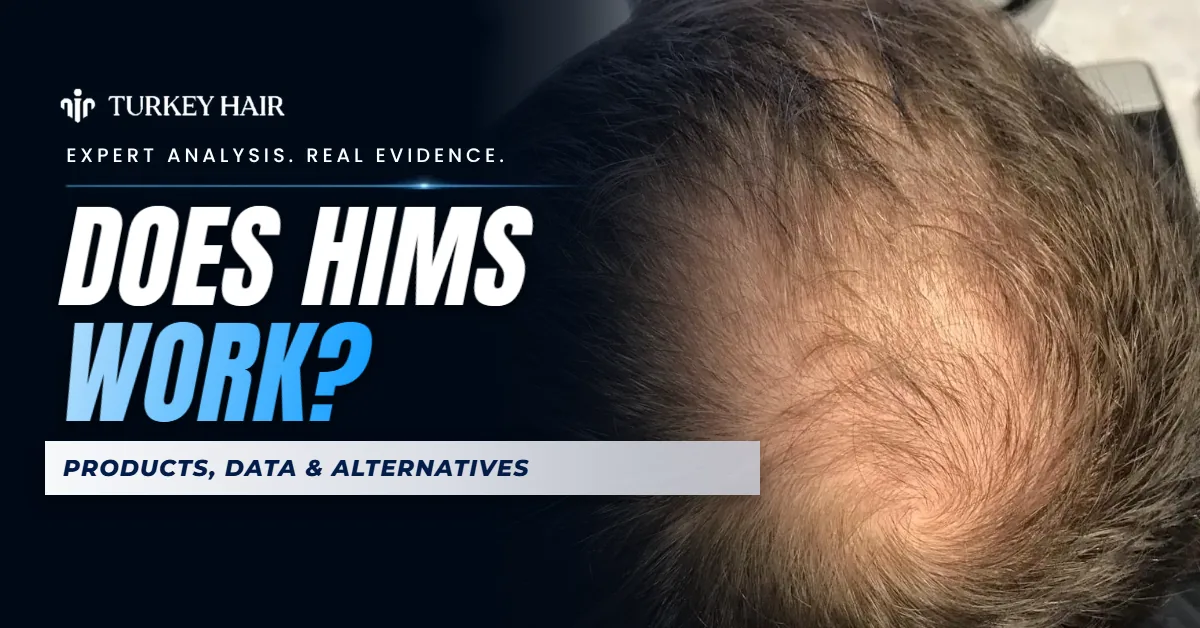
Does Hims work for hair loss? What it prescribes, which products are FDA-approved, what patient data show and how Hims compares with Rogaine, Keeps and Roman.
Can you regrow hair in 3 weeks? How the hair growth cycle sets the pace, what is realistic in 21 days, which home remedies were tested, and a starting plan.
Finasteride blocks the enzyme that turns testosterone into DHT, the hormone that shrinks follicles in male pattern hair loss. It is a prescription medicine with possible side effects, so it should be started and followed by a doctor.
Full entry: Finasteride for Hair Loss →Minoxidil is an established medication for certain types of hair loss. It is a drug, not a hair oil, and the FDA-approved label says not to use it for sudden or patchy hair loss.
Full entry: Minoxidil for Hair Loss →Post-finasteride syndrome is a term for sexual, neuropsychiatric and physical symptoms that persist for at least three months after a man stops finasteride. A 2020 review concluded that studies so far can neither confirm nor refute it as a distinct disease.
Full entry: Post-Finasteride Syndrome →Red light therapy, or low-level light therapy (LLLT), is a non-invasive option for pattern hair loss. Clinical studies suggest it may improve hair density, but research does not prove it is consistently more effective than minoxidil.
Full entry: Red Light Therapy →Spironolactone is a prescription water tablet that dermatologists use off-label for women with female pattern hair loss, because it blocks the effect of androgen hormones on the hair follicle.
Full entry: Spironolactone for Hair Loss →Talk to our hair team on a free video call, in your language. You receive a written plan with your technique, estimated grafts and all-inclusive price. If a hair transplant isn't right for you, we tell you honestly.
Your information is 100% confidential.