Performed at authorized partner hospitals Turkey Hair Center is a Ministry of Health authorized health-tourism intermediary, not a clinic.
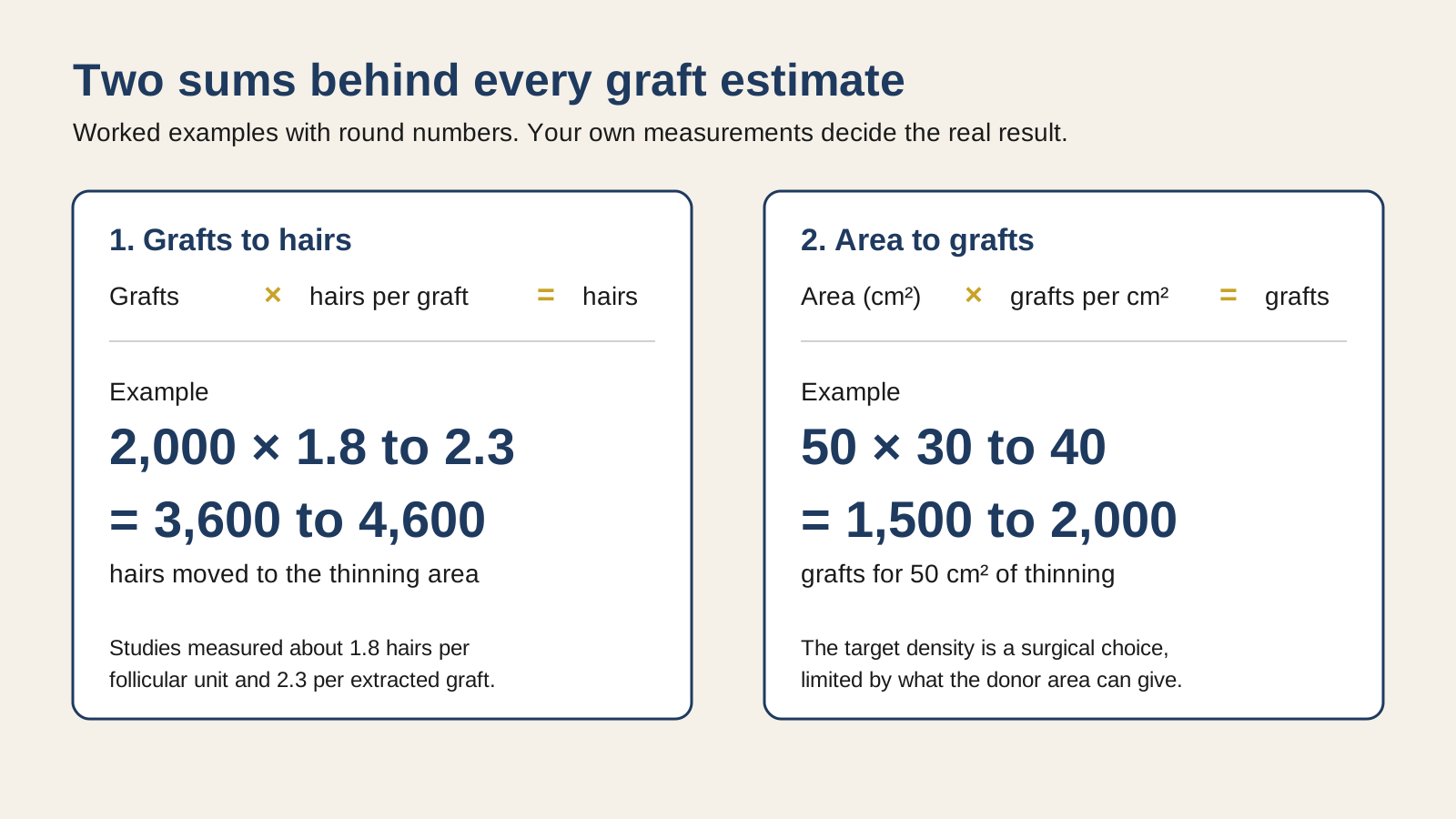
Most men need roughly 1,500 to 4,000 grafts, and the exact figure depends on three things: the size of the thinning area, the density of the donor area and how many hairs each graft carries. Two sums give a first estimate: grafts times hairs per graft gives the hair count, and area in cm² times target grafts per cm² gives the graft count.
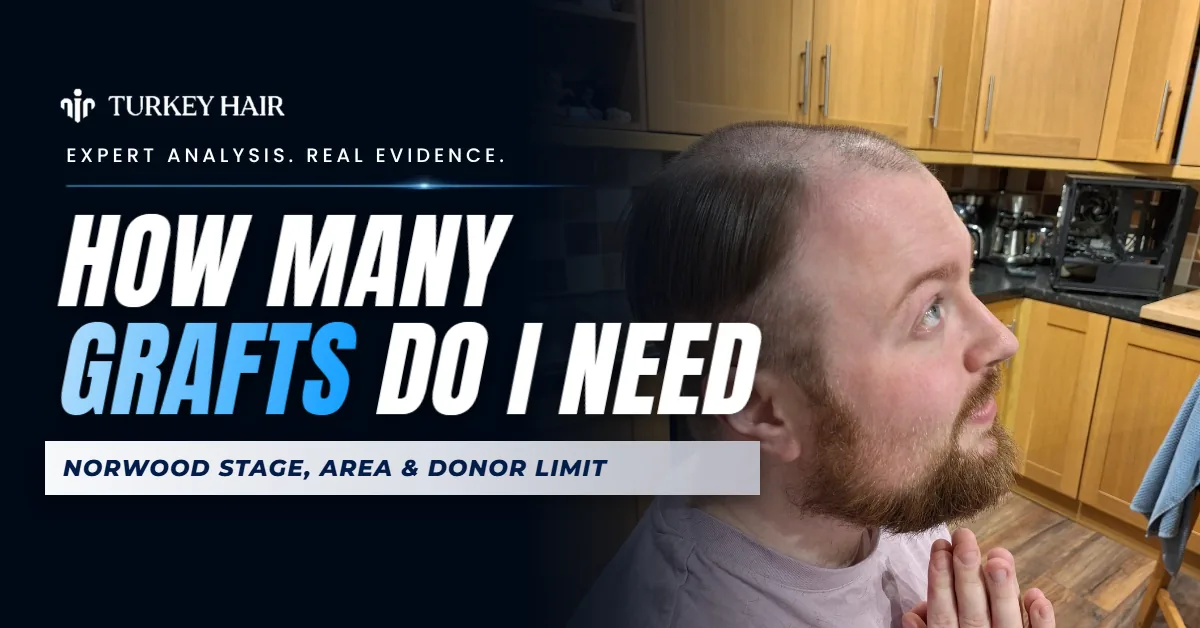
Cover built on a man with male pattern hair loss midway through a haircut. Photo: Sister of necronwarrior, uploaded by necronwarrior, CC BY-SA 4.0, via Wikimedia Commons, cropped, text and logo added.
A graft is a unit of skin with one to four hairs, not a single hair, so a number on its own can mislead. This guide shows typical graft ranges by Norwood stage, how area and density turn into a number, what the donor area can safely give, when a second session or a female pattern of thinning changes the plan, and how the medical team confirms a real figure for one person.
The man in the cover photo has not had a transplant. His hair is thin on top while the sides are already clipped short, which shows the two zones every graft estimate weighs against each other: the thinning area that needs cover and the side and back hair that would supply it. One photo cannot give his exact stage or graft count.
Grafts and Hairs Are Not the Same Thing
A graft is a follicular unit taken from the donor area and placed in the thinning area. Each unit holds a small group of hairs that grow together. A 2010 review of follicular unit extraction by Dua and Dua notes that an extracted graft may hold 1 to 4 hairs, and rarely 5 or 6.
The average sits between one and three. A 2019 study of 580 Indian men found 1.81 follicles per follicular unit on average. A 2018 study of extracted units found about 2.3 hairs per extracted graft. The two figures come from different samples and methods, so treat them as a working range, not a fixed value.
That difference is why a plan quoted as "3,000 grafts" and a plan quoted as "6,000 hairs" can describe the same operation. Both sums are worked through below with round numbers.
The sums are simple, but the inputs are personal:
Hairs per graft: about 1.8 to 2.3 in the studies above, and lower or higher in some people.
Area: the part of the scalp that needs cover, measured in cm².
Target density: how many grafts per cm² the surgeon plans to place, a surgical choice limited by what the donor can give.
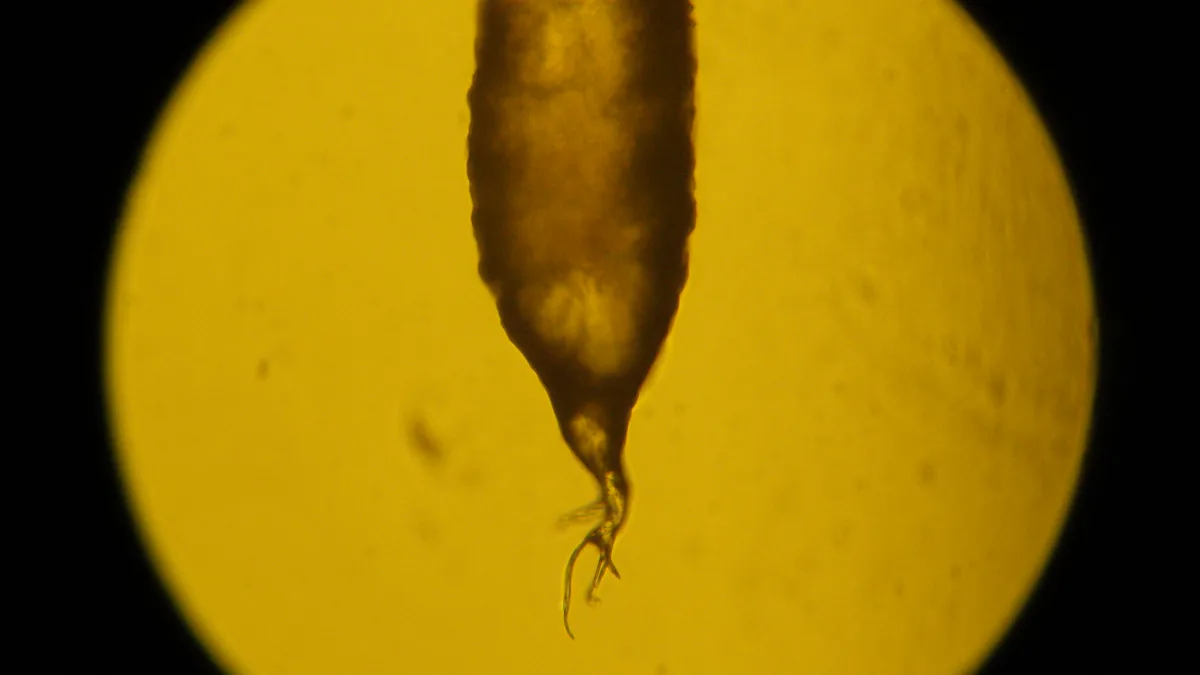
This is one hair and its root, not a graft. A graft holds a small group of such hairs together with the skin around them, which is why the hair count of a plan is always higher than its graft count.
How Many Grafts Do You Need by Norwood Stage?
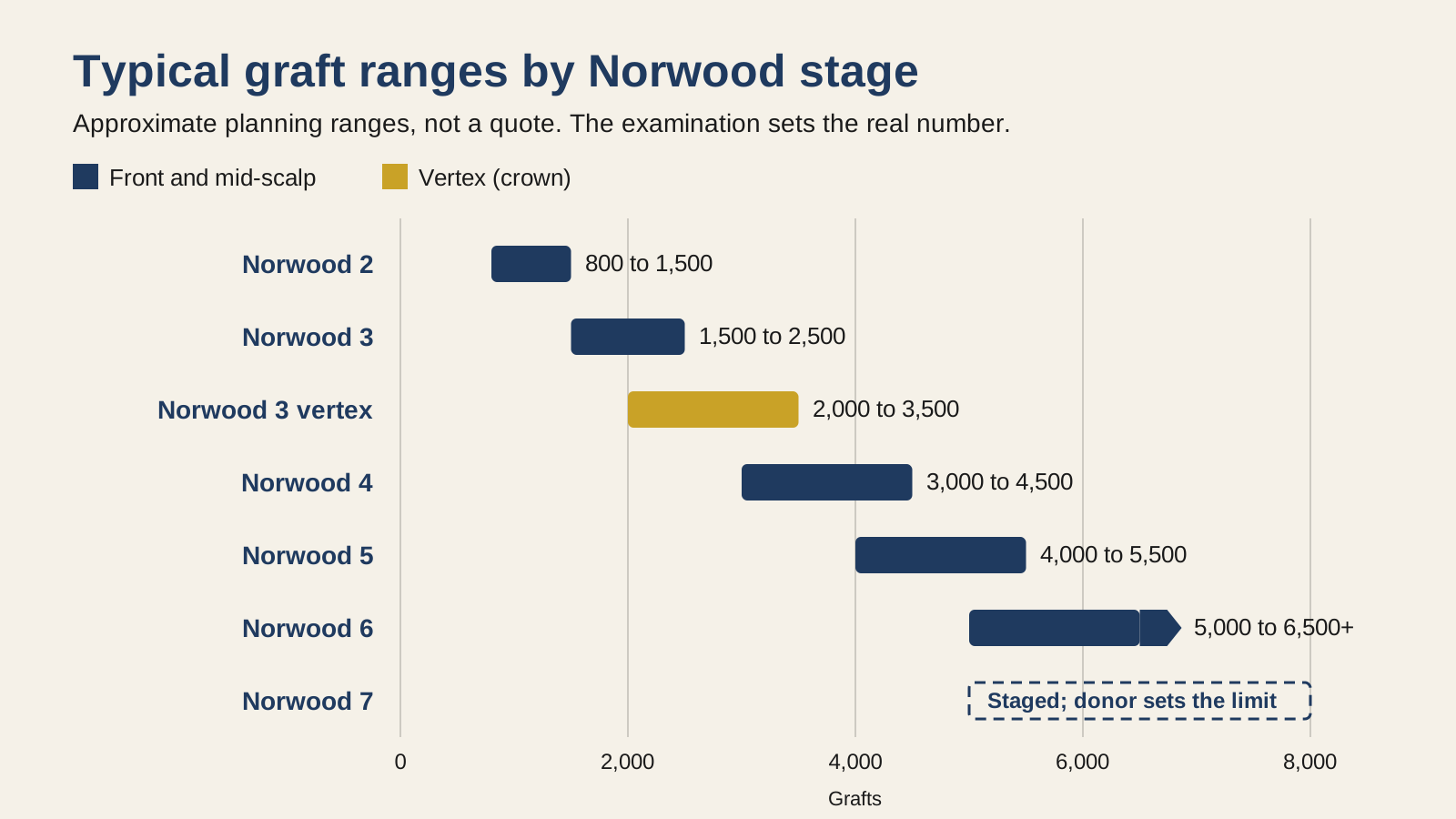
The Norwood scale, published by O'Tar Norwood in 1975, grades male pattern baldness from stage 1 to stage 7. It is the usual starting point for a graft estimate because it describes how much of the scalp has lost hair. The table below gives approximate planning ranges, not a quote. They come from the medical team's planning experience, and the examination sets the real number.
Norwood stage
Typical pattern
Approximate grafts
Norwood 2
Slight recession at the temples
800 to 1,500
Norwood 3
Deeper recession at both temples
1,500 to 2,500
Norwood 3 vertex
Stage 3 recession plus thinning at the crown
2,000 to 3,500
Norwood 4
Marked front loss plus a bald crown, with a band of hair between
3,000 to 4,500
Norwood 5
The band between front and crown is narrower and thinner
4,000 to 5,500
Norwood 6
The band is gone and the bald area is one large zone
5,000 to 6,500+
Norwood 7
Only a horseshoe of hair remains at the sides and back
Planned in stages; the donor area sets the limit
Two points about the ranges matter more than the numbers:
They overlap on purpose. Two men at the same stage can need different counts because the thinning area, the hair type and the donor area differ.
The top end is limited by the donor. At stages 6 and 7 the question changes from "how many do I want" to "how many can be taken".
The second sum works from the map of the scalp. The surgeon measures the area that needs cover in cm², then chooses how many grafts per cm² to place. The table shows the arithmetic at 30 to 40 grafts per cm², an illustrative range used in this guide.
Area to cover
At 30 grafts per cm²
At 40 grafts per cm²
25 cm²
750
1,000
50 cm²
1,500
2,000
75 cm²
2,250
3,000
100 cm²
3,000
4,000
Those densities are well below natural density. The 580-man study measured a mean of 78.2 follicular units per cm² in the donor scalp, so a planned 30 to 40 per cm² is about 40 to 50 percent of that. Transplanted hair still looks full from normal distance, but the plan is a balance, not a copy of the donor area.
Raising the density in one zone uses grafts that then cannot cover another. That trade-off is why the front is usually planned first.
What Changes the Number: Hair Type, Contrast and Curl
Two people with the same area to cover can need different counts. The medical team looks at these points during the review:
Hair thickness. Thicker shafts cover more skin per hair, so fewer grafts can give the same look. Fine hair needs more.
Colour contrast. Dark hair on pale skin shows gaps quickly. Hair close to the skin tone, such as blonde or grey, hides them. Our blonde hair transplant guide covers that case.
Curl. Curly hair lies over the scalp and covers more, but it can make harvesting harder. Rose notes in a 2015 review that very curly hair can be difficult to harvest with a robotic needle, which cannot always follow the curve of the follicle.
Hairs per graft. A donor area with more two and three hair units gives more hairs from the same count.
Future loss. Hair loss usually continues in untreated areas, so the plan allows for it. See how long hair transplants last.
The method used to extract and place grafts is a separate decision, covered in FUE vs DHI. The count follows from the area and the donor area, not from the name of the technique.
How Many Grafts Can the Donor Area Give?
The donor area at the back and sides of the scalp is the limit of every plan. Rose names a lack of donor hair as a major challenge to good results in hair restoration surgery. Taking too much from one area leaves it thin, which is why safe limits exist.
Two studies put figures on this, and both are worth reading with their samples in mind:
Chouhan and colleagues (2019) measured 580 Indian men with androgenetic alopecia. At 25 percent extraction, the extractable follicular units across the limited, standard and extended donor zones were 2,064, 3,097 and 3,612 in one sitting, and 3,612, 5,420 and 6,321 over two sittings.
Mohmand and Ahmad (2018) studied the donor area after extraction and recommended taking less than 35 percent of total hair density in a first session and no more than 10 to 20 percent in a second. They also noted that patients left with 20 to 30 percent of their original density in the donor area looked odd.
Donor zone (580-man study)
One sitting
Two sittings
Limited
2,064
3,612
Standard
3,097
5,420
Extended
3,612
6,321
These are group figures from one population, not a promise for any individual. Donor density, the size of the safe zone and skin laxity all vary. Beard hair is sometimes used as extra donor supply when the scalp alone is not enough, and the same study counted about 824 beard units in its cohort.
The ranges in this guide are planning estimates, not a quote or a promise of a result. The real figure depends on an examination of the scalp, the donor area and your hair type. A surgeon may also advise against surgery or advise a smaller plan.
Hairline, Crown and Front: Where the Grafts Go
The same grafts do different work in different zones, so where the thinning sits changes the count as much as how large it is.
Hairline and front. The front frames the face and is planned first. Soft single-hair grafts usually go at the edge, with denser units behind. A hairline alone is a smaller job than a full-scalp plan, and our guide to the mature hairline explains what a natural line looks like at different ages.
Mid-scalp. The area behind the hairline carries most of the visible density. It takes the largest share of grafts in stages 3 to 5.
Crown. The crown is a circular area with a swirl of hair direction. It is often larger than it looks in a mirror and uses a lot of grafts for a modest visible change. Our crown balding guide covers this zone in detail.
When the donor area cannot cover everything, the plan puts the grafts where they change the look most, usually the front first.
Should the Crown Be Done in the First Session?
When both the front and the crown have thinned, the order of work matters as much as the total. Rose notes in the 2015 review that in marked hair loss it is often not possible to treat every area, and that the crown is the zone most often left out, simply because there is not enough donor hair. Grafts spent on a wide crown cannot later frame the face.
The medical team usually weighs the situations below. They are planning patterns, not fixed rules.
Hair loss situation
Usual strategy
Crown thinning only
A crown-focused plan
Hairline plus a small thinning crown
A combined plan may be possible in one session
Front loss plus a large thinning crown
Front first; the crown may need a second session
Norwood 6 to 7
Planned coverage of the most visible zones, often in stages
A crown can be done in the first session when the donor area is strong and the front does not need many grafts. When the front still needs major work, keeping grafts in reserve protects the donor area and leaves room for a later crown session if the patient wants one.
One Session or Two?
Large plans are often split. Three findings from the studies used in this guide explain why:
A second session gives less. Mohmand and Ahmad advised taking under 35 percent of donor density in a first session and only 10 to 20 percent in a second, so the second harvest is smaller than the first.
Two sittings raise the total. In the 580-man study, the standard donor zone gave about 3,100 grafts in one sitting and about 5,400 over two at 25 percent extraction.
Extraction takes time. A 2010 review by Dua and Dua notes that the number of grafts extracted in a day is limited, so large FUE cases run over several days. At the time it described more than a thousand grafts a day in trained hands and megasessions of up to 2,000 grafts in a 10 to 12 hour day.
In the 580-man study, Chouhan and colleagues set a second sitting at least 6 months after the first. This is a minimum. A second session is considered only after the first has grown out and the donor area has healed, and the medical team sets the timing after checking both. Dua and Dua note that the recipient area heals in about 14 days; the growth stages that follow are covered in the hair transplant recovery timeline.
Is 6,000 Grafts Too Much? Are 7,000 or 8,000 Realistic?
6,000 grafts can suit some patients with a strong donor area, but it is not a safe number for everyone. In the 580-man study, even the extended donor zone gave about 3,600 follicular units in one sitting and about 6,300 over two at 25 percent extraction. A 6,000 graft plan therefore usually means an extended donor zone, two sittings or both. Rose warns that with successive harvests the donor area can thin, and that the thinning may become visible.
Figures of 7,000 or 8,000 need a closer look, because they often count hairs, not grafts. At 1.8 to 2.3 hairs per graft, 4,000 grafts hold about 7,200 to 9,200 hairs, so an "8,000" offer may describe a 4,000 graft operation. Our 8000 grafts guide shows how to check which one an offer means.
A true count of 7,000 grafts or more goes beyond what the extended scalp zone gave over two sittings in that study. It would need extra supply, such as beard hair (the same study counted about 824 beard units) or body hair, which Dua and Dua note can only be harvested with FUE. Our guides to beard transplant and body hair transplant cover those donor sources.
Before accepting a high number, ask:
Is the figure grafts or hairs?
How many follicular units will be extracted, and from which zones?
What share of my donor density does that take?
Will it be done in one session or two?
How will the donor area look afterwards, and what will be left for later?
A high count is only worth it when there is bare skin that needs it and the donor area can still look natural afterwards.
How Many Grafts Do Women Need?
Female pattern hair loss usually looks different from the male pattern, so the Norwood table above does not apply. A 2018 review by Fabbrocini and colleagues describes the first sign as diffuse thinning over the top of the scalp and the crown, while the front hairline stays in place. The review notes that severity is usually graded with the Ludwig scale from 1977 or the Savin scale from 1994.
Scale
Usually used for
What it describes
Norwood
Men
Recession at the temples and front, a bald crown, then one large bald zone
Ludwig
Women
Diffuse thinning over the top of the scalp, with the front hairline kept
Savin
Women
Widening of the central parting and a loss of density
That pattern changes the graft question in three ways:
The donor area may thin too. The same review notes that in female pattern hair loss a reduction in hair density usually shows across the whole scalp. A donor area that is itself thinning cannot give many grafts safely.
Grafts go between existing hairs. Diffuse thinning leaves native hair in the recipient area, so grafts are placed among it rather than on bare skin, and the plan has to protect that hair.
Fewer women are candidates. The review describes transplantation as an option for women over 25 whose hair loss has stabilised and has not responded to medical treatment. It names women with high donor density at the back of the scalp and loss concentrated at the front of the scalp as the best candidates.
The studies used here give no graft range by Ludwig stage, and this guide does not invent one. The medical team first looks for medical causes of the thinning and checks how stable the donor area is. Our guide to hair transplant for women covers that assessment.
How the Exact Number Is Confirmed
A reliable number comes from looking at your own scalp, not from a table. The medical team works from clear photos first and an in-person assessment before any plan is final.
Clear photos. Front, both sides, top and back, in daylight, with the hair dry and combed in its usual direction.
Hair history. How long the loss has been going on, family history and any medicines.
Donor and recipient measurement. Density and area are measured to apply both sums above.
A written plan. The graft range, the zones, the order of work and whether one or two sessions are needed.
Taking a clear picture of the scalp is the first step of a remote review. Photo: DiagnalDrgaon, CC0 1.0, via Wikimedia Commons, cropped, packaging blurred.
The first review is free and has no obligation. The estimate you get from photos is a range, and it is firmed up at the in-person assessment.
Frequently Asked Questions
Is 2,000 Grafts Enough for a Hair Transplant?
It depends on the area. At 1.8 to 2.3 hairs per graft, 2,000 grafts move about 3,600 to 4,600 hairs. That fits a Norwood 2 or 3 plan or a hairline-only plan. For a bald crown plus a receding front, 2,000 grafts would cover only part of the area at lower density.
Is 3,000 Grafts Enough?
At 1.8 to 2.3 hairs per graft, 3,000 grafts move about 5,400 to 6,900 hairs. That fits the upper Norwood 3 range, a stage 3 vertex plan and the lower end of stage 4. It is also close to what the standard donor zone gave in one sitting in the 580-man study, about 3,100 units. For a wider stage 4 or 5 pattern, 3,000 grafts usually cover the front and part of the mid-scalp, not the crown as well.
Is 5,000 Grafts Enough?
It fits the typical Norwood 5 range of 4,000 to 5,500 grafts and the lower part of stage 6. In the 580-man study the standard donor zone gave about 3,100 grafts at 25 percent extraction in one sitting and about 5,400 over two, so a 5,000 plan often means a large donor area, a second session or both. The examination decides.
How Many Grafts Do You Need for a Full Head?
Full coverage of the hairline, mid-scalp and crown falls in the Norwood 6 range, about 5,000 to 6,500 grafts or more. Few donor areas can give that in one sitting: in the 580-man study the extended zone gave about 3,600 units in one sitting and about 6,300 over two. Full coverage therefore often means two sessions and a lower density at the crown than at the front.
How Many Grafts Do You Need for the Crown?
A crown-only plan usually falls in the Norwood 3 vertex range of about 2,000 to 3,500 grafts. The crown takes many grafts for a modest visible change, and thinning around the crown can continue, so the surgeon plans for what the scalp will look like later. See crown balding.
How Many Grafts Do You Need for the Hairline?
A hairline-only plan is a smaller job than a full-scalp plan and usually sits within the Norwood 2 and 3 ranges, about 800 to 2,500 grafts. The height and width of the line, the temple shape and the hair type set the exact figure. The mature hairline guide shows how to judge a natural line.
What Is the Difference Between Grafts and Hairs?
A graft is a follicular unit with one to four hairs, and rarely more. Hairs are the individual strands. Studies measured about 1.8 hairs per follicular unit in the scalp and about 2.3 per extracted graft, so 2,000 grafts is roughly 3,600 to 4,600 hairs.
How Many Grafts Can the Donor Area Give?
It varies by person. In a 580-man Indian cohort, the standard donor zone allowed about 3,100 follicular units in one sitting and about 5,400 over two at 25 percent extraction. Another study advised taking under 35 percent of donor density in a first session. Your own donor density sets your figure.
Does a Higher Graft Count Mean a Better Result?
No. A higher count takes more from a limited donor area and is only useful if there is bare skin that needs it. The aim is a natural result that still leaves the donor area looking healthy.
Want a Graft Estimate for Your Own Scalp?
Send clear photos for a free hair analysis. The medical team will give you a graft range for your Norwood stage, hair type and donor area, and tell you honestly whether one session is enough.
Medical disclaimer: This article is for informational purposes only and is not medical advice. Individual results and recovery vary from person to person. Always follow the written aftercare plan from your own medical team.
Sources and medical review
Norwood OT. Male pattern baldness: classification and incidence. Southern Medical Journal, 1975;68(11):1359-1365
Dua A, Dua K. Follicular unit extraction hair transplant. Journal of Cutaneous and Aesthetic Surgery, 2010;3(2):76-81
Humayun Mohmand M, Ahmad M. Effect of follicular unit extraction on the donor area. World Journal of Plastic Surgery, 2018;7(2):193-197
Chouhan K, Kota RS, Kumar A, Gupta J. Assessment of safe donor zone of scalp and beard for follicular unit extraction in Indian men: a study of 580 cases. Journal of Cutaneous and Aesthetic Surgery, 2019;12(1):31-35
Rose PT. Hair restoration surgery: challenges and solutions. Clinical, Cosmetic and Investigational Dermatology, 2015;8:361-370
Send three photos: front, top and sides. You get a technique recommendation, a graft range and a straight answer about what is achievable, before anyone talks about price.
Your details are with the team
A patient coordinator will get back to you shortly. If you would like to send your photos now, WhatsApp is the fastest way to do it.
We respond quickly, day or night, in your language.
Multilingual team, no obligation
Data protectedKVKK and GDPR compliant, 100% confidential
Authorized Health Tourism Intermediary
Turkey Hair Center is the hair-restoration brand of Healthy Way Tourism, an authorized international health-tourism intermediary. All medical procedures are performed by licensed medical professionals at authorized healthcare facilities in Turkiye, in accordance with the regulations of the Ministry of Health.