Performed at authorized partner hospitals Turkey Hair Center is a Ministry of Health authorized health-tourism intermediary, not a clinic.
Dandruff on its own is not thought to cause hair loss, but the conditions behind it can be linked with more shedding: an inflamed scalp, seborrheic dermatitis and, in some people, pattern hair loss that happens to start at the same time. The research is small, so the honest answer is "indirectly and not proven in most people", not a clear yes or no.
Cover built on a photo of the back of a head with dandruff flakes in dark hair. Photo: Hmochoa95, CC BY-SA 3.0, via Wikimedia Commons, cropped, text and logo added.
If you are losing more hair than usual and also have flakes, the flakes are rarely the whole story. This guide separates dandruff from seborrheic dermatitis and psoriasis, explains what studies have actually found, covers scratching and the yeast on the scalp, and shows when shedding points to telogen effluvium or pattern baldness instead.
Dandruff vs Seborrheic Dermatitis: Where the Line Falls
The difference matters for hair, because the two are not the same on the scalp. The American Academy of Dermatology says dandruff may be considered the mildest form of seborrheic dermatitis, and that seborrheic dermatitis causes inflammation (swelling and discoloured skin) while dandruff does not. DermNet describes dandruff as an uninflamed form of seborrhoeic dermatitis on the scalp, with bran-like scale and no redness underneath.
The NHS adds two points that are worth knowing before worrying about your hair:
Dandruff is not harmful and you cannot catch it.
It is not caused by poor hygiene, although it may be more obvious if you do not wash your hair regularly.
A 2015 review by Borda and Wikramanayake describes dandruff and seborrheic dermatitis as one spectrum, with dandruff limited to the scalp and without visible inflammation. So when a person says "dandruff" they may be describing anything from a few loose flakes to a red, scaly scalp that is closer to seborrheic dermatitis.
What the Studies Say About Dandruff and Shedding
Direct evidence is thin. Two laboratory and clinical findings come up most often:
A five-year follow-up of eight men. The 2006 study by Piérard-Franchimont and colleagues (40 examinations in total) found that the share of hairs in the resting phase moved together with the severity of dandruff. The authors describe "dandruff-associated smouldering alopecia" and note that excessive shedding and diffuse hair loss may develop.
Scalp biopsies of dandruff skin. A 2024 study by Limbu and colleagues found T cells in the outer skin layer of dandruff scalp and a weakened immune privilege of the hair follicle. That is a laboratory finding about inflammation near the follicle; it does not show how many people lose hair because of it.
Eight men cannot tell us what happens in the general population, and a biopsy study is not a hair count. Taken together, these papers make a link plausible and worth studying, not settled. Neither paper tested whether treating dandruff makes hair grow back.
Link is not the same as cause. Dandruff and shedding are both common, so they will often appear in the same person by chance, and a third factor such as stress, a new medicine or inherited pattern thinning can drive both.
How Dandruff Could Lead to More Hair Fall
Without a proven direct effect, researchers point to indirect routes. These are the ones with some support:
Inflammation around the follicle. When dandruff is on the seborrheic dermatitis side of the spectrum, the scalp is inflamed. The Limbu study found immune cells and a weakened follicle protection in dandruff skin, which is one proposed way inflammation could disturb hair growth.
Malassezia yeast. DermNet notes that overgrowth of the Malassezia yeast genus is believed to play a role in seborrhoeic dermatitis, while also pointing out that these yeasts are part of normal skin, so finding them does not prove disease. Our guide to scalp yeast infection covers how it is diagnosed.
Scratching and secondary infection. The AAD warns that scratching an itchy seborrheic dermatitis rash can lead to an infection. Broken, sore skin is a poor environment for hair, and an itchy scalp deserves attention in its own right.
Another scalp condition mistaken for dandruff. Scaling with patchy hair loss is not typical dandruff. It may be psoriasis or a fungal infection, both covered below.
In short, the follicle is more likely to be affected by what is happening in the skin around it than by the flakes themselves.
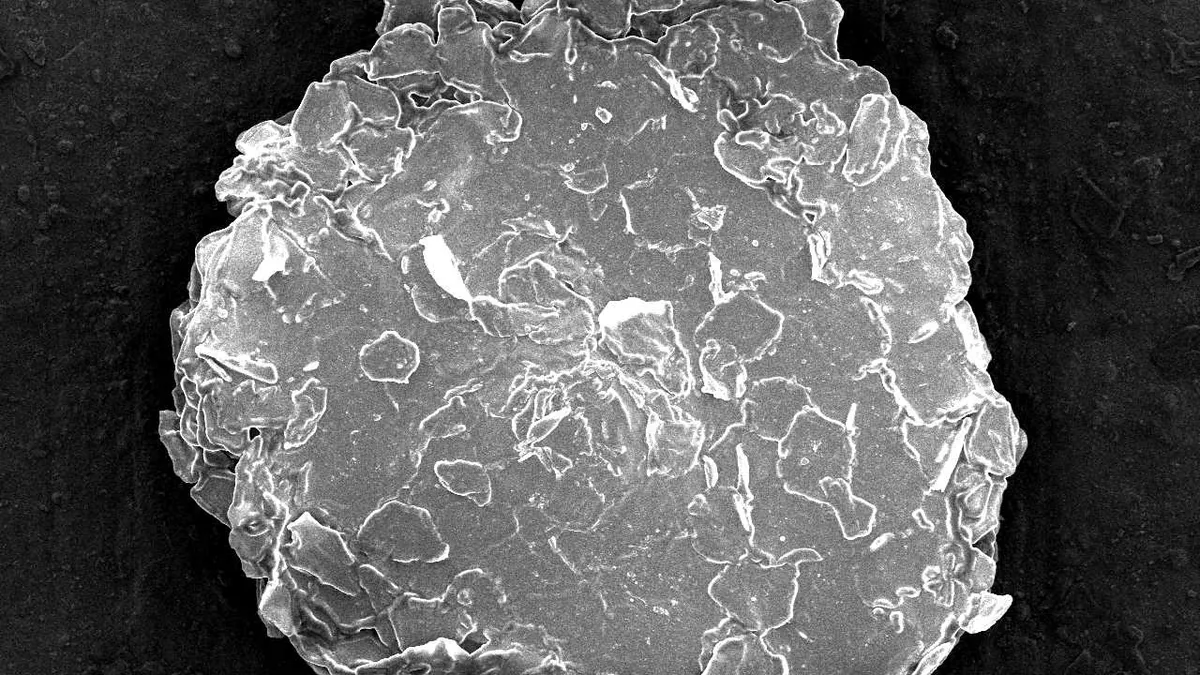
Scanning electron microscope picture of a freshly prepared human dandruff sample. Photo: Horoporo, CC BY-SA 3.0, via Wikimedia Commons, cropped.
Dandruff, Seborrheic Dermatitis, Psoriasis and Ringworm Compared
Flaking with hair loss is where conditions get confused. The NHS lists seborrhoeic dermatitis, psoriasis and ringworm among the causes that can look like dandruff, and a doctor tells them apart by examining the scalp.
Condition
What the scalp looks like
Hair loss
Dandruff
Loose, bran-like scale, no visible redness
Not a typical feature; linked with shedding only in small studies
Seborrheic dermatitis
Flaking with inflammation (swelling, discoloured skin)
Linked with more shedding in some studies, see below
Scalp psoriasis
Well-defined scaly patches; needs a medical diagnosis
Partial hair loss with some inflammation is characteristic (DermNet)
Spots and bumps on the scalp are another look-alike. They are covered in our guide to pimples on the scalp.
Seborrheic Dermatitis and Pattern Hair Loss Often Appear Together
This is the best-documented link, and it points toward overlap rather than a clear cause. In a 2025 study of 311 people with androgenetic alopecia, 131 (42.1%) also had seborrheic dermatitis, and seborrheic dermatitis scores were higher in those with more severe hair loss. The authors call it a possible two-way relationship, which means the study shows the two travelling together, not which causes which.
A 2026 review by Zhu and Hu reports that seborrheic dermatitis is present in 40% to 50% of patients diagnosed with androgenetic alopecia. They discuss shared factors, including sebum, the balance of microbes on the scalp and inflammation.
What this means in practice:
If you have both dandruff and thinning at the crown or temples, treat the two as separate questions.
Controlling flaking may make the scalp more comfortable, but the studies do not show it stops pattern thinning.
Pattern hair loss is progressive. The Lolli review in 2017 describes it as gradual miniaturisation of follicles driven by androgens and genetics.
When Shedding Means Something Else
Many people blame the flakes when the real cause is elsewhere. Two common ones look like this:
Telogen effluvium
Androgenetic alopecia
Pattern
Diffuse shedding across the scalp
Gradual thinning in a typical pattern
Typical trigger
Medicines, illness, emotional or physiological stress (Asghar 2020)
Androgens and genetics (Lolli 2017)
Course
Excessive shedding, often self-limiting
Progressive; the NHS notes pattern baldness is permanent
The NHS says it is normal to lose between 50 and 100 hairs a day, often without noticing. Shedding well above that, coming out in handfuls in the shower or on the brush, points toward telogen effluvium rather than dandruff. Our guide on telogen effluvium explains the triggers and the usual recovery. A hair wash test and a trichogram are the tools described in the Asghar review for confirming it.
Most dandruff responds to simple steps, and treating it is reasonable even though it may not stop hair loss. The NHS suggests trying an anti-dandruff shampoo for up to 4 weeks, looking for products with ketoconazole, coal tar or salicylic acid, and a pharmacist can explain how to use them. For how that ingredient works and who should avoid it, see our ketoconazole shampoo guide.
Keep these points in mind:
Do not scratch hard or pick at scaly patches.
Stop a new product if it burns or reddens the scalp, and ask a pharmacist.
Do not stop a prescribed medicine because of dandruff or shedding without speaking to the prescriber.
Photograph your parting every few weeks in the same light so you can see whether density is changing.
Signs You Should See a Doctor
The NHS advises seeing a GP if you still have dandruff symptoms after at least 4 weeks of anti-dandruff shampoo, if the dandruff is bad or the scalp very itchy, if the scalp is red or swollen, or if there are flaky, itchy patches on the face or elsewhere on the body. Add these hair-specific signs:
Round or patchy bald areas, especially with scale or broken hairs.
Hair coming out in clumps rather than a slightly higher count.
Visible widening of the parting or a receding hairline.
Thinning that continues for months after the flaking has cleared.
Frequently Asked Questions
Does Dandruff Cause Hair Loss?
Not directly, as far as the evidence shows. The NHS describes dandruff as not harmful. The small studies that link it to shedding point to inflammation and seborrheic dermatitis, and both are limited by size.
Can Dandruff Cause Hair Loss in Men?
Men with pattern hair loss often also have seborrheic dermatitis: in a 2025 study of 311 people with androgenetic alopecia, 42.1% had it. That shows the two occur together, not that dandruff caused the thinning.
Will My Hair Grow Back if I Treat the Dandruff?
If the shedding was driven by an inflamed scalp, calming it may help the hair cycle settle, but there is no study showing that treating dandruff regrows hair. Pattern hair loss, according to the NHS, is permanent without treatment aimed at it.
Does Dandruff Mean Unhealthy Hair?
No. The NHS says dandruff is not caused by poor hygiene and is not harmful. It reflects how your scalp skin behaves, partly yeast and partly conditions such as eczema.
How Do I Know if Dandruff Is Causing My Hair Loss?
You cannot tell from the flakes alone. Look at the pattern: diffuse shedding after illness or stress suggests telogen effluvium, gradual thinning at the crown or temples suggests pattern hair loss, and patches with scale need a doctor to rule out psoriasis or ringworm.
Can Seborrheic Dermatitis Cause Hair Loss?
It is associated with it. The 2006 and 2024 studies above suggest inflammation may disturb hair growth, but the evidence is small and does not show that every case leads to hair loss.
Is Itchy Scalp With Hair Loss Always Dandruff?
No. Itching with thinning can come from seborrheic dermatitis, psoriasis, ringworm or reactions to products. A doctor can tell them apart from a scalp exam.
Is Your Hair Still Thinning?
If your flakes have settled but your hairline or crown still looks thinner, the pattern of loss shows what is going on. Send clear photos for a free hair analysis, and the medical team will tell you what they see.
Medical disclaimer: This article is for informational purposes only and is not medical advice. Individual results and recovery vary from person to person. Always follow the written aftercare plan from your own medical team.
Piérard-Franchimont C, et al. Dandruff-associated smouldering alopecia: a chronobiological assessment over 5 years. Clinical and Experimental Dermatology, 2006;31(1):23-26
Borda LJ, Wikramanayake TC. Seborrheic dermatitis and dandruff: a comprehensive review. Journal of Clinical and Investigative Dermatology, 2015;3(2)
Limbu SL, et al. Dandruff lesional scalp skin exhibits epidermal T cell infiltration and a weakened hair follicle immune privilege. International Journal of Cosmetic Science, 2024;46(5):717-733
Menteşoğlu D, Kurmus GI, Kartal SP. Possible bidirectional relationship between disease severity in androgenetic alopecia and seborrheic dermatitis. Indian Dermatology Online Journal, 2025;16(4):571-575
Zhu M, Hu L. Double challenges for scalp health: seborrheic dermatitis and androgenetic alopecia. Dermatology Research and Practice, 2026
Send three photos: front, top and sides. You get a technique recommendation, a graft range and a straight answer about what is achievable, before anyone talks about price.
Your details are with the team
A patient coordinator will get back to you shortly. If you would like to send your photos now, WhatsApp is the fastest way to do it.