
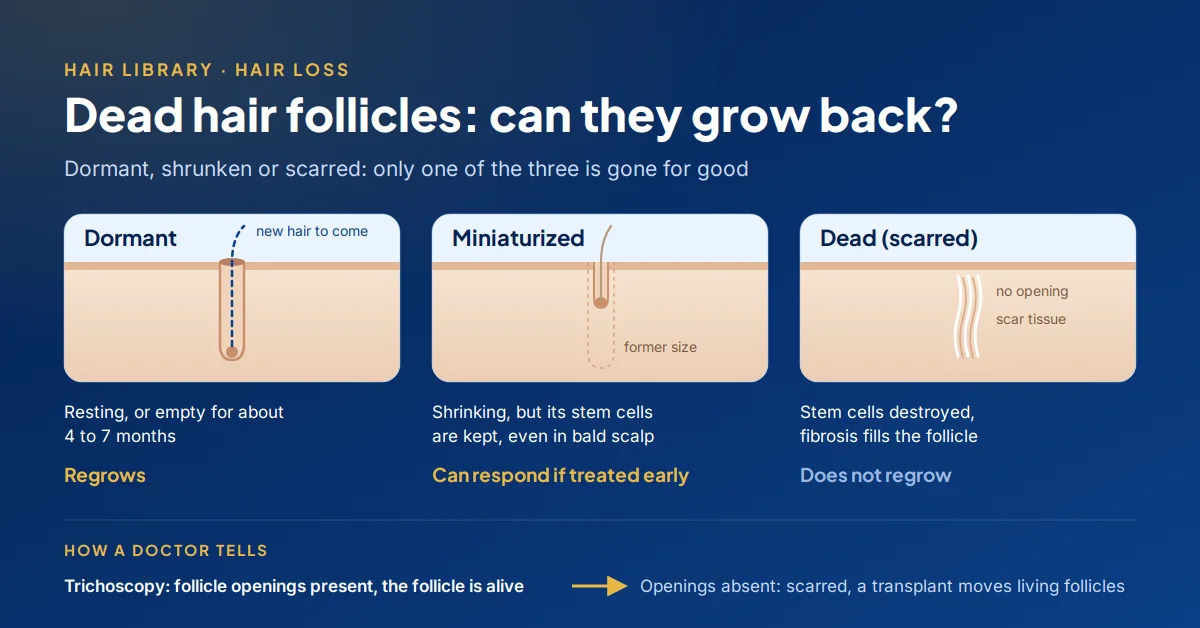
Dead Hair Follicles
We explain whether dead hair follicles can grow back, how they differ from dormant and miniaturized ones, which tests tell them apart and when transplants help.
Reviewed 31 Oct 2026
Hair Library · Category
The patterns, causes and stages of hair loss, the scales doctors use to describe them, and hair loss linked to hormones, pregnancy and medicines.
We explain whether dead hair follicles can grow back, how they differ from dormant and miniaturized ones, which tests tell them apart and when transplants help.
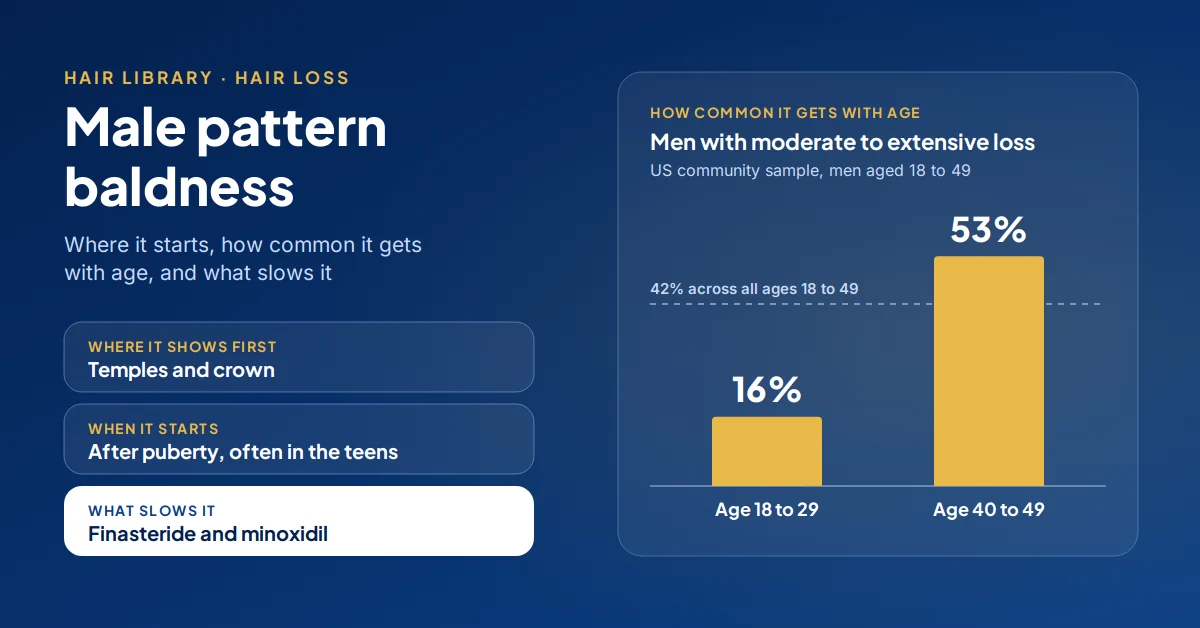
We explain male pattern baldness: why it happens, the age it often starts, how to tell it from a mature hairline or shedding, and what medicines and surgery do.
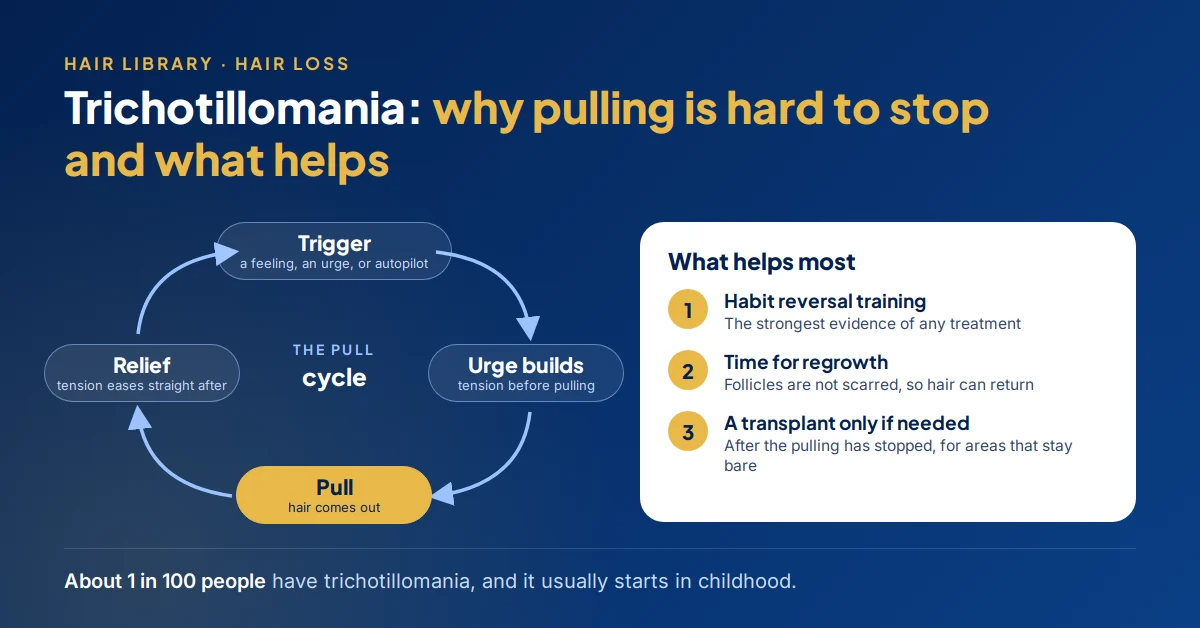
We explain trichotillomania: why pulling is hard to stop, how it differs from alopecia areata, what treatment works, when hair regrows and if a transplant fits.
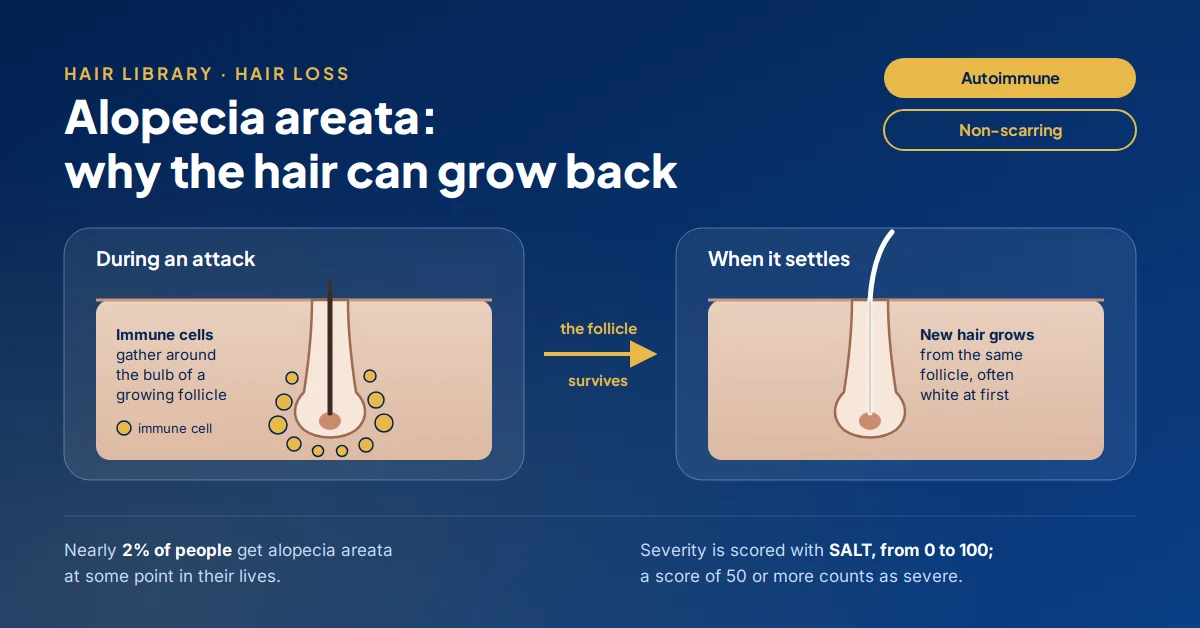
We explain alopecia areata: early signs, types, causes, how the SALT score grades it, what steroids and JAK inhibitors can do, and why a transplant rarely fits.
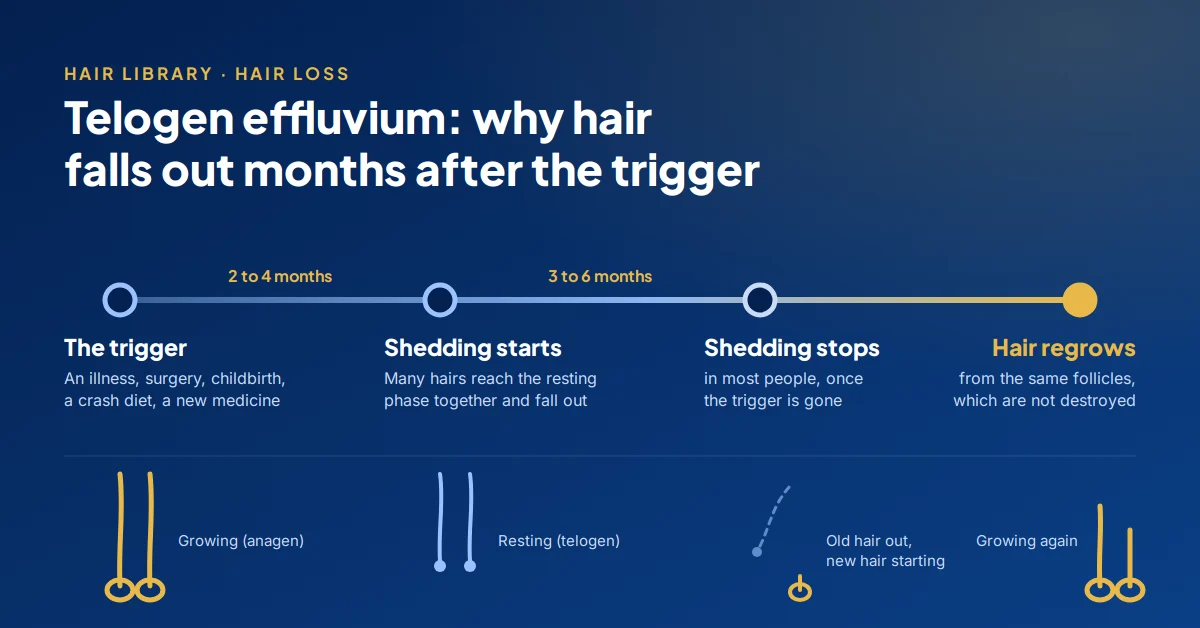
We explain what telogen effluvium is, why shedding starts months after a trigger, how long it lasts, how it differs from pattern loss, and when hair grows back.
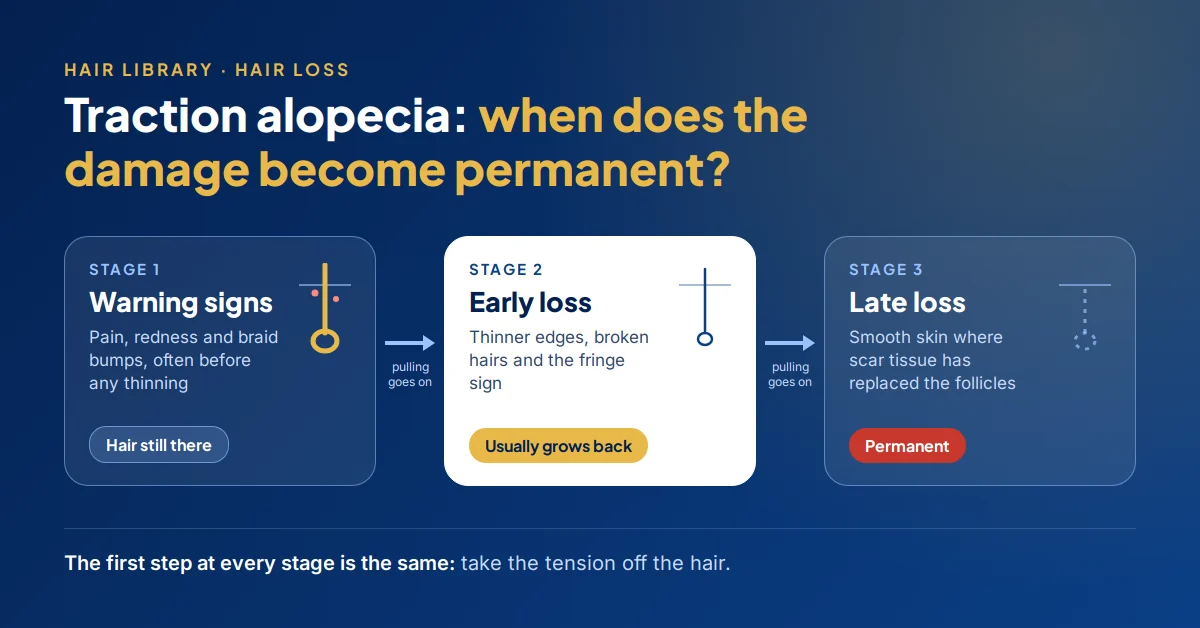
We explain what causes traction alopecia, the first signs on the hairline, when the loss turns permanent, which treatments help and when a hair transplant fits.
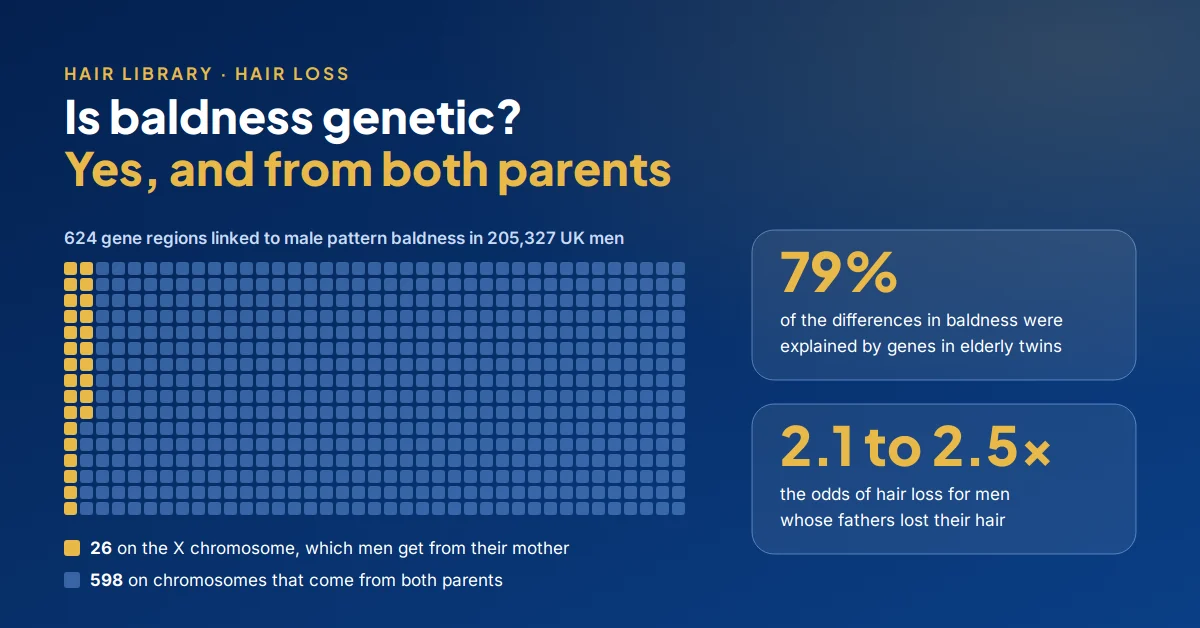
Is baldness genetic? We explain what twin and gene studies found, whether it's from your mother or father, if it skips a generation and what a transplant fixes.

We explain female pattern hair loss: early signs, the Ludwig and Sinclair stages, which blood tests matter and what minoxidil, spironolactone and surgery offer.
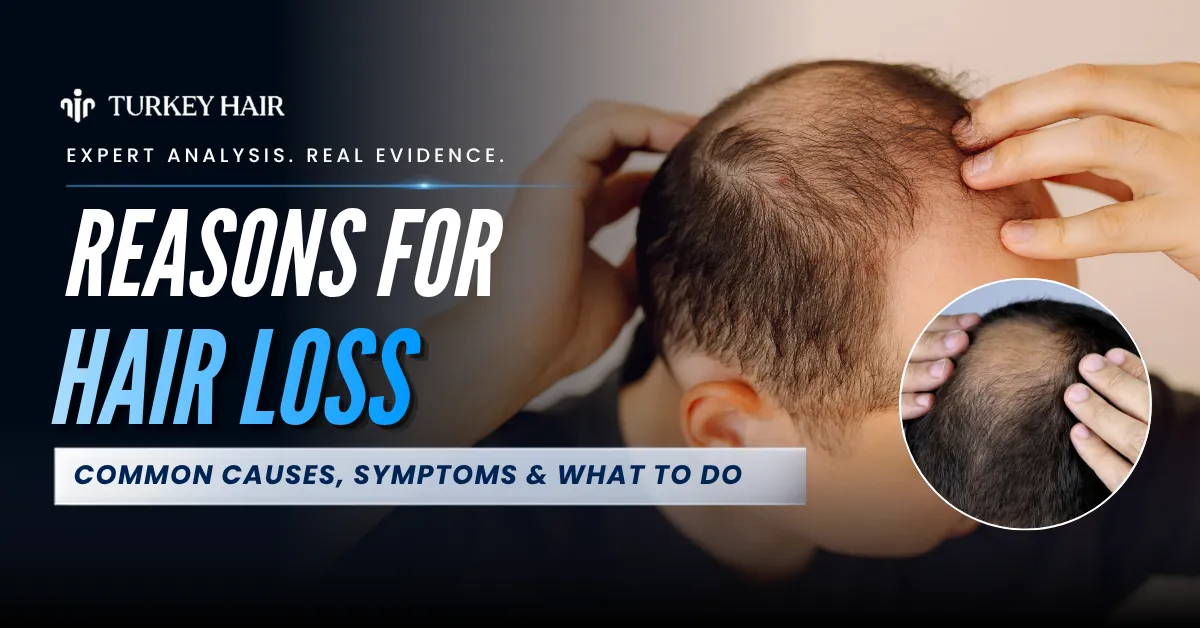
Discover the main reasons for hair loss, from genetics and stress to nutrient deficiencies. Learn the difference between hair shedding and hair loss.

DHT hair loss happens when genetically sensitive follicles shrink over time. Learn the early signs, how specialists diagnose it, and which treatments can slow it down.
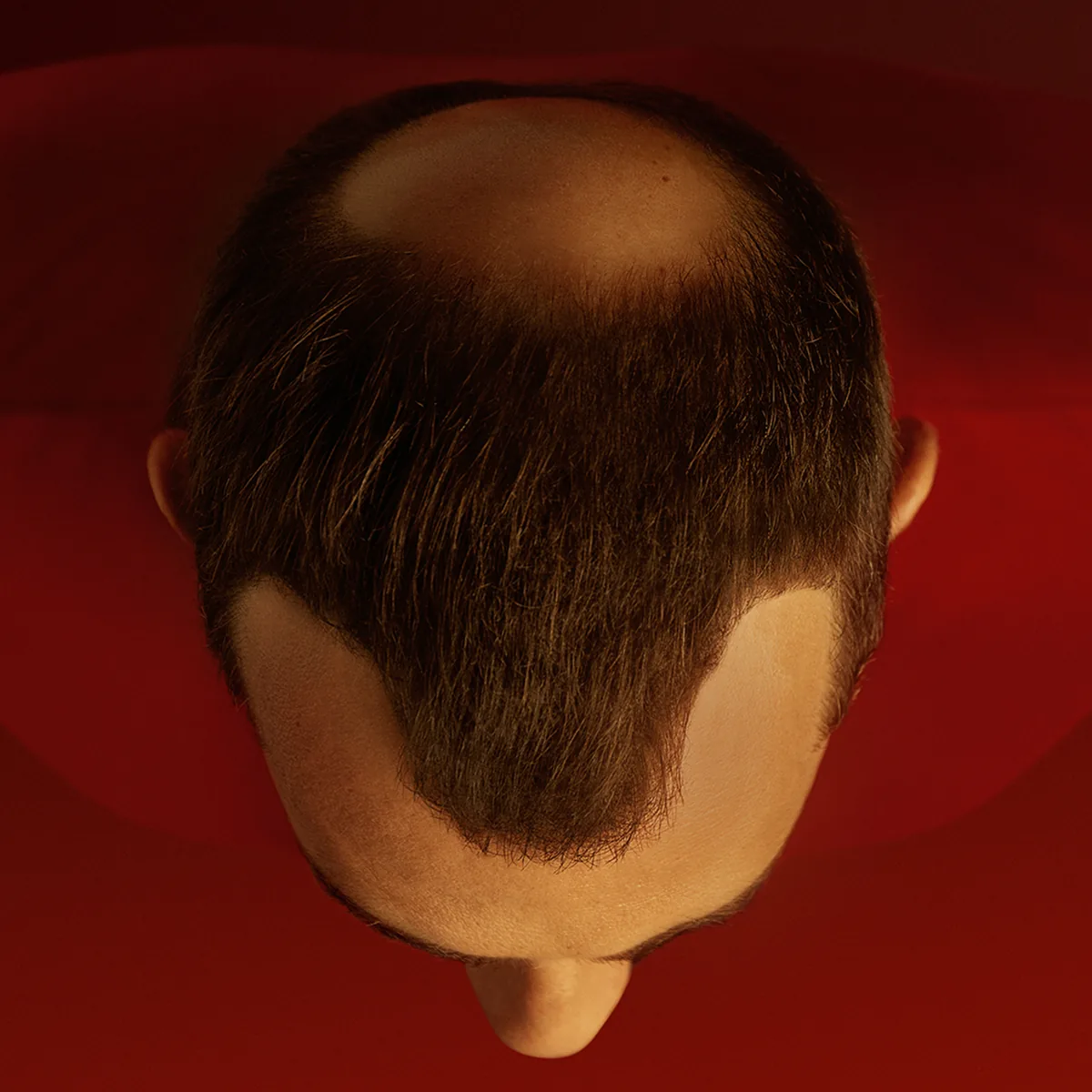
The Norwood scale stage by stage: Norwood 1, 1.5 and 2 to 7, the 3 vertex and type A patterns, how common each stage is and what it means for treatment.
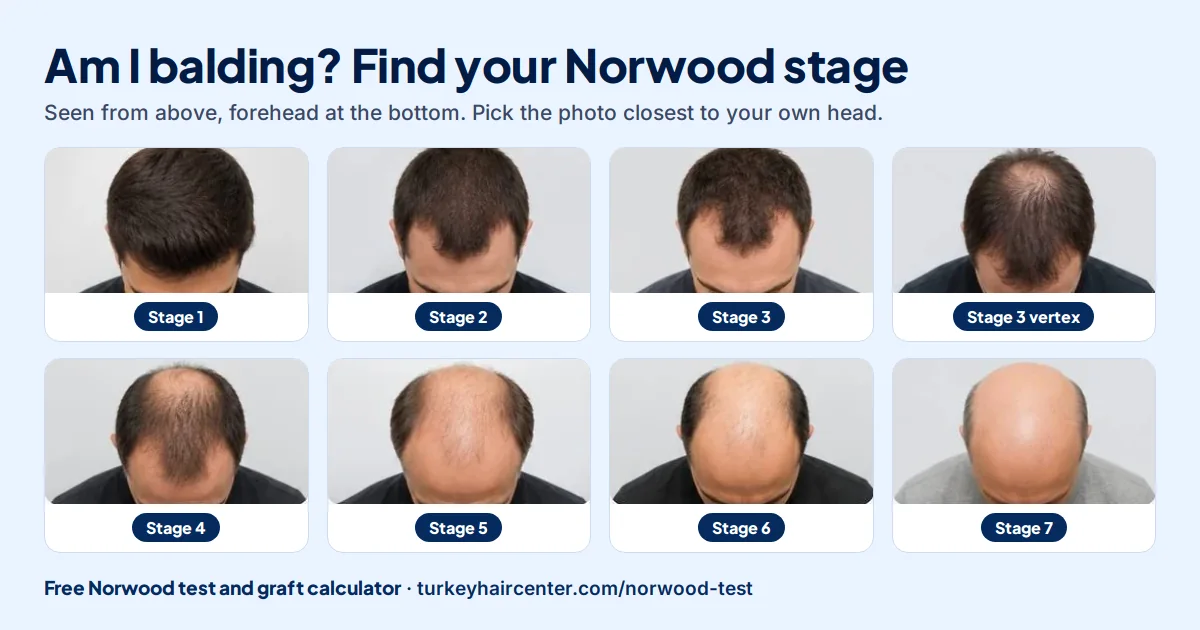
Pick the picture closest to the top of your head to see your Norwood stage and the graft range our medical team plans from. Free, no sign-up.
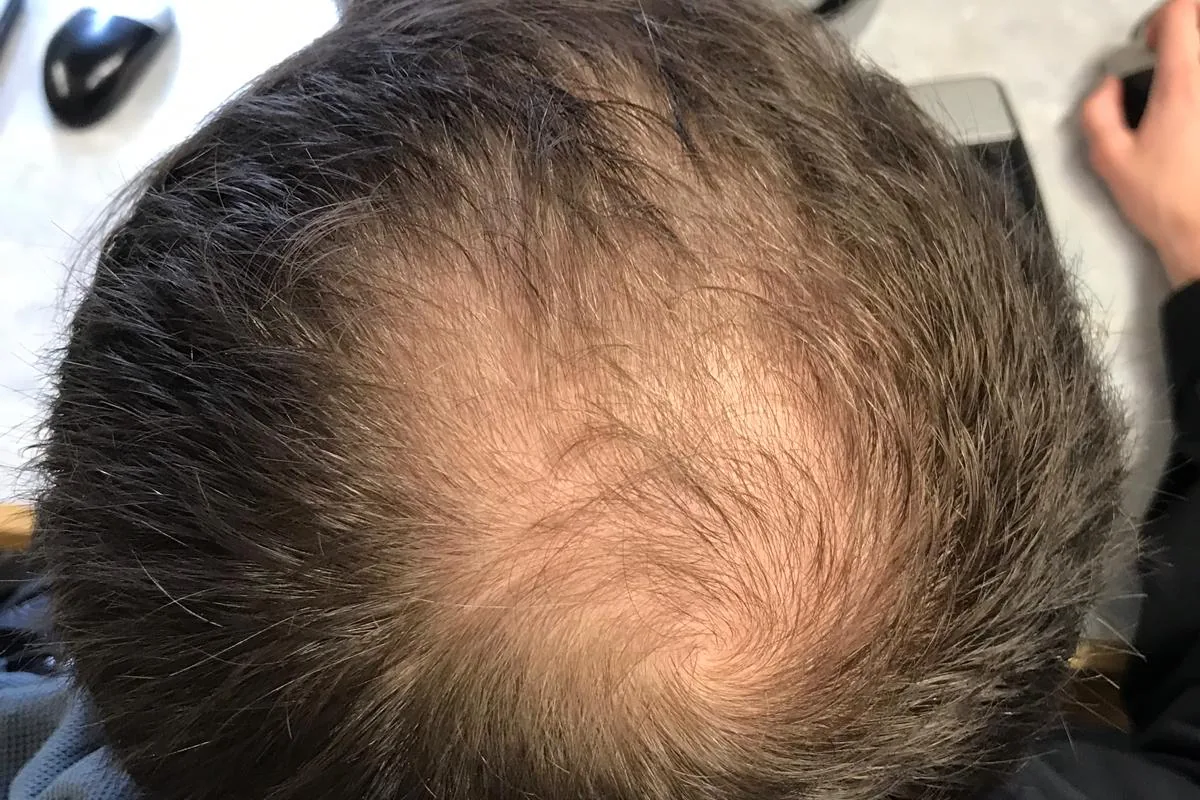
Crown balding explained: a normal crown vs a thinning one, the stages of crown hair loss, its causes, and the treatments and transplant options with evidence.
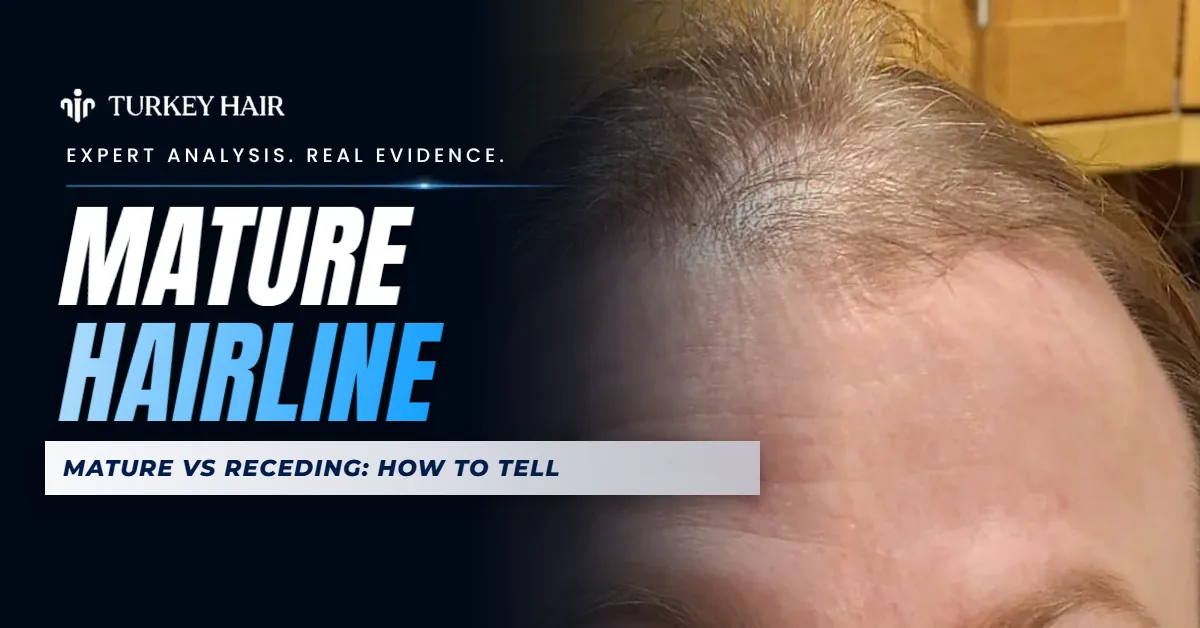
Mature hairline or receding hairline? What Norwood 2 means, when a hairline matures, four checks to compare at home and when to see a doctor about it.
Can thyroid problems cause hair loss? How hypo and hyperthyroidism, Hashimoto's and levothyroxine affect hair, when it grows back and which tests to ask for.
Postpartum hair loss explained: why it happens after birth, when the shedding peaks and stops, and how to support healthy regrowth without unnecessary panic.
Does Mounjaro cause hair loss? Label rates for Mounjaro, Zepbound, Wegovy and Ozempic vs placebo, why shedding starts, how long it lasts and if hair grows back.
Does Adderall cause hair loss? What the FDA label and trials show about appetite, weight and sleep, why shedding starts months later, and what to ask.

Wellbutrin hair loss explained: what the bupropion label and a 1 million patient study show, when shedding starts, how long it lasts, and what to ask.
Can birth control cause hair loss? Learn how the progestin type affects shedding, how long hair loss lasts after stopping the pill, and which options are least likely.
Topics this category still needs. Each is written from peer-reviewed sources and medically reviewed before it is published.
Alopecia areata is an autoimmune condition that can cause round patches of hair loss in the eyebrows, beard or scalp. Hair often regrows within a few months and may look white or grey at first before the natural colour returns.
Full entry: Alopecia Areata →Androgenetic alopecia, or pattern baldness, is the pattern hair loss behind most male and female thinning. It is primarily driven by genetic predisposition and sensitivity to androgen hormones.
Full entry: DHT and Hair Loss →The crown, also called the vertex, is the highest point at the back of the head, where hair grows out in a spiral. Crown and vertex are two names for the same area.
Full entry: Crown Balding →Dihydrotestosterone (DHT) is a potent androgen that the body makes from testosterone using an enzyme called 5-alpha reductase. In people who are genetically sensitive to it, DHT makes hair follicles shrink.
Full entry: DHT and Hair Loss →A mature hairline is the slightly higher, more shaped hairline most men develop as they move from their teens into adulthood. It is a change in shape, not a loss of density.
Full entry: Mature Hairline →The Norwood scale is the classification most doctors use for male pattern hair loss. It describes the usual ways the loss moves, stage by stage, from Norwood 1 to Norwood 7.
Full entry: Norwood Scale: Stages 1–7 →Postpartum hair loss is heavier-than-normal shedding after giving birth, medically termed postpartum telogen effluvium. It is considered a normal response to hormonal change, not a disease.
Full entry: Postpartum Hair Loss →Telogen effluvium is sudden diffuse shedding that follows illness, childbirth or stress. Shedding usually starts two to three months after the trigger, and it is usually self-limiting once the trigger is removed.
Full entry: Telogen Effluvium →Talk to our hair team on a free video call, in your language. You receive a written plan with your technique, estimated grafts and all-inclusive price. If a hair transplant isn't right for you, we tell you honestly.
Your information is 100% confidential.